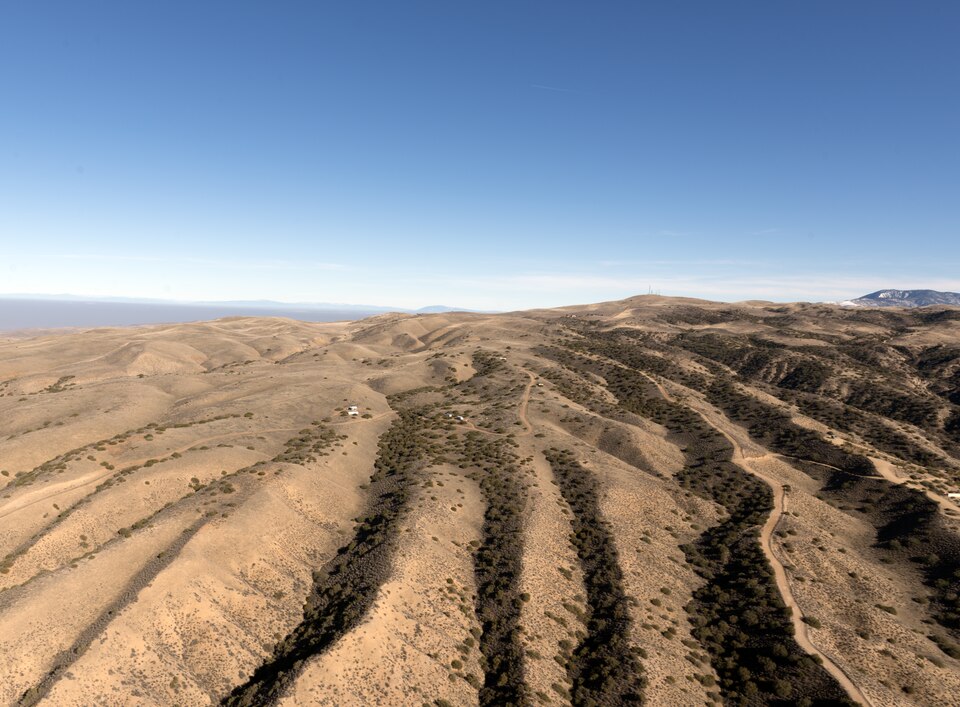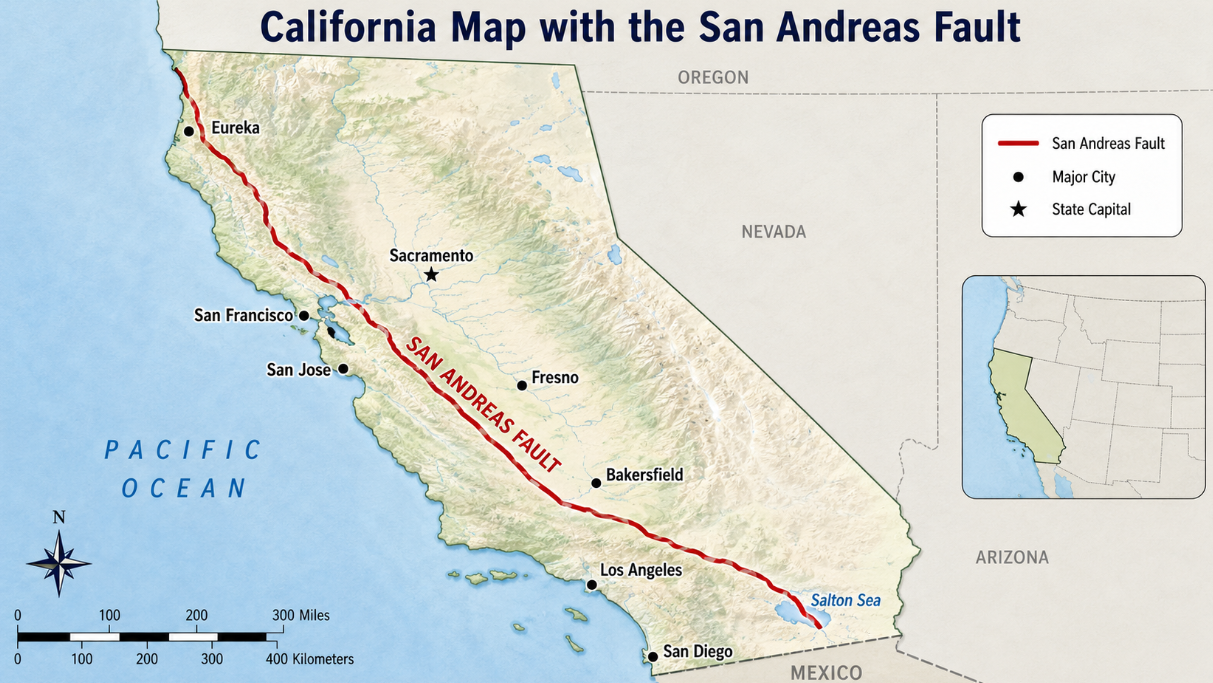
A stretch of California's San Andreas Fault has been slipping quietly for years without anyone noticing. Scientists now know because an artificial intelligence system found it.
A research team led by Dr. Zahra Zali of the GFZ Helmholtz Centre for Geosciences identified dozens of short-duration slow slip events beneath the Parkfield section of the fault. These are silent movements that release stress over hours or days without producing the kind of shaking people feel. According to a report by Phys.org, the study was published in Nature Communications.
Parkfield sits in central California and is one of the most heavily monitored fault zones on Earth. Scientists have used it for decades as a natural laboratory to study how faults build and release stress. Even so, some of what the fault was doing stayed hidden.
The slow slip events were buried inside years of continuous data from borehole strainmeters, instruments drilled into the earth that can detect extremely small and gradual deformations in the crust. The problem was the volume of that data. Subtle signals were easy to miss among long-term deformation trends, environmental interference, and instrument noise.
To get past that problem, the team developed a deep-learning approach that could automatically identify patterns connected to slow fault slip. Rather than searching for signals that researchers had already defined, the system learned to recognize them on its own.
"Faults can move in ways that do not generate strong seismic waves and therefore escape traditional earthquake detection methods," said lead author Zali. "We wanted to know whether important fault slip processes might be hidden within years of continuous deformation measurements."
The team also found that the silent slip events were not random. The slow movements were systematically followed by increased low-frequency earthquake activity. That connection suggests the events may play a role in how stress builds and transfers along the fault, which could have implications for understanding how larger earthquakes eventually occur.
The research team included Prof. Patricia Martínez-Garzón from GFZ, Dr. David Mencin from EarthScope, and Prof. Gregory C. Beroza from Stanford University.