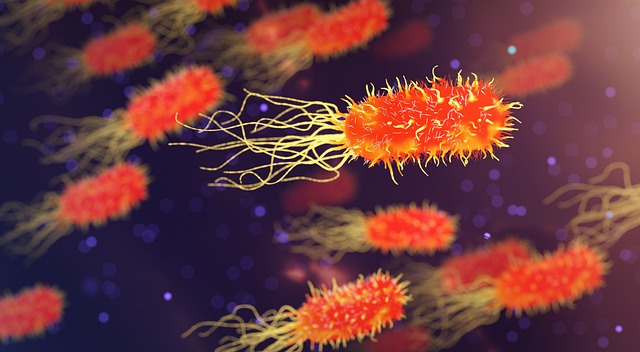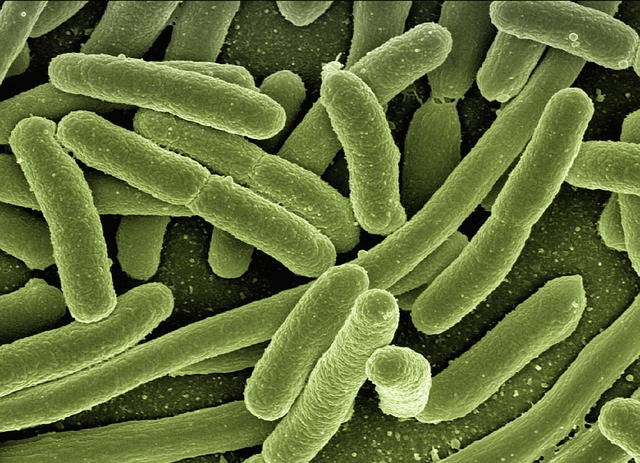
Bacteria already known to break down harmful substances in soil and water have now been shown to do something far more specific. Given the right food source, they can pull uranium out of contaminated water and lock it away in their own cell walls, reducing dissolved uranium levels by 95 percent in just over four months.
Researchers at the Helmholtz-Zentrum Dresden-Rossendorf, known as HZDR, working alongside scientists from Wismut GmbH and the University of Granada in Spain, published the results in the journal Nature Communications, according to Phys.org. The study is the first to demonstrate that bacteria can convert dissolved uranium into a stable chemical compound under these conditions.
The key ingredient was glycerol, a basic component of plant and animal fats that forms naturally when wood is decomposed by fungi. The bacterial communities in the experiment accepted glycerol as a food source, and in doing so, they metabolized the uranium dissolved around them.
Dr. Evelyn Krawczyk-Bärsch, a scientist in HZDR's Terrestrial Microbiology research group and a co-author of the study, explained the foundation of the work. "There are bacteria that can metabolically utilize the toxic heavy metal uranium," she said. "Our group's investigations have already revealed that bacteria can use uranium dissolved in water for their metabolism when they have access to glycerol as a food source."
For the experiments, the team used real mine water drawn from a flooded uranium mine in the Ore Mountains of Germany, a site operated by Wismut GmbH. Experiments were conducted in an oxygen-free environment to replicate natural underground conditions. Antonio M. Newman-Portela, a former doctoral candidate at both HZDR and the University of Granada and the lead author of the study, explained why that mattered. "We wanted to create natural conditions for the bacterial community already existing in the mine water because, at a depth of approximately 2,000 meters (6,600 feet), there is usually little or no oxygen in the mine," he said.
The results were striking. "After 130 days, only around 5% of the uranium dissolved in the water remained in the samples," Newman-Portela said. The team then worked to determine where that uranium had gone and in what chemical form it now existed.
They suspected the bacteria had drawn uranium into their cell walls, a process called bioaccumulation that had been observed in related research. Advanced microscopic and spectroscopic methods confirmed it. The team used experiments conducted at the Rossendorf Beamline, a facility operated by HZDR at a European synchrotron research center, to identify the precise chemical compounds involved. They found that the uranium had assumed a chemical state previously known only as a transient, or temporary, state. The fact that bacteria could stabilize it was not previously established.
The implications reach beyond this one experiment. Uranium contamination in groundwater is a persistent problem at legacy mining sites around the world, particularly in regions of central Europe, Central Asia, and parts of Africa where cold war-era uranium extraction left behind flooded shafts and leaching tailings. Current remediation approaches often rely on pump-and-treat systems or chemical stabilization, both of which are costly and difficult to sustain at scale.
A bacterial approach, if it can be developed further, would use organisms already present in contaminated environments and feed them a relatively simple and naturally occurring substance. The researchers described the findings as relevant to future work on using bacteria for environmental remediation.
No field trials have been announced. The current results come from controlled laboratory conditions, and scaling the process to an actual mine or contaminated aquifer would involve considerably more complexity. But the core finding, that bacteria can reduce dissolved uranium by 95 percent and hold it in a newly confirmed stable form, gives environmental scientists a concrete biological mechanism to study and potentially engineer.