

One of the quieter problems in quantum computing has nothing to do with building qubits or connecting them. It has to do with keeping them tuned.
Quantum processors built from superconducting hardware require a process called calibration before they can run calculations. Engineers test different frequencies and amplitudes of microwave pulses to find the combination that produces the lowest error rates, then save those settings. The problem is that hardware drifts over time, and the standard calibration process cannot run while a calculation is in progress. For long and complicated algorithms, that drift becomes a real problem.
Google has now found a way around it. According to a report by Ars Technica, Google figured out that it is possible to do calibration using the same data that is already being used for error correction. That means the processor can recalibrate itself continuously, without stopping what it is doing.
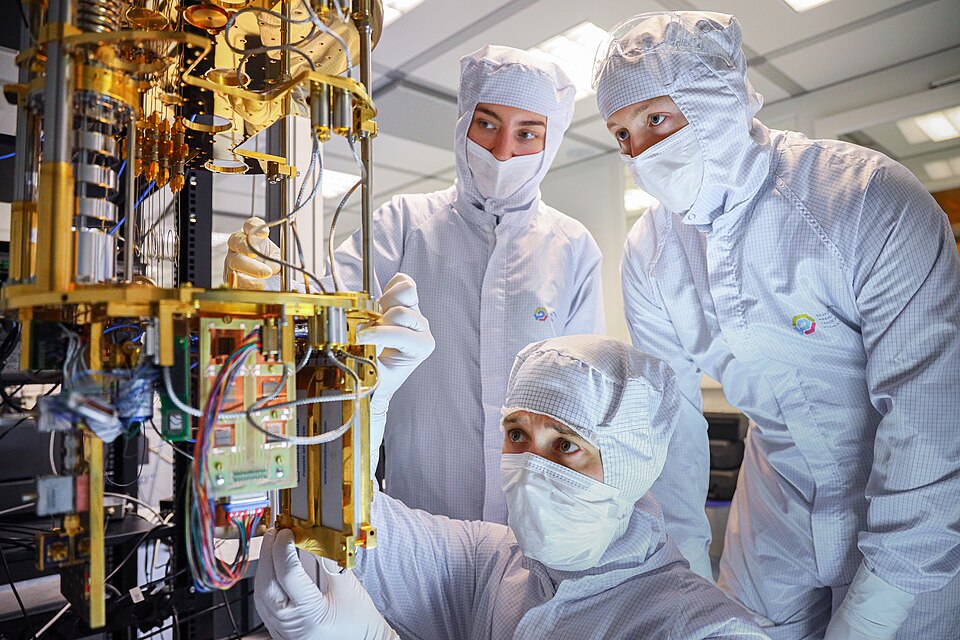
The hardware at the center of this work is a type of qubit called a transmon. Transmons consist of a loop of superconducting wire connected to a resonator, and they are controlled by pulses of microwave photons. The hardware that generates those pulses, including classical computers and microwave sources, sits outside the refrigeration unit that keeps the qubits cold. That external hardware is what gets used during calibration, testing different combinations of wavelengths and amplitudes to find the best settings.
The subtle variations that make calibration necessary in the first place are a manufacturing reality. No two superconducting qubits are exactly alike. This is not a problem for every type of quantum hardware. Systems that use atoms to hold qubits do not have this issue, though the lasers that control those atoms can drift for other reasons. For superconducting systems, finding and maintaining the right settings is an ongoing challenge.
The technique Google developed applies reinforcement learning to the problem. Rather than treating calibration as a separate step that happens before computation begins, the system learns from the error correction data it is already collecting and adjusts its settings in real time. This approach keeps the processor better tuned throughout a long calculation than traditional methods allow.
This is one of several less prominent challenges standing between current quantum hardware and the kind of useful quantum computing that researchers are working toward. The bigger, better-known problems include whether enough high-quality hardware qubits can be manufactured to build the error-corrected logical qubits that complex calculations require, and how to generate the quantum states needed for universal computation. But calibration drift has been a real obstacle for superconducting systems in particular, and Google's approach offers a concrete path forward.
The result is a processor that does not degrade as quickly during extended runs, which matters more as quantum algorithms grow longer and more demanding.