

Researchers had only just installed their sensors when the readings went wrong.
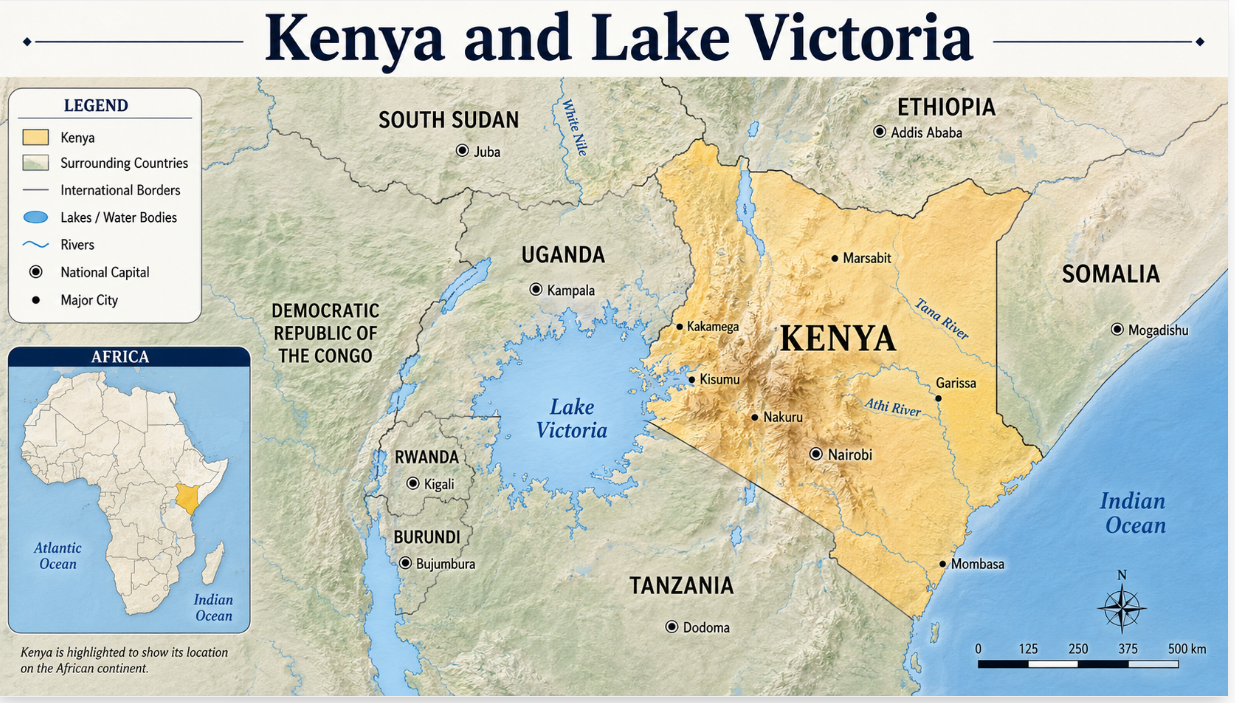
Days after deploying pilot water-quality monitors at aquaculture sites near Dunga Beach in Kisumu, Kenya, the equipment recorded dissolved oxygen levels falling to nearly zero. Hours later, local fish farmers began reporting deaths in the same area. The sequence was exactly what the researchers had hoped their system would one day catch, and it happened almost immediately after the equipment went in.
The work is part of the FRESH-WQ project, a collaboration between King's College London, the Kenya Marine and Fisheries Research Institute, and the African Center for Aquatic Research and Education. The project combines low-cost sensors, satellite observations, and artificial intelligence to help communities anticipate dangerous water-quality conditions before they cause major losses, according to Phys.org.
Naing Oo, a senior technician in King's College London's Department of Geography, was watching the data when the numbers changed. "When I saw the dissolved oxygen readings suddenly fall to almost zero, I honestly thought there must be a problem with the sensors because the values were so extreme. The following morning, we received reports of fish deaths from the same area at Dunga Beach, Kisumu, Kenya."
He added: "It was heartbreaking to hear about the losses experienced by local fish farmers, but it also showed the value of continuous, real-time monitoring. It reinforced why we're developing affordable monitoring systems that, combined with forecasting, could one day provide communities with advance warning so they have time to respond before these events become disasters."
The condition that killed the fish is called hypoxia, a state in which oxygen levels in the water drop to the point where fish cannot survive. It can devastate aquaculture operations overnight and directly threaten the livelihoods of communities that depend on the lake. Researchers and local stakeholders have grown increasingly concerned that pollution and climate change may make these events more frequent and more severe.
The gap the project is trying to fill is significant. Forecasting systems for weather, floods, and droughts are widely used around the world. But tools capable of anticipating water-quality hazards remain rare, particularly in regions where monitoring infrastructure is limited. Lake Victoria, shared by Kenya, Uganda, and Tanzania, is one of Africa's most important freshwater bodies and supports millions of people who depend on fishing.
At a stakeholder workshop held during the fieldwork, fish farmers, researchers, and community representatives described how they currently assess changing lake conditions. They rely on local knowledge: watching water color, observing fish behavior, and reading other environmental signs. Participants said the ability to predict hazardous conditions weeks in advance would fundamentally change how they manage their operations.
The pilot deployment has now shown the sensors can detect the warning signs in real time. The next step for the FRESH-WQ project is building the forecasting layer that could turn that detection into advance warning.