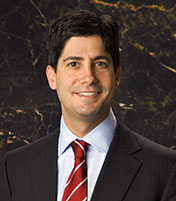
Kevin Warsh has been Federal Reserve chair for roughly six weeks. He has said little publicly about where he thinks interest rates should go. That changed recently at a central banking forum.
According to Yahoo Finance, Warsh told CNBC at the forum: "We're all in the price stability business, that might not be our only business, but if there was a common thing I heard over the last couple of days, it was open-mindedness on these questions of AI, open-mindedness on productivity, but we've all looked around, and we've seen that prices are too high."
The statement reinforced a hawkish posture that surprised some investors. When President Donald Trump nominated Warsh, many expected him to push for lower rates. Trump has been a consistent advocate for rate cuts. In a Wall Street Journal op-ed before his confirmation, Warsh argued that artificial intelligence could be a significant disinflationary force, which led some Fed watchers to assume he would use that argument to justify cutting rates.
Warsh has also discussed viewing inflation through what is known as the trimmed averages approach, a method that removes the prices with the most extreme changes from the basket when calculating overall price changes in the economy. In February 2026, the Federal Reserve Bank of Dallas calculated a trimmed-mean rate for the Fed's preferred inflation gauge, the Personal Consumption Expenditures Price Index. That figure would have been nearly a half-point lower than the headline PCE rate of 2.8%. Under that lens, the economy would appear much closer to the Fed's 2% inflation target.
But since taking over as chair, Warsh has not leaned on that argument publicly. At his first Federal Open Market Committee meeting in mid-June, he made clear that his focus is on achieving price stability, which led investors to believe he may be more hawkish than initially expected.
Warsh has also signaled a preference for the Fed to be less communicative with markets. His view is that markets function more efficiently when they digest economic data on their own rather than watching for signals from the Fed about how it will respond.
Markets are now pricing in the possibility of a rate hike. His comments at the forum did nothing to push back against that expectation.