

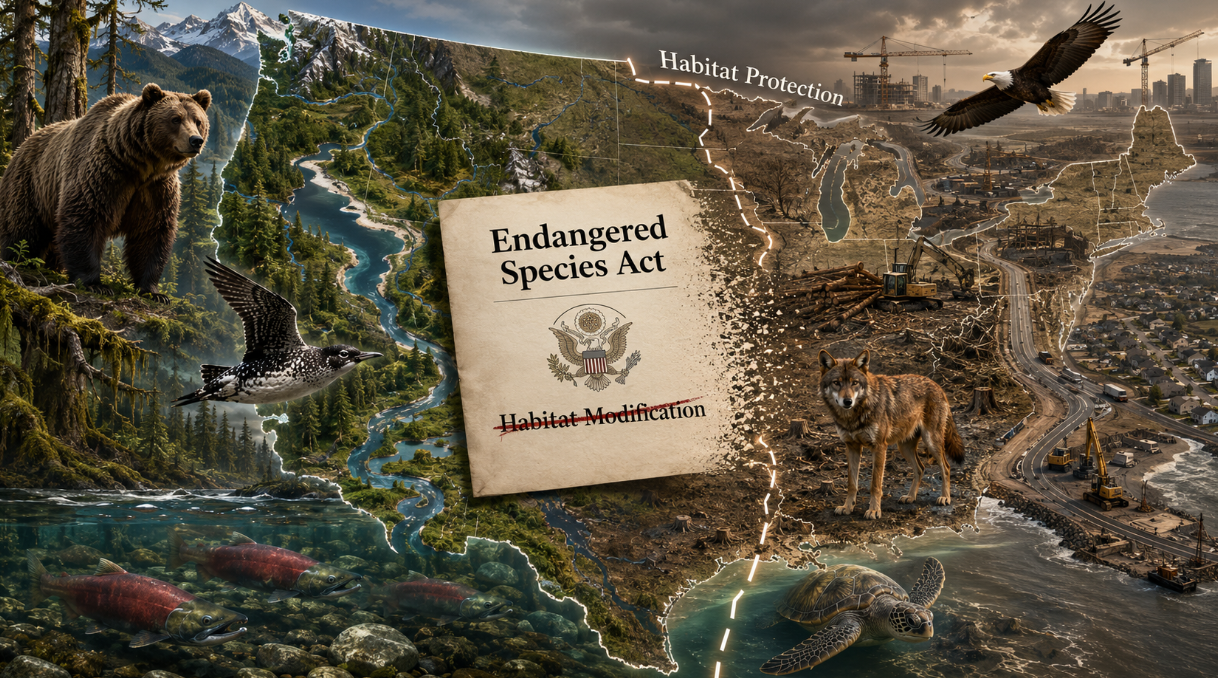
The Trump administration has removed a key definition from the Endangered Species Act that environmental groups say will strip legal protection from the habitats of threatened and endangered animals across the country, according to ABC News.
The U.S. Department of the Interior and the U.S. Department of Commerce announced Friday that they were rescinding the definition of the word "harm" from the 1973 law. That definition, first established in 1975 and revised in 1981, read: "an act which actually kills or injures wildlife. Such an act may include significant habitat modification or degradation where it actually kills or injures wildlife by significantly impairing essential behavioral patterns, including breeding, feeding or sheltering."
In 1995, the Supreme Court upheld that definition, ruling it prohibited habitat modification or degradation because of the potential threats such changes posed to endangered animals. Removing the definition means that destroying or degrading habitat will no longer automatically qualify as "harm" under the law.
For decades, the U.S. Fish and Wildlife Service and the National Marine Fisheries Service used that definition to block activities such as logging, development, and land clearing in areas where listed species lived, ate, or bred. Environmental groups say those protections were central to the law's ability to prevent extinctions.
"The Trump Administration repeal violates the core purpose of the statute and decades of legal precedent, including from the U.S. Supreme Court. Now more than ever, imperiled species from salmon to marbled murrelets to grizzly bears need habitat protection to survive and recover," said Earthjustice attorney Kristen Boyles.
Environmental nonprofits including the Center for Biological Diversity, the Sierra Club, and the Conservation Law Foundation have already filed suit against the administration over the change.
The administration defended the move, saying it reduces unnecessary permitting, cuts compliance costs, and eliminates confusion. Secretary of the Interior Doug Burgum said in a statement: "For years, federal agencies abused the ESA to obstruct lawful land use and burden American families and businesses. That approach turned routine activity into a regulatory trap, drove up costs that impacted people's lives, and expanded federal authori" The administration also said the change "returns the interpretation of the ESA back to its actual text and original intent, which will end years of federal overreach."
Officials said the core protections of the Endangered Species Act will remain in place. The administration also cited a recent Supreme Court decision ending what is known as Chevron deference, arguing the previous regulations did not match what the administration called the best reading of the statute's text.
The Interior Department and the Commerce Department did not respond to a request for comment.