

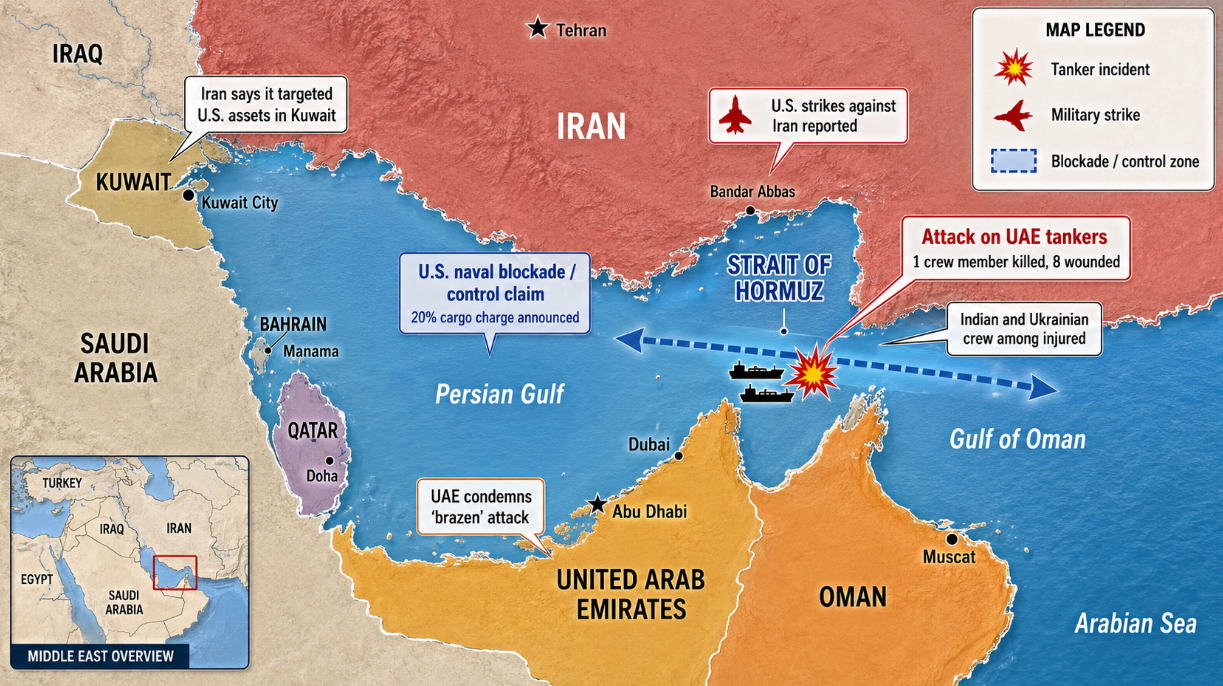
A third American service member was killed Saturday in Iraq. The death came during a controlled detonation of unexploded ordnance from a downed Iranian one-way attack drone. The fatality pushed the U.S. death toll to 17 since the conflict began in February.
According to CNBC, U.S. Central Command also reported Sunday that American forces found unidentified remains at the location of an earlier attack in Jordan that killed two service members on July 17. A fourth service member had been listed as missing following that strike. Central Command said it is working to identify the remains.
American forces conducted their eighth straight night of strikes against Iranian targets over the weekend. Central Command said in a post on X that its forces "successfully hit Iranian military coastal surveillance and air defense facilities, maritime capabilities, and missile and drone storage sites to continue degrading Iranian military capabilities." The statement also said "American military assets also targeted Islamic Revolutionary Guard Corps forces that launched attacks against U.S. service members in Jordan on July 17."
President Donald Trump ordered the latest airstrikes starting late Saturday. The stated objectives were to degrade Iran's ability to threaten commercial shipping in the Strait of Hormuz and to punish IRGC forces for the Jordan attack, according to Central Command.
The escalation raised fresh concerns about oil shipments through the Strait of Hormuz, one of the world's most critical shipping lanes. Oil prices climbed in early trading Sunday. Bloomberg reported that the gains added further pressure on Asian markets already dealing with a slump in chip stocks. MarketWatch reported that U.S. stock-index futures were little changed as investors also looked ahead to key technology earnings expected later in the week.
The Washington Post reported that the U.S. military is growing concerned about a dwindling munitions stockpile caused by the prolonged conflict. Congress is currently debating whether to provide additional funding to rebuild the stockpile, though no vote has been scheduled.
The U.S. Embassy in Jordan's capital, Amman, issued a security alert Sunday, saying Jordanian authorities had evacuated the international airport and seaport in Aqaba due to what it described as a specific and credible threat. The embassy did not elaborate on the nature of the threat.
Jordan pushed back on that account almost immediately. Reuters quoted government spokesperson Mohammad Al-Momani as saying in a written statement: "No potential threats have been recorded by the relevant Jordanian authorities in the past few hours. The airport and port are operating normally."
The back-and-forth between the U.S. Embassy and Jordanian officials added another layer of uncertainty to an already volatile situation. The developments over the weekend further strained the fragile truce that had been reached between the U.S. and Iran last month. Energy Secretary Chris Wright sought Sunday to allay concerns that the renewed fighting would again close the Strait of Hormuz and cause a spike in energy prices, though the situation remained fluid as of Sunday evening.