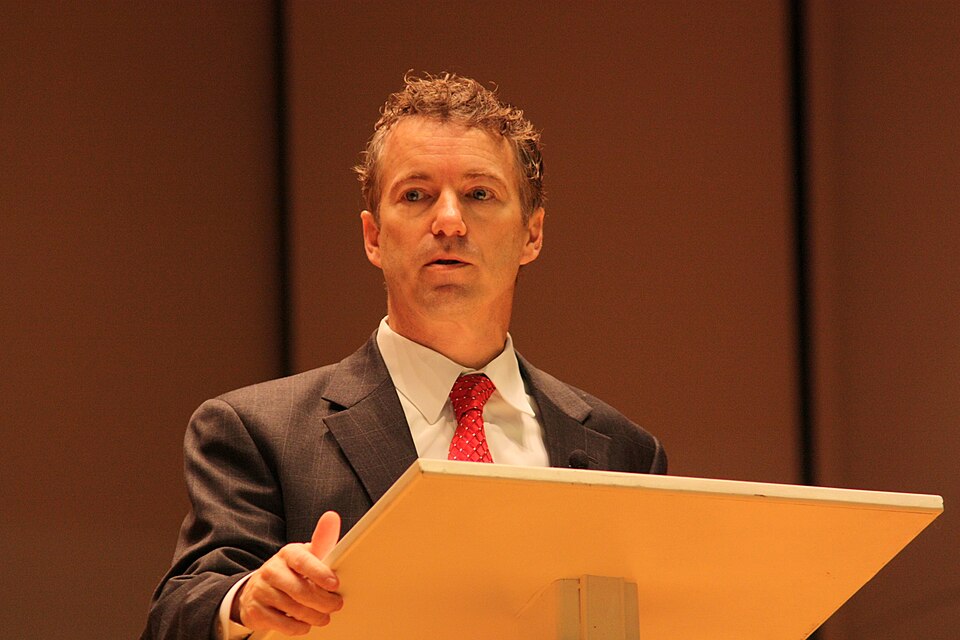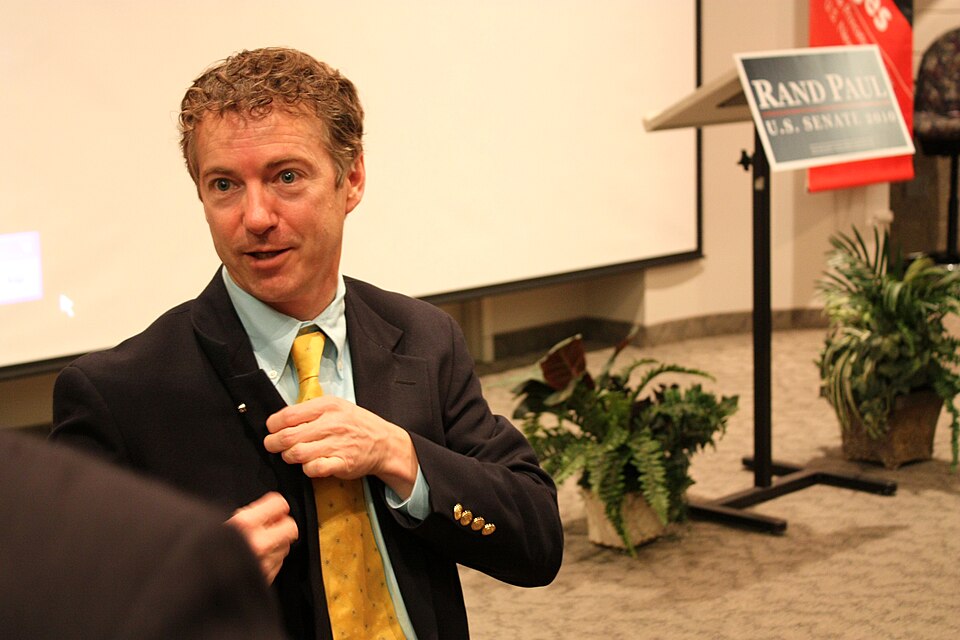
Senator Rand Paul released internal Slack messages Tuesday from the authors of one of the most influential early papers on the origins of COVID-19, and the messages show the scientists held private doubts that contradicted what they published.
The paper in question, according to Fox News, is "The Proximal Origin of SARS-CoV-2," published in Nature Medicine in March 2020. It was written by Kristian Andersen, Robert Garry, Eddie Holmes, and Andrew Rambaut. Public health officials and media outlets widely cited it as scientific authority for ruling out a laboratory origin of the virus.
The Slack messages tell a different story.
Andersen privately assigned a 30% probability to a lab origin of the virus. Holmes gave a 20% estimate, though he later revised that figure down to 10%. Both numbers stand in sharp contrast to the paper's public assertion that the virus had not been manipulated.
In one message dated June 11, 2020, Andersen wrote to his colleagues about the limits of what they actually knew. "The part I'm really struggling with is that, at the end of the day, we really don't have any hard evidence one way or the other — and especially given some of the recent evidence, we also can't rule out that somebody actually put it in there," he wrote. He continued: "That's obviously not to say that somebody did, but we can't rule it out. Our paper was pretty strong in saying 'there's no way,' but I have less confidence in that statement at this stage."
The messages also reveal internal debate over the furin cleavage site, a specific genetic feature that sits at the center of the lab-leak question. A news release from Paul's office states that Andersen told colleagues that "some smoking(ish) guns" had emerged that made him "not comfortable" and that he had "less confidence ... at this stage."
Beyond the scientific disagreements, the messages show the authors were in contact with the U.S. intelligence community and National Institutes of Health leadership while publicly defending their conclusions. The authors also discussed coronavirus researcher Ralph Baric, acknowledging his expertise but describing a contentious professional relationship marked by rivalry and suspicion. They suspected Baric was an anonymous leaker they called "Deep Throat," who they believed shared confidential peer-review information with a journalist. That leak suggested the authors had initially suspected a lab origin before changing their stated position.
Paul spoke directly about his reaction to the messages in an interview with Fox News. "The idea that it came from a lab is implausible, and, yet, privately they're saying the opposite. … This level of dishonesty, I think, needs to be exposed," he said. "These are people who get large, multimillion-dollar grants from our country, and we shouldn't be giving money to people who lied to us."
Paul brought the matter to a Senate hearing and has made the origins of COVID-19 a sustained focus of his work in Congress. The release of these messages adds new detail to a years-long debate over what the authors knew, when they knew it, and whether the paper's public conclusions accurately reflected the scientific uncertainty they were expressing privately.