In January 2026, Angie Lindsey gained 29 pounds in 12 days from fluid retention. She was already living two and a half hours from her heart specialist in the St. Louis area. Getting care meant a long drive each way, and her condition kept getting worse.
Lindsey's story began in 2019, when she was 59 years old and preparing for a family event. She felt exhausted throughout the day. Her daughter, a nurse, stopped by and checked her vital signs. "I told her what was going on, and she said, 'Well, Mom, I think we need to get you somewhere. I don't know, your heart sounds okay, but something's not right,'" Lindsey recalled, according to Healthline.
At the emergency room, doctors initially suspected a pulmonary embolism. Then bloodwork came back. Her troponin level, a marker of heart damage that should be close to zero, was 4,400. She was having a massive heart attack. Because she lives in a small town in Missouri, she was transported 45 miles to a hospital equipped to treat her. Doctors placed a stent two days later.
The heart attack left her with congestive heart failure and persistent fluid retention. She retired from her job as a nursing home administrator. Near the end of 2022, she spent a month in the hospital as her gallbladder threatened to rupture and her organs began to suffer.
The January 2026 fluid retention episode gave her a concrete sense of the weight she was carrying. "A gallon of milk weighs eight pounds, so figure three, eight gallons of milk around your neck, your chest, your heart. It was not very comfortable," she said.
At one point, sitting in her cousin's home after an appointment in St. Louis, she found herself questioning what her life had become. "I remember sitting there…getting really sad, thinking, 'Is this how my life is going to be? I'm just going to exist,'" she said.
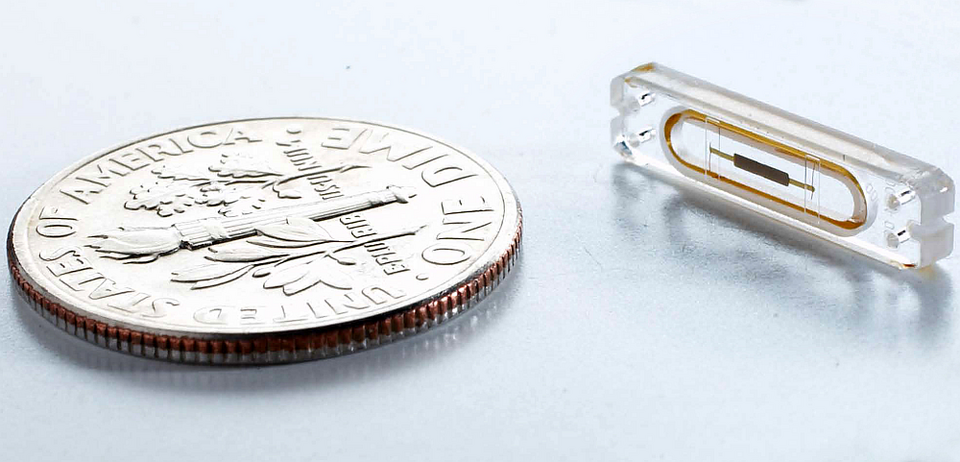
In April 2026, her doctor implanted Abbott's CardioMEMS HERO Device, a pulmonary artery pressure sensor roughly the size of a paperclip. The device sits near the heart, where rising pulmonary artery pressures signal worsening heart failure. It takes pressure readings and sends the data wirelessly to her care team. The procedure was outpatient and took only a few hours.
The sensor allows her doctors to monitor changes and adjust her treatment without requiring her to make the long drive to St. Louis. Lindsey said the technology has helped her avoid hospitalizations and return to daily activities she had given up.