More than half of American adults between the ages of 30 and 79 are now eligible for statin therapy under sweeping new cholesterol guidelines released in 2026. That figure, approximately 87.5 million people, includes 21.5 million individuals who were not recommended statins under the previous 2018 guidelines.
The updated rules come from the American Heart Association, the American College of Cardiology, and several other medical organizations, collectively published as the ACC/AHA/Multisociety Dyslipidemia Guideline. According to Healthline, three separate studies examined the potential impact of the new standards and found they could significantly expand treatment eligibility and improve cholesterol control across the country.
The guidelines recommend treating high cholesterol earlier than before. They also call for measuring lipoprotein(a) at least once in a patient's lifetime to identify inherited heart disease risk, and they introduce a newer, more personalized calculator to estimate cardiovascular risk. Lower LDL targets are set for people at very high risk of heart disease, and the guidelines encourage tailoring treatment to individual risk factors and imaging results when appropriate.
One of the three studies looked at how many adults already had LDL cholesterol levels above the new guidelines' recommended goals. Among adults without heart disease, about one-third had LDL above target levels. The gap widened sharply as risk increased. Among low-risk individuals, roughly 10 percent had LDL above goal. Among those at borderline or intermediate risk, that figure jumped to 64 percent. Among high-risk individuals, it reached 83 percent.
The numbers were even more striking among people with established heart disease. Nearly 80 percent of that group had LDL levels above the stricter targets set for them under the new rules.
The same study found that a large majority of people with elevated LDL were not receiving any cholesterol-lowering medication. More than three-quarters of high-risk individuals in primary prevention, meaning those who had not yet had a heart attack or stroke, were untreated. More than one-third of those in secondary prevention, meaning people who already had heart disease, were also not on therapy.
The newly eligible group under the 2026 guidelines tends to be younger and at lower short-term cardiovascular risk compared to those already recommended for statins. Experts quoted in the research say this reflects the guideline's emphasis on early intervention, the idea that reducing cholesterol before significant damage accumulates may lower long-term risk more effectively than waiting until a patient crosses a higher-risk threshold.
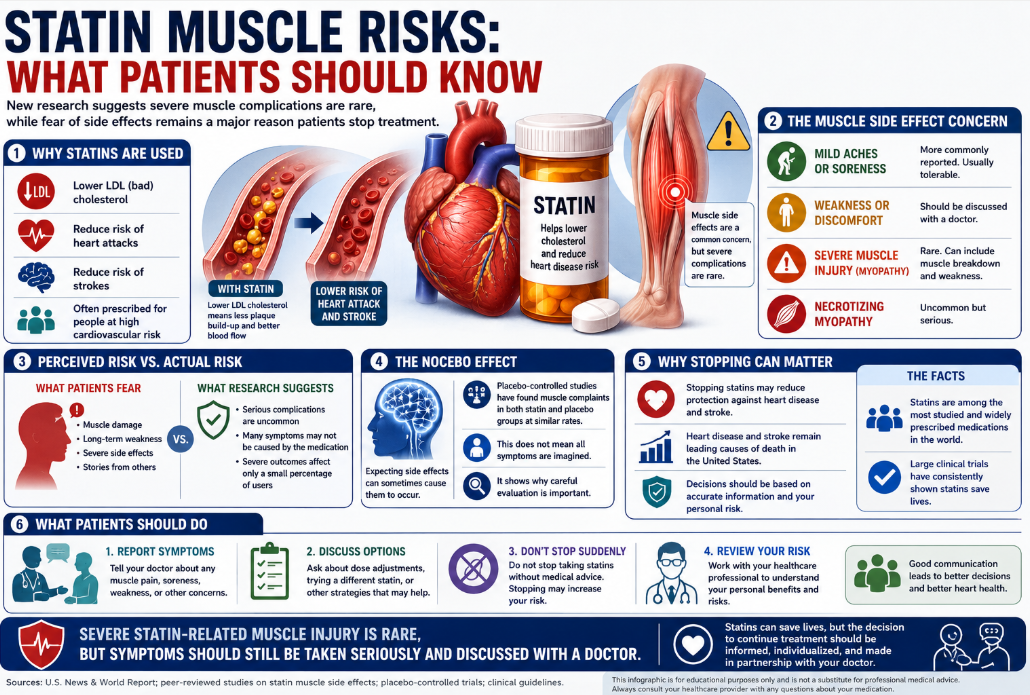
Statins are among the most commonly prescribed drugs in the United States and are generally used for the primary prevention of heart attack and stroke. The guidelines do not recommend statins alone. A comprehensive approach including lifestyle changes such as diet and exercise remains part of the recommended framework, with medication added when needed based on individual risk.
The three studies were published together and evaluated the guidelines from different angles, including population-level eligibility, treatment gaps, and the performance of the new risk calculator. Together they suggest that current cholesterol management in the U.S. falls well short of what the updated standards now call for, particularly among those at the highest risk of cardiovascular events.