Scientists have taken a significant step toward growing human organs inside animals by identifying and then blocking the immune mechanism that has been killing donor cells before they can develop.
The research, published in the journal Cell on June 5, 2026, was led by Specially Appointed Honorary Professor Hiromitsu Nakauchi from the Stem Cell Therapy Laboratory at the Institute of Science Tokyo, in collaboration with researchers at Stanford University. According to Phys.org, the team focused on a process they identified as xenophagocytosis, in which embryonic macrophages actively destroy living donor cells from another species.
"Xenophagocytosis describes how embryonic macrophages eliminate living donor cells from another species. By blocking this process, we aimed to improve donor cell survival," Nakauchi said.
The technique the researchers are trying to improve is called blastocyst complementation. In this approach, stem cells from one species are injected into the embryo of another species to grow a specific organ. The method has worked in animal experiments but has remained limited because most donor cells do not survive the early stages of development inside the host embryo.
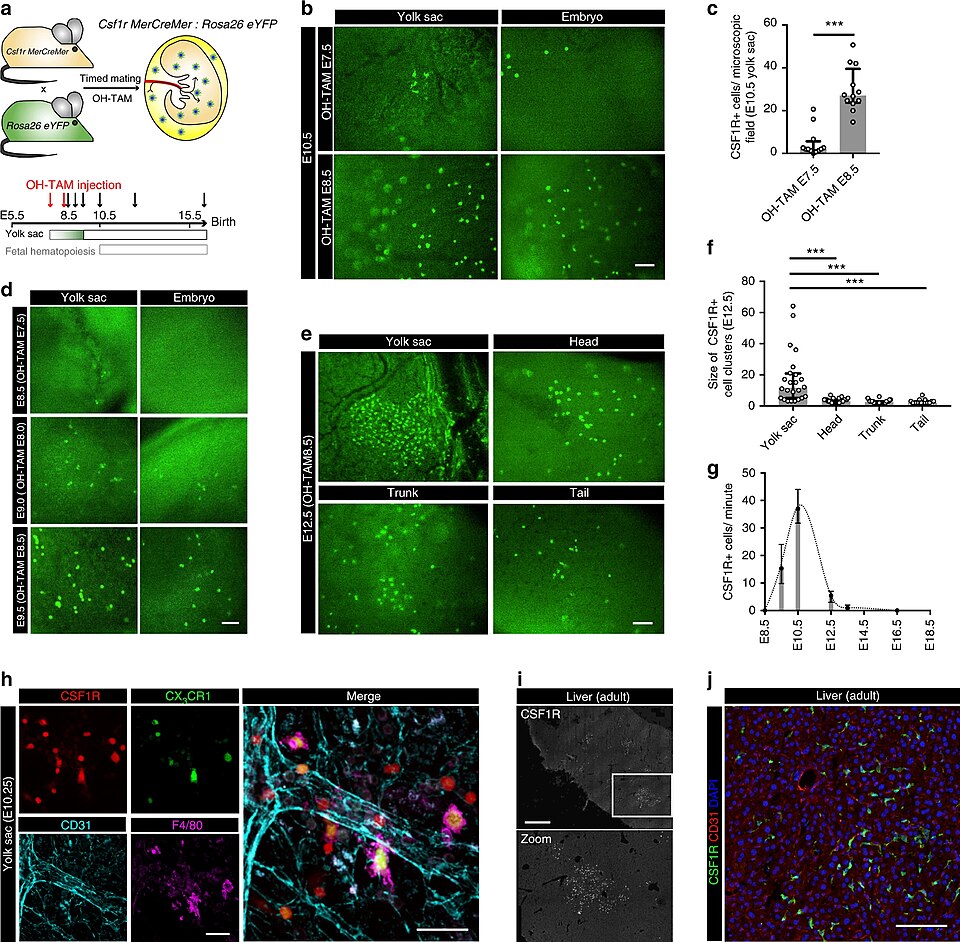
To find out why, the team studied mouse-rat chimeric embryos in which rat stem cells were placed into mouse embryos. They found that the foreign environment causes cellular stress in donor cells. That stress pushes a molecule called phosphatidylserine to the surface of the cell. Phosphatidylserine is normally kept hidden inside the cell membrane. When it appears on the outside, it acts as an eat-me signal. Primitive macrophages in the host embryo detect this signal through a receptor called Axl and then engulf the donor cells, even though those cells are otherwise healthy. All of this happens before the adaptive immune system has even developed.
Once they understood the mechanism, the researchers tried three approaches to stop it. First, they genetically depleted host macrophages and disrupted the Axl receptor, both of which are involved in the xenophagocytosis process. Second, they engineered donor cells to carry CD47, a molecule known as a don't-eat-me signal, which helps the donor cells avoid being engulfed. Together, these strategies led to significantly improved donor cell survival rates and more successful generation of rat pancreas tissue inside mouse embryos.
The shortage of donor organs remains one of the most serious problems in transplant medicine, with many patients waiting for organs that may never become available. Blastocyst complementation has been viewed as a potential long-term solution, but the donor cell survival problem has been a persistent barrier. The new findings offer a more complete picture of what the immune system is doing during early embryonic development and provide concrete strategies for overcoming it.