

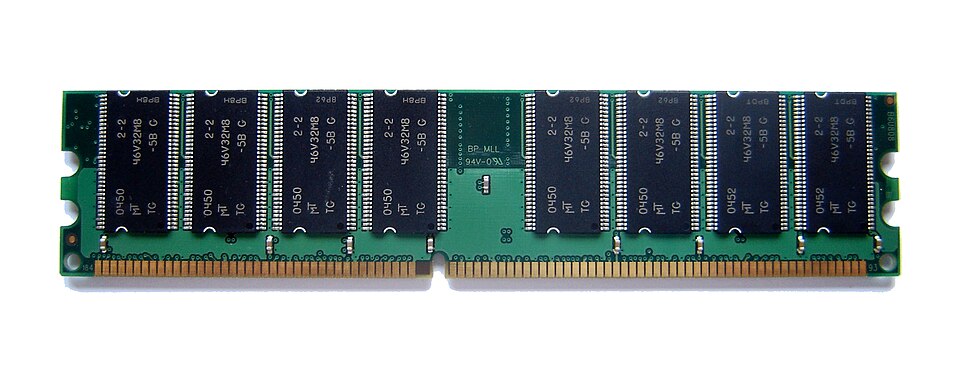
SK Hynix announced it will invest 54 trillion Korean won, equal to $38.1 billion, to build two new memory chip facilities in South Korea. The company is the second largest RAM and NAND chip manufacturer in the world, behind Samsung. Officials said the new plants will help the company keep pace with what they described as explosive demand for memory products driven by the AI data center boom.
According to a report by Engadget, the investment is split between two sites. SK Hynix will put 35.2 trillion won, about $24.9 billion, into a fabrication plant in Yongin that will produce HBM and other DRAM products. Another 19.1 trillion won, roughly $13.2 billion, will go toward a facility in Cheongju focused on NAND storage chips.
"This investment is a decision made to seize opportunities in line with the market's growth speed... we reached this investment decision after a thorough review of market demand," a SK Hynix official said in a statement.
The first cleanroom is scheduled to start production as early as June 2029. That timeline means relief for consumers hoping for lower prices on everyday electronics is still years away. Higher memory prices have already pushed up costs for smartphones, gaming consoles, and personal computers, as chip profits have soared for manufacturers including Samsung, SK Hynix, and Micron.
The investment reflects a broader bet that demand for AI-related memory products will keep growing. Some analysts have raised concerns that the current boom could eventually slow, but the multi-year construction window gives SK Hynix room before those risks fully materialize.
Counterpoint Research analyst Neil Shah told CNBC that "with demand growing even faster than planned capacity, memory prices are unlikely to soften before the end of 2028."
There is another factor keeping consumer prices elevated. Manufacturers including Samsung and SK Hynix have been directing the majority of their chip output toward data center customers rather than consumer electronics. Micron has gone further, abandoning the consumer memory market entirely to focus on AI products. That shift in priorities means that even as total production capacity grows, the share available to everyday buyers may not increase significantly.
The Yongin plant, which will receive the larger share of the investment, is central to SK Hynix's strategy around high bandwidth memory, or HBM. HBM chips are a key component in the graphics processors used to run AI workloads, and SK Hynix has positioned itself as a leading supplier to companies building out large-scale AI infrastructure. Demand for HBM has grown faster than many in the industry predicted, and the new facility is intended to secure the company's position in that market over the next decade.
The Cheongju facility, focused on NAND flash storage, addresses a separate but related segment of the AI supply chain. Data centers require large amounts of fast storage alongside processing memory, and NAND demand has followed a similar upward trajectory.
Together, the two plants represent one of the largest single capital commitments in the company's history. SK Hynix has not announced a full construction timeline for either site beyond the June 2029 target for initial production at the first cleanroom.