

Understanding how human language evolved is one of the hardest problems in science to unpick, since writing is a relatively recent innovation. Also, the vocal tracts and brains of our ancestors did not fossilize as they were made of soft tissue. One of the most prominent theories about the origins of human language is that our ancestors started to communicate using gestural language.
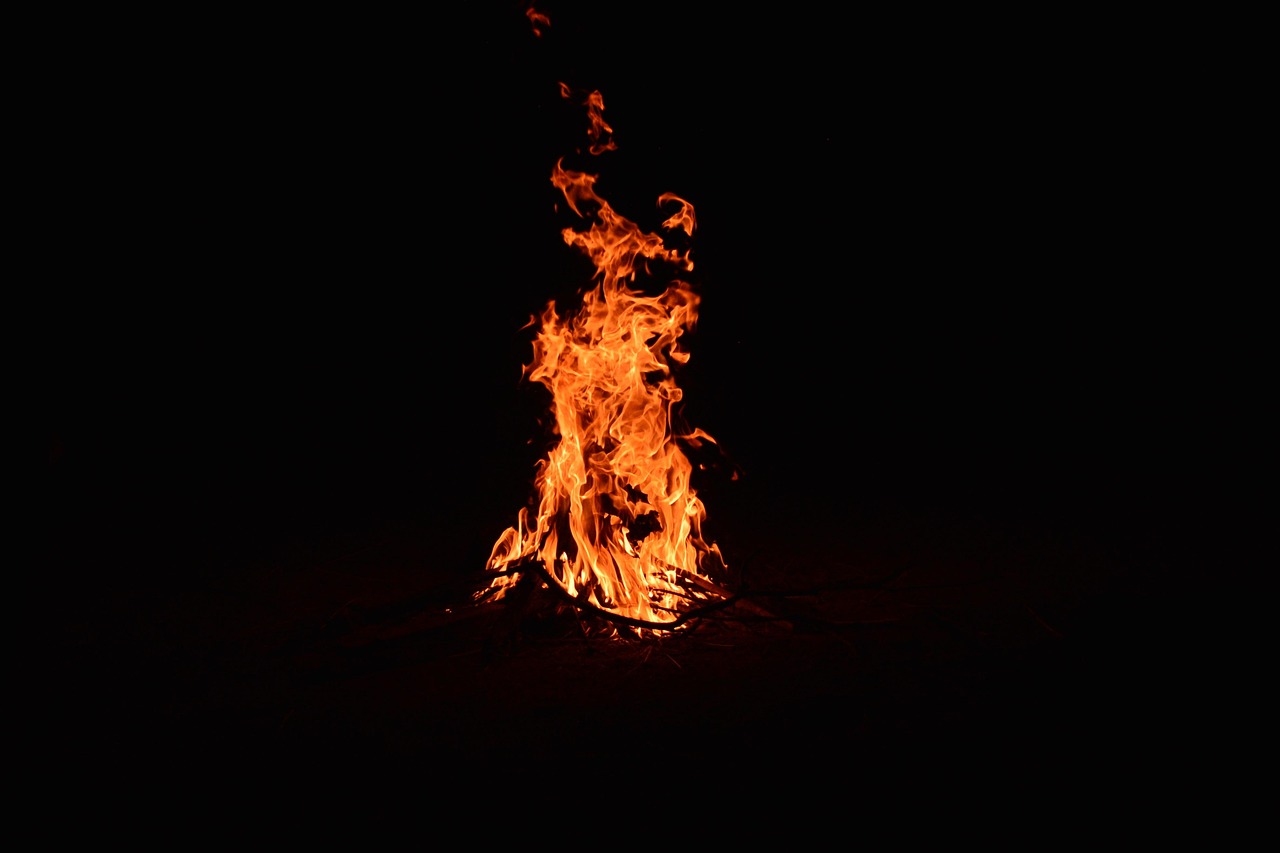
A new theory suggests that firelight may have played a key role in shaping how spoken language developed. This idea builds on the understanding that early humans likely used gestures and visual signals before developing complex speech, according to Scientific American.
The theory does not suggest that firelight trained early humans to make more precise facial movements. Instead, researchers argue that the dim light around a fire may have made it harder for gestures to carry the most important parts of a message. Speech would have allowed people to communicate after dark without needing to clearly see every movement.
The new theory was developed by Catherine Hobaiter of the University of St Andrews and Nathaniel Dominy of Dartmouth College. Their paper was published September 2 in Proceedings of the Royal Society B.
Researchers believe that the shared experience of gathering around fires may have helped early humans form stronger social bonds. The new paper focuses especially on storytelling around fires rather than communication for practical daily tasks.
Stories can describe people and events that are not physically present. They can also deal with the past and future or with imaginary events. Hobaiter and Dominy argue that this type of storytelling may have encouraged language to become more structured and less dependent on physical gestures.
The theory does not dispute that gestural communication was important in early human development. Instead, it suggests that firelight may have accelerated the shift from gestures to speech.
Scientific American noted that gestures are useful when people do not share a language because many gestures have meanings that can be understood without prior knowledge. Chimpanzees and gorillas also use systems of gestures. These observations have helped support theories that human language may have had gestural roots.
The use of fire for warmth, cooking, and protection may have also created a consistent environment for social interaction. Fire allowed social activity to continue after sunset and gave early humans additional time to gather together.
The researchers also examined the physical properties of firelight. Fire produces very little blue light compared with modern electronic screens. The researchers argue that this could have allowed people to remain socially active after dark without strongly suppressing melatonin and interfering with sleep.
Fire also flickers. Research has shown that neurons in the brain can synchronize with flickering light. Hobaiter and Dominy suggest that this effect might have encouraged synchronized behavior and stronger feelings of social connection among people gathered around a fire.
Some researchers argue that the emotional and cognitive benefits of group gathering around fire may have supported language evolution. The theory is not universally accepted, but it adds a new perspective to the ongoing debate about how language first developed.
Earlier research has also found a strong connection between fire and storytelling. Anthropologist Polly Wiessner studied conversations among Ju/'hoansi hunter-gatherers in southern Africa. Her research found that daytime conversations focused heavily on practical and economic matters while nighttime conversations around fires were much more likely to involve stories.
It highlights how environmental factors like firelight may have influenced human cognitive development and social behavior. The researchers argue that fireside storytelling could have helped humans communicate about distant places and people as well as past and future events.
More research may be needed to fully understand how this environmental factor contributed to language development. Theories like this one help scientists piece together the complex history of human communication and cognition.
While many aspects of early human life remain uncertain, the role of fire in shaping social behavior is well documented. Evidence for regular human use of fire extends hundreds of thousands of years into the past although researchers continue to debate when controlled fire became common.
The connection between fire, light, and language is still being explored by researchers studying early human behavior. As more evidence emerges, this theory may help explain how spoken language became a dominant form of communication among humans.
The authors stress that their proposal can be tested. Their paper makes predictions about the effects of firelight and fireside social behavior that future research could examine.
Whether or not firelight directly caused the evolution of speech, it remains a powerful symbol of early human development and social life.