

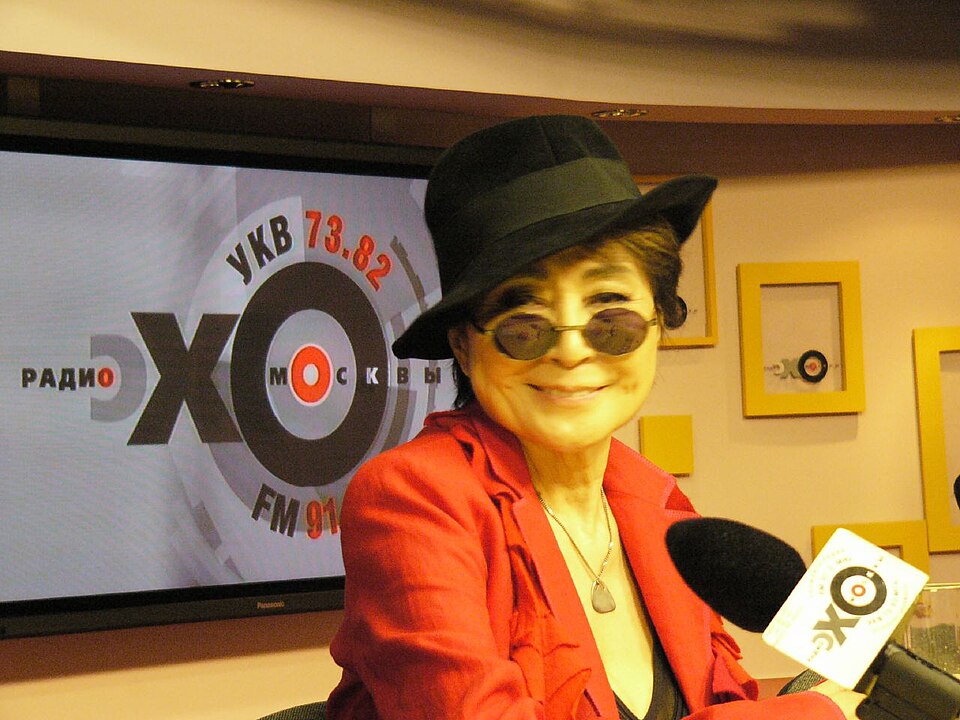
A tribute concert celebrating the music of Yoko Ono drew a crowd of fans and musicians to the outdoor plaza of Los Angeles' the Broad museum for an event billed as Yoko Only: A Night Celebrating the Music of Yoko Ono.
Ono, who is 93, was not present. But the 19-song set, performed mostly with Yo La Tengo serving as the house band, covered a wide range of her catalog. According to Rolling Stone, the setlist stretched from avant-garde works to bona fide hits, including 1981's disco track Walking on Thin Ice and No, No, No, a song Ono wrote in reaction to her husband's murder.
Yo La Tengo expanded to a five-piece for the evening, joined by Wilco guitarist Nels Cline and Cibo Matto's Yuka Honda. Honda curated the event, selecting both performers and songs, and played keyboards throughout the night. The concert was presented alongside the museum's ongoing special exhibition, Yoko Ono: Music of the Mind.
Yo La Tengo guitarist and singer Ira Kaplan introduced Ono's 1973 song What Did I Do! with a note of deadpan humor. "I'd like to dedicate this to the Beatles," he said from the stage. He added, by way of explanation, "It's been long enough that we no longer bear a grudge for them trying to break up the Plastic Ono Band."
Bikini Kill's Kathleen Hanna joined Sleater-Kinney's Corin Tucker to perform No, No, No. Backstage before the show, Tucker spoke about Ono's influence on her generation. "Yoko Ono was just so ahead of her time and so influential to my generation, the riot grrrl generation," Tucker said. "She was a direct influence for us of someone who was, like, no filter. Music is about expressing yourself and about being who you truly are and putting out these ideas into the world. That was a huge impact on us."
Tüneyards' Merrill Garbus opened the evening with We Are All Water. Deerhoof singer Satomi Matsuzaki performed The Playful Tabeti, described as staccato and percussive.
The concert also covered AOS, Ono's 1970 recording made with the Ornette Coleman Quartet, representing one of the more experimental corners of her catalog.
Ono remains one of the more singular figures in music history. Her approach to singing and composition has remained distinct from mainstream conventions throughout her career, and the Broad event drew what Rolling Stone described as geezers and hipsters of all stripes pressing up to the stage.