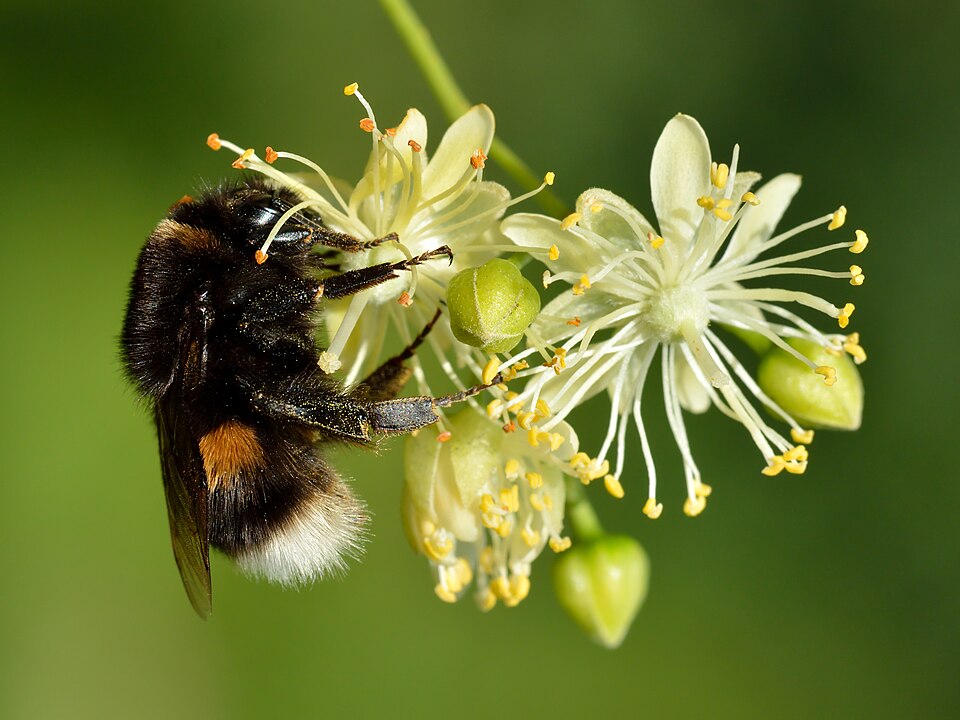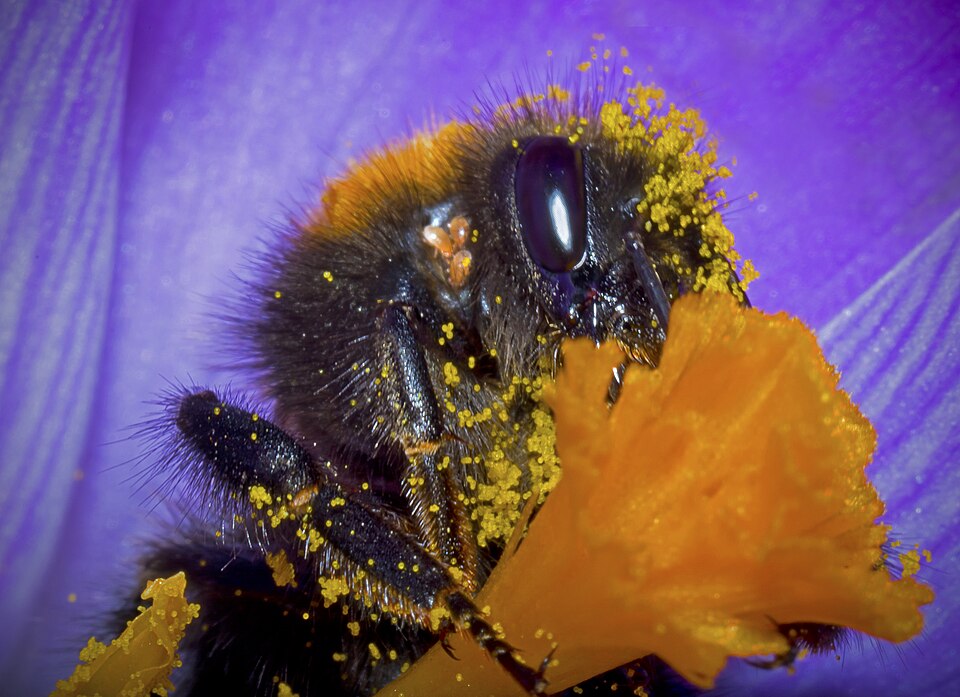
Worker bumblebees learn to recognize their queen's scent through experience rather than being born with that recognition already built in, according to a new study from Penn State published in the journal Communications Biology.
The finding pushes back against a long-held assumption about how social insects operate. Scientists had generally believed that worker bees, ants, and termites respond to the chemical signals of their queens through fixed, instinctive reactions that require no learning at all. The new research suggests that process is significantly more flexible.
For the study, researchers applied one of two harmless floral scents to eight buff-tailed bumblebee queens as those queens built their colonies. Four queens were treated with a compound that smelled similar to grape popsicles. The other four were treated with a compound that smelled like anise. Worker bees in each colony grew up tending to a queen who carried one of these added scents.
Later, the researchers placed those worker bees in a T-shaped maze and gave them a choice: walk toward the scent associated with their queen, or walk toward an unfamiliar odor they had never encountered. The workers consistently preferred the smell linked to their queen, which the researchers interpreted as evidence of learned association.
Etya Amsalem, associate professor of entomology in Penn State's College of Agricultural Sciences and the study's lead author, said the results change how scientists should think about chemical communication in insect societies. "Insects are often thought of as 'hard-wired' animals with behavior that is largely preprogrammed and driven by instinct — especially when it comes to chemical communication, such as worker bees recognizing a queen's pheromones," she said. "These findings demonstrate that these mechanisms are much more flexible and adaptable than previously thought."
Pheromones typically produce automatic responses in insects. A chemical signal arrives, and the insect reacts in a predictable way without needing any prior experience. In bee colonies, this system has long been thought to be how workers stay focused on caring for the queen and her offspring rather than attempting to reproduce themselves.
Amsalem noted that the picture is more complicated. "These pheromones influence both worker behavior and physiology, helping maintain the colony's social organization," she said. "However, it is still unknown how flexible these responses are and whether workers can learn and update how they perceive and respond to the queen over their lifetime."
The study's design, pairing an unfamiliar smell with a queen repeatedly over time, showed that young workers incorporated that scent into their understanding of who the queen was. "By repeatedly pairing these new scents with the queen, young workers grew up learning that the added odor was part of the queen's identity," Amsalem said.
The researchers described the findings as improving the broader understanding of how social behavior is regulated in insect societies. Whether similar learning mechanisms operate in other social insects such as ants and termites remains an open question that future research may address.