A team of theoretical physicists has proposed using one of the oldest precision experiments in physics to search for a type of hypothetical particle that could make up a fraction of dark matter. The paper was published in Physical Review Letters and reported by Phys.org.
The particles in question are called millicharged particles, or mCPs. They carry a very small electric charge, a tiny fraction of the charge carried by an electron. Because they interact so weakly with ordinary matter and electromagnetic fields, they have so far evaded detection in conventional particle physics experiments.
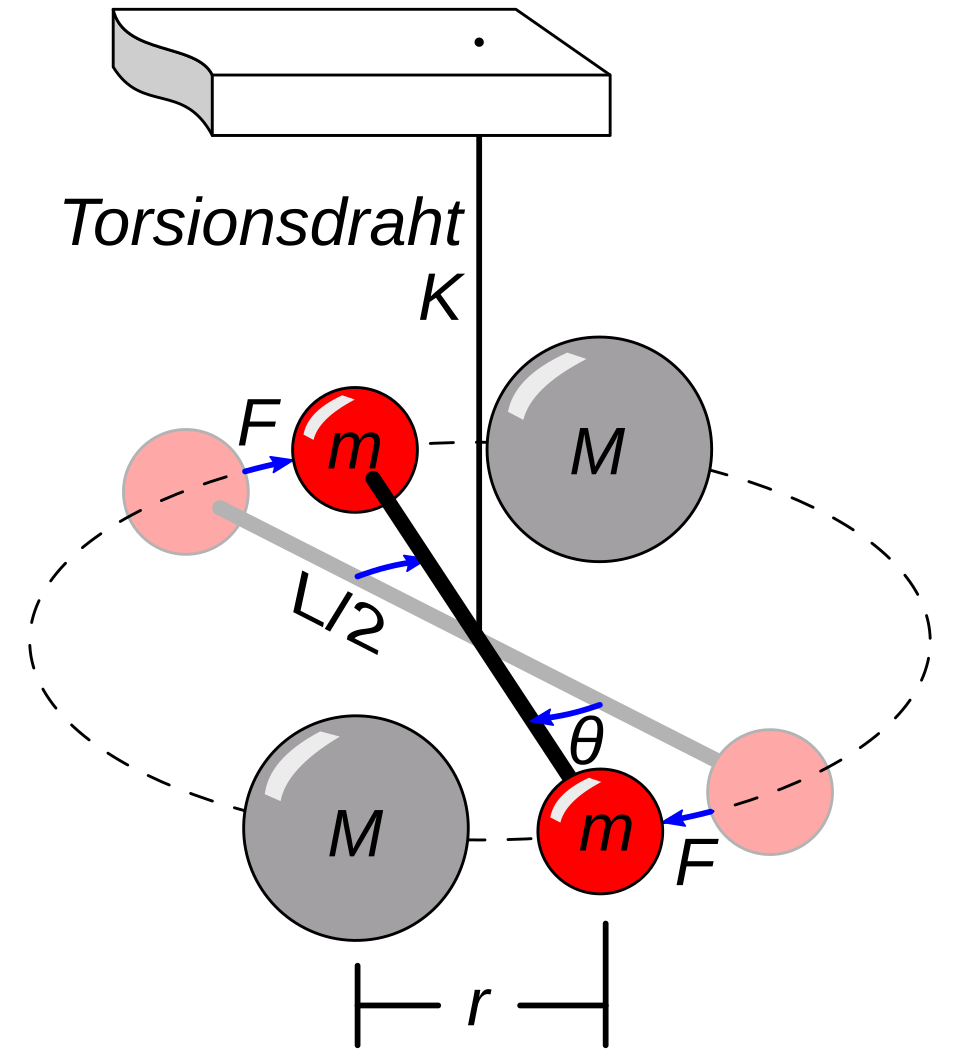
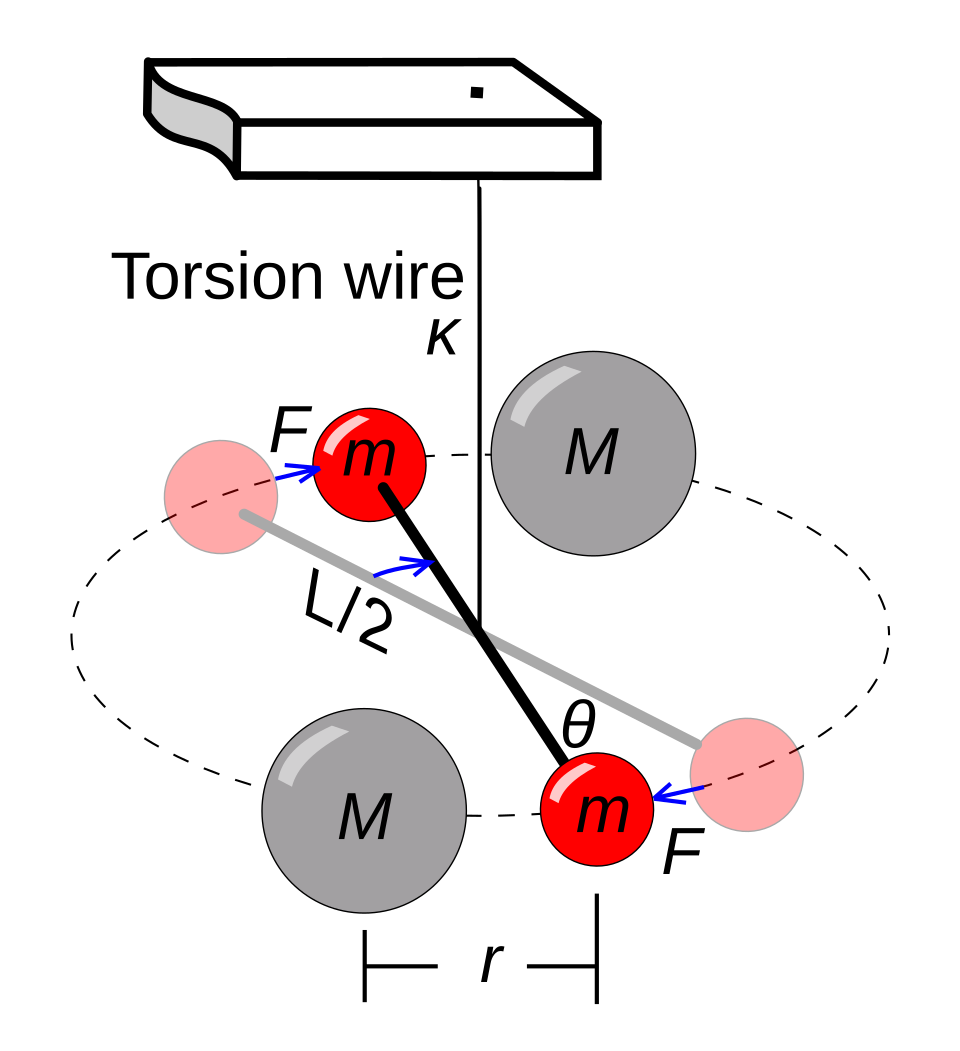
Researchers at Fermi National Accelerator Laboratory, Stanford University, and the University of Delaware looked at whether the Cavendish test, first developed centuries ago, could be adapted to find them. The original Cavendish experiment was designed to measure gravitational force between masses. It is one of the most precise experimental setups in the history of physics.
"mCPs, new particles that possess an electric charge that is a small fraction of the electron charge, are one of the simplest extensions of the Standard Model of particle physics," said Harikrishnan Ramani, the paper's senior author. "However, they are poorly constrained despite decades of scrutiny."
Ramani and co-authors Asher Berlin, Zachary Bogorad, and Peter W. Graham proposed building a device that can oscillate the electric charges of accumulated mCP particles and measure the weak electric field produced during that process. The signal they are looking for is a deviation from Gauss's law, which describes how electric fields behave around charged objects.
"Historically, such a device was used to set limits on the photon's mass," Ramani explained. "It turns out that the nonzero nature of the photon's mass and the presence of mCPs, although somewhat unrelated, can both cause the same signal—deviations from Gauss' law."
The researchers' projections suggest this approach could be three times more sensitive than existing or planned particle accelerator experiments. The team focused specifically on mCPs predicted to accumulate naturally near Earth, which would make them accessible to a ground-based experiment rather than one requiring a large accelerator.
Some studies have suggested that millicharged particles could account for a small fraction of dark matter, the unidentified form of matter that makes up roughly 27 percent of the universe. Dark matter does not emit, absorb, or reflect light, and its composition remains one of the biggest unsolved problems in physics. The Cavendish-based approach would not confirm dark matter directly, but it could either detect mCPs or place tighter limits on their properties than any current method allows.