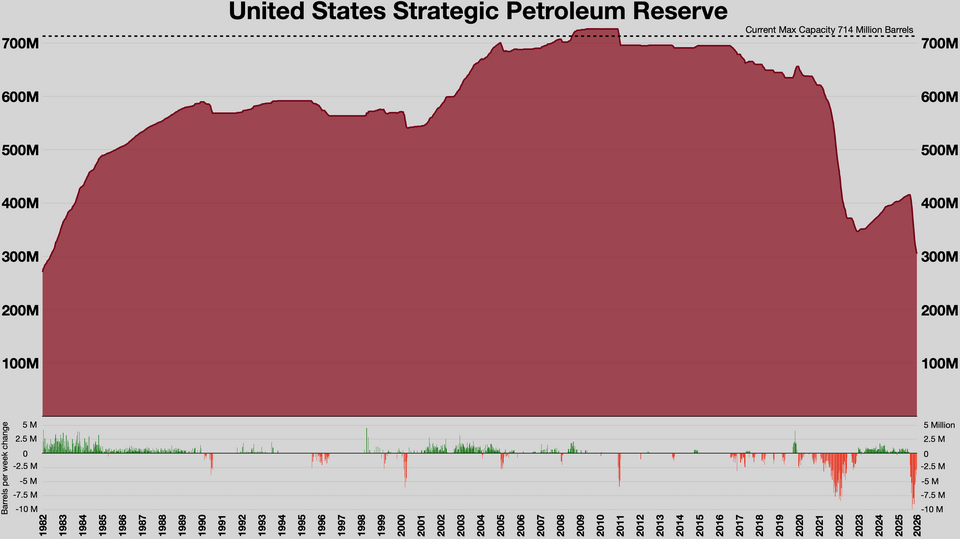
The U.S. Strategic Petroleum Reserve has dropped below 300 million barrels for the first time since it was filled in the early 1980s, according to Department of Energy data released Monday. The drop comes as the government releases 172 million barrels to offset the oil supply disruption caused by the war with Iran. When the drawdown is finished, the reserve will sit at around 243 million barrels.
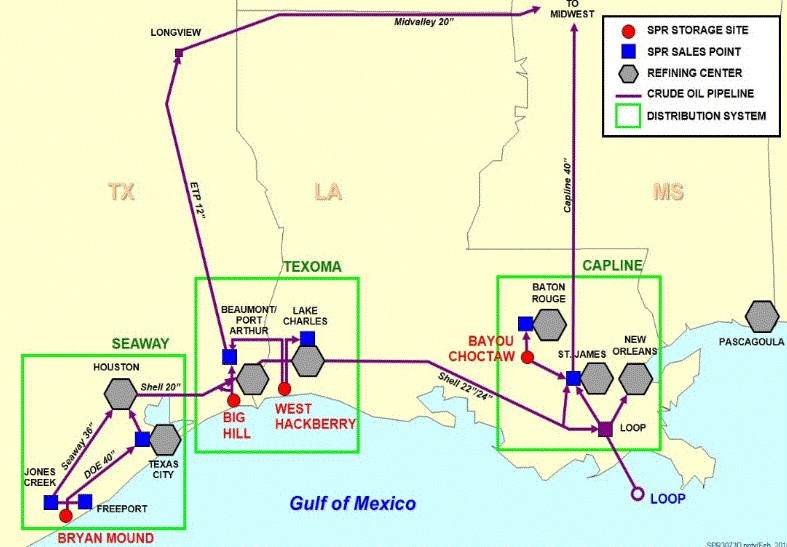
The SPR holds its oil in 60 salt caverns thousands of feet underground at four sites along the Gulf Coast in Louisiana and Texas. Energy experts are now warning that drawing the reserve down this far could physically damage those caverns, making it harder to respond to future energy crises, according to a report by CNBC.
The Energy Department has said at least 70 million barrels must remain in the reserve to safely manage the caverns. But Amos Hochstein, a senior energy advisor to President Joe Biden, disputed that figure sharply.
"Don't believe the people out of the government that are saying the SPR can go to 70 million barrels. It's nonsense," Hochstein told CNBC's Squawk Box on Thursday. At that level, the reserve would be depleted to "the point of never resurrecting it," he said.
Hochstein had also raised the alarm earlier. Speaking at an Atlantic Council event in June, he said the risk begins well above the 70-million-barrel mark.
"I don't know anyone who believes we can go below 300," Hochstein told CNBC's Brian Sullivan. "I know plenty of people who think we can't get near 300 because physically you will damage the caverns where the oil is stored."
The Trump administration rejected those claims. Energy Department spokesman Ben Dietderich said the concerns about cavern collapse are false.
"The caverns are always full. All that changes is the ratio of oil and water that is filling them," Dietderich told CNBC in a statement. The Trump administration is "responsibly managing the SPR as the critical national security asset it was designed to be," he said.
The debate is not new or strictly partisan. Republican lawmakers raised similar concerns in 2022 when the Biden administration released a record 180 million barrels in response to Russia's invasion of Ukraine. The SPR fell below 350 million barrels under Biden before being refilled to around 415 million barrels ahead of the current war.
The Government Accountability Office addressed the long-term structural risk in a May report. While the majority of the SPR's caverns were found to be in "very good condition" after the 2022 drawdown, the GAO cautioned that repeated partial drawdowns followed by refill can leach a single part of a cavern repeatedly, leading to undesirable shapes.
"However, every drawdown cycle expands cavern volume and reduces the spacing between caverns within the salt dome, which ultimately reduces their long-term viability," the GAO said.
The drawdown is ongoing. No timeline has been announced for when or whether the reserve will be refilled.