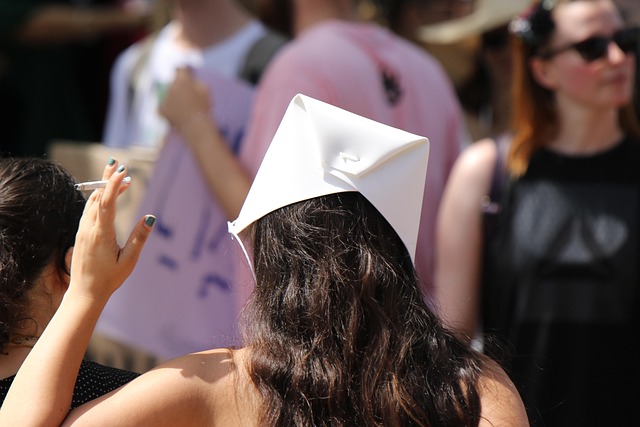
The red cloak and white bonnet worn by handmaids in Margaret Atwood's most famous novel have become a symbol of political protest around the world. Atwood says the look came from a cleaning product that frightened her as a child.
According to CBS News, Atwood was interviewed at the Thomas Fisher Rare Book Library in Toronto, where she keeps stacks of research for her novels. She described the image that shaped the handmaid's bonnet: "The Old Dutch Cleanser box of the 1940s traumatized me as a child. So, it shows a woman whose face is covered by this bonnet, holding a stick and chasing something... pretty scary."
Atwood follows a strict rule when writing: nothing goes into a plot unless it happened somewhere, at some time. That rule governed The Handmaid's Tale, published in 1985 and later adapted into an Emmy Award-winning series for Hulu. Research in her archive includes a news clipping about Romania, from which she quoted directly: "Persistent non-pregnancy will be considered a crime against the state."
The color choices for the novel's costumes were also deliberate. "For the 'Wives,' it would be blue, which was the Virgin Mary color," Atwood said. "[But] for the handmaids, it would be red, which is the Mary Magdalene and 'Scarlet Letter' color."
Atwood said the novel had several entry points, but a key one came just after Ronald Reagan was elected in 1981. "And this was the moment at which the religious right was getting organized as a political force," she said. A friend told her about a vision in which women would return to the home. That raised a question in Atwood's mind: "My question to myself was: now that they're all running around having credit cards and jobs, how are you going to get them back into the home?"
She also cited George Orwell as a major influence: "I had read '1984' as a very young teenager and been extremely impressed by it." She wrote much of The Handmaid's Tale on a rented typewriter in 1984 West Berlin. Visits to the Eastern Bloc gave her direct exposure to state surveillance and the absence of freedom.
Atwood set the novel's dystopian society at Harvard University, a location she knows well. She was a graduate student in Cambridge in the 1960s. She explained why Harvard made sense as the heart of a collapsed America: "It was right in the heart of what people believed-- in the 80s, 70s, and 60s, and 50s-- what they believed America to be. And what they believed it to be was the antithesis of the USSR."
On the broader logic of totalitarian dress codes, Atwood was direct: "Well, if you have a cult, and if you [have] totalitarianism, you have to have outfits."