

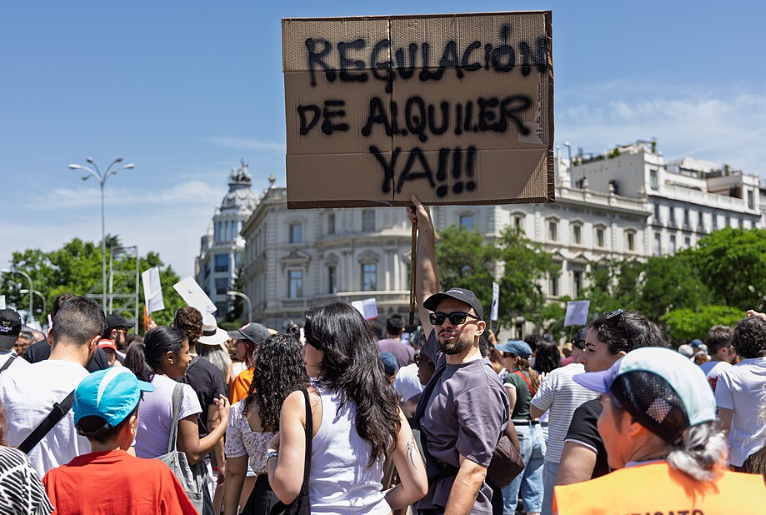
Millions of workers across Spain joined a nationwide general strike on Wednesday, November 11, 2026, protesting soaring housing costs, stagnant purchasing power and the growing difficulty of finding affordable homes. The 24-hour walkout disrupted public transportation, factories, ports and schools as demonstrators filled streets in Madrid, Barcelona and other major cities.
The strike was organized by Spain's two largest labor unions, CCOO and UGT, alongside smaller unions and housing organizations. It was the country's first nationwide general strike in 14 years and came less than three weeks before a general election scheduled for November 29.
Protesters marched under the slogan "Salaries. Housing. Prices." Their demands included stronger tenant protections, higher wages and government action to reduce the cost of renting and buying property.
The demonstrations were largely peaceful during the day, but confrontations developed in Barcelona and Madrid as evening approached. Police reported dozens of arrests after some protesters damaged property, set fires and clashed with officers.
Hundreds of Thousands Protest in Madrid and Barcelona
Barcelona witnessed one of the day's largest demonstrations, although organizers and city officials reported sharply different attendance figures. Housing activists estimated that 400,000 people participated, while municipal authorities counted approximately 55,000.
The march moved through central Barcelona behind a banner reading "Live. Not Just Survive." Demonstrators carried signs criticizing landlords, property investors and government housing policies.
In Madrid, authorities estimated that 120,000 people attended demonstrations despite heavy rain. Protesters marched through the city center carrying umbrellas and signs demanding affordable housing.
Among them was 74-year-old Almudena López, who told The Associated Press that her 43-year-old son could not afford to purchase a home. Despite working in information technology, he was renting a small room in a shared apartment.
López recalled that earning a university degree once gave young people a reasonable opportunity to find employment and save for a home. She said the situation facing younger generations had changed dramatically.
Housing activist Valeria Racu criticized property speculation and accused successive governments of failing to protect renters. She said the movement intended to maintain pressure regardless of which political party won the upcoming election.
The demonstrations reflected frustration among people who work full time but cannot afford suitable housing. Young adults and families have faced growing challenges as rent increases have outpaced wage growth.
Strike Disrupts Public Transportation and Industry
The nationwide walkout affected transportation networks and major industrial operations. Barcelona's metro and public buses suspended services outside designated rush-hour periods, forcing commuters to change their travel plans.
Rail services were also disrupted across Spain. State-owned operator Renfe reported cancellations affecting approximately 24% of scheduled high-speed and long-distance trains.
Commuter and medium-distance rail services experienced additional cancellations. Airports were affected as well, with preliminary figures showing 263 canceled flights, representing about 5.8% of scheduled operations.
Industrial facilities experienced substantial interruptions. Union representatives reported major work stoppages at automobile factories, ports and logistics centers.
CCOO and UGT claimed participation reached approximately 90% in the automotive and port sectors. They reported rates of 85% in meat processing, 82% in waste collection and 75% in energy production.
Several automobile plants suspended production, while shipping operations were disrupted at ports including Barcelona, Tarragona, Valencia and Algeciras. Workers also established picket lines outside distribution centers and transportation facilities.
The Spanish news agency EFE reported that electricity consumption fell by as much as 15.5% during one morning period compared with forecasts. The decline suggested that industrial and commercial activity had been affected, although electricity demand alone cannot establish how many workers joined the strike.
Some businesses and schools closed for the day, while many restaurants, stores and other establishments continued operating. The disruption therefore varied considerably by region and industry.
Unions and Employers Disagree Over Participation
The strike's overall participation became a major point of disagreement between labor organizations and business representatives.
Union leaders described the action as successful and said participation exceeded their expectations. The Reuters news agency reported that approximately four million workers joined the stoppage, representing roughly one-fifth of Spain's workforce.
However, Spain's leading employers' association, CEOE, disputed claims of widespread participation. It estimated that only about 5% of workers joined the strike and said most businesses operated normally.
Both sides acknowledged that participation was stronger in heavy industry and transportation than in retail and hospitality. The conflicting estimates reflected different assessments of how extensively the walkout affected the economy.
CCOO leader Unai Sordo said the demonstrations demonstrated growing public frustration over housing affordability. UGT officials also emphasized the connection between wages and the amount workers must spend on accommodation.
Business representatives argued that the strike was unnecessarily disruptive and questioned its timing during the election campaign. They also said Spain needed policies that encouraged construction and increased the available housing supply.
Clashes Break Out After Barcelona Demonstration
Although most participants protested peacefully, confrontations erupted after the main Barcelona march ended.
Groups of protesters smashed storefront windows along Paseo de Gracia, one of the city's busiest shopping streets. Some set dumpsters and street furniture on fire, while others launched fireworks toward police.
An Apple store was among the businesses affected by damage. Riot police responded to disturbances as officers attempted to restore order.
Clashes also occurred in Madrid, where police used crowd-control measures including pepper spray and tear gas. Reuters reported that officers also used foam projectiles during confrontations near Plaza de España.
The Associated Press reported that police had made 49 arrests nationwide as of its reporting. Other accounts published at different times provided different arrest totals, reflecting the changing situation throughout the day.
The incidents did not represent the conduct of all demonstrators. The main marches brought together large crowds of workers, families and housing activists who protested without violence.
Housing Costs Have Become a National Crisis
Spain's housing market has become increasingly difficult for renters, particularly younger workers living in major cities. Average rents have nearly doubled over the past decade, creating financial pressure even for households with steady employment.
The Spanish Youth Council estimates that average monthly rent is approximately €1,176. That figure represents nearly 99% of the average monthly wage earned by a young person in Spain.
The Bank of Spain has estimated that the country faces a housing shortage of roughly 750,000 homes. The shortfall could exceed one million by 2028 if construction fails to keep pace with demand.
Housing activists argue that speculative investment, inadequate tenant protections and insufficient public housing have contributed to the problem. They want stronger restrictions on rent increases and more security for people approaching the end of rental agreements.
Labor unions are also demanding higher wages and expanded public housing. Their proposals include salary increases, stronger collective bargaining protections and measures intended to prevent housing costs from consuming household incomes.
Employers and property industry representatives have emphasized expanding construction as another way to address shortages. They argue that increasing supply and reducing building costs would make more homes available over time.
The competing proposals reflect a broader disagreement about how Spain should address a crisis involving both housing availability and household purchasing power.
Strike Takes Place Ahead of November Election
The walkout occurred during a politically sensitive period for Prime Minister Pedro Sánchez and his governing coalition. Spain is scheduled to hold an early general election on November 29 following disputes over housing legislation and other political pressures.
The government's handling of housing affordability has become an important campaign issue. Opposition parties have criticized the administration's policies, while unions and tenants' groups have demanded stronger action from politicians across the political spectrum.
Some opposition leaders questioned whether the strike was intended to influence the election. Labor organizers rejected claims that their demands were limited to supporting one political party.
The government called for respect for the legal right to strike, and several ministers expressed support for the demonstrations.
The political debate is expected to continue as parties present competing proposals on rent controls, public housing investment, construction and wages.
The November 11 strike demonstrated the scale of public anger over housing costs, even as unions and employers disagreed about participation. With Spain's general election approaching on November 29, affordable housing remains a central issue for workers, tenants and political leaders.