

A senior U.S. Army officer was arrested in southwestern England on Tuesday, November 10, 2026, on suspicion of espionage involving Russia. The 41-year-old soldier was detained near Gloucester during a joint British-American counterintelligence investigation, raising concerns about the possible exposure of sensitive military information.
British authorities said the suspect was arrested under two provisions of the United Kingdom's National Security Act 2023. The alleged offenses involve obtaining or disclosing protected information and assisting a foreign intelligence service.
The soldier's identity and exact military rank have not been officially disclosed. British police confirmed that the investigation concerns Russia but have not released details about the suspected activities or identified any information that may have been compromised.
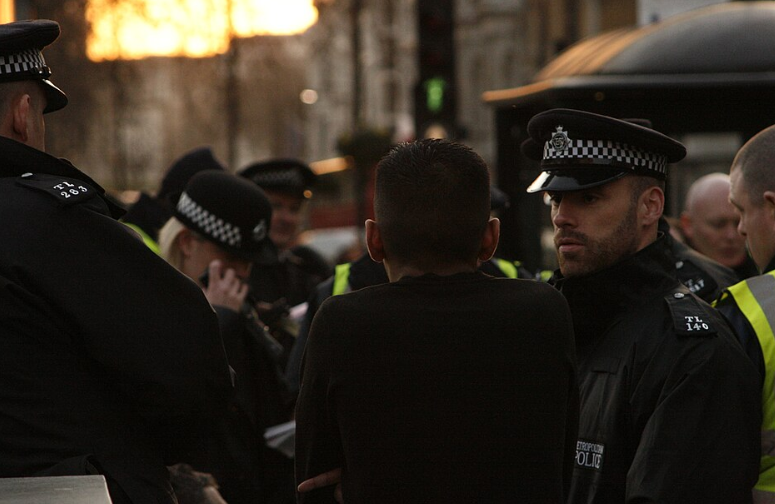
The Metropolitan Police said the man was being held at a London police station following his arrest. Officers also searched two locations in Gloucestershire as investigators continued gathering evidence.
The case involves cooperation among British counterterrorism police, the FBI, American military counterintelligence personnel and Britain's domestic security service, MI5.
Suspect Reportedly Served at NATO Headquarters
The arrested soldier was stationed at Imjin Barracks near Innsworth, Gloucestershire, according to American officials cited by CBS News and ABC News. The British military installation houses the headquarters of NATO's Allied Rapid Reaction Corps.
The corps is responsible for preparing and coordinating military forces that could be deployed during an international crisis. Its headquarters brings together personnel from several NATO member countries, including the United States.
American service members assigned to the installation work alongside allied military personnel on planning, coordination and other defense-related activities. Some positions involve access to sensitive operational information and intelligence.
U.S. officials described the arrested man as a senior soldier who had been entrusted with sensitive information. They did not publicly identify his assignment or specify the material investigators believe was involved.
The Washington Post reported that officials familiar with the investigation suspected the officer of attempting to obtain information from the NATO facility for delivery to Russia. Those officials said no sensitive information had been transferred, although that assessment has not been independently established through publicly released evidence.
The distinction is important because British police have not confirmed that any classified documents reached Russian intelligence. They have also not explained whether investigators believe the suspect was acting alone or communicating with other individuals.
The investigation therefore remains focused on allegations rather than any publicly established act of espionage.
British Police Investigate Two National Security Offenses
The suspect was arrested on suspicion of violating Sections 1 and 3 of Britain's National Security Act 2023. Parliament introduced the legislation to strengthen protections against espionage, foreign interference and other threats to national security.
Section 1 concerns obtaining, copying, retaining or disclosing protected information under circumstances that satisfy the law's national security and foreign-power requirements.
Protected information can include documents or other material to which access is restricted for security reasons. The offense does not require information to have already been made public.
Section 3 addresses assistance to a foreign intelligence service. It can apply to conduct intended to support an intelligence organization acting for another country, subject to the conditions established in the law.
Both provisions are designed to address conduct that could threaten British security or interests. The law also permits investigations into certain activities involving foreign governments and their intelligence organizations.
An arrest under these provisions does not mean that a suspect has been convicted or even formally charged. Prosecutors must establish whether the available evidence supports criminal proceedings.
As of November 11, authorities had not publicly announced formal charges against the American soldier. His continued detention was part of the ongoing investigation.
FBI and US Army Respond to Arrest
FBI Director Kash Patel described the operation as an important development involving allegations of espionage that concern American and allied national security.
In a statement released through British police, Patel said the FBI would not tolerate conduct by individuals who violate their obligations to the United States or endanger its security partnerships.
He thanked British counterterrorism police, MI5, British defense counterintelligence personnel and U.S. Army investigators for their cooperation.
Brigadier General Sean Stinchon, commanding general of U.S. Army Counterintelligence Command, also addressed the arrest.
Stinchon described the alleged conduct of a senior soldier entrusted with sensitive information as a reminder that insider threats remain a persistent security concern.
He praised the cooperation between American and British authorities and encouraged military personnel who observe suspicious activity to report it through established counterintelligence channels.
Deputy Assistant Commissioner Vicki Evans, the senior national coordinator for Britain's Counter Terrorism Policing, said the arrest resulted from close coordination between the two countries.
Evans emphasized that the allegations were serious and that investigators were continuing their work. She said the operation demonstrated the importance of international law enforcement and intelligence partnerships.
The public statements did not disclose how the suspect came under investigation, when authorities first became suspicious or what evidence prompted the arrest.
Investigation Separate From Threats at British Airbases
British police specifically stated that the espionage investigation was unrelated to other counterterrorism operations underway in the country.
That clarification followed separate security concerns involving American military facilities in Britain, including RAF Fairford in Gloucestershire and RAF Mildenhall in Suffolk.
RAF Fairford has hosted U.S. Air Force bombers involved in military operations connected to the conflict with Iran. British and American authorities previously investigated a suspected threat involving the installation.
Following those concerns, the U.S. Air Force moved bombers away from RAF Fairford. American refueling aircraft were also withdrawn from RAF Mildenhall amid separate regional security tensions.
The Associated Press reported that the suspected threat at RAF Fairford had been linked to Iran. British authorities emphasized that the newly announced investigation concerned Russia instead.
The distinction matters because the operations involve different allegations and potential security threats. Police have not announced evidence connecting the detained American soldier to the earlier airbase incidents.
The arrest occurred while Western governments were also confronting suspected Russian intelligence and sabotage activities across Europe.
Since Russia's full-scale invasion of Ukraine in February 2022, European security officials have repeatedly warned about espionage, cyberattacks and covert operations targeting governments and infrastructure.
However, those broader warnings do not establish the detained soldier's guilt or prove that the alleged conduct was part of an organized Russian operation.
Case Raises Questions About Insider Security
The arrest has attracted particular attention because the suspect reportedly served at an installation supporting NATO military planning.
Military alliances depend on the controlled sharing of intelligence and operational information among participating countries. Personnel working in sensitive positions may be able to access material that must remain protected from foreign intelligence services.
Counterintelligence programs are intended to identify potential threats involving unauthorized disclosures, foreign intelligence contacts and attempts to obtain restricted material.
Such investigations can involve cooperation between military security organizations and civilian law enforcement agencies, particularly when suspected conduct crosses national borders.
The Gloucester investigation illustrates that cooperation. British authorities are conducting the criminal inquiry while American agencies assist in examining the allegations involving one of their service members.
Officials have not disclosed whether the soldier has been suspended from military duties or whether his access to sensitive information has been revoked.
They have also not confirmed whether American military authorities intend to pursue separate proceedings under U.S. military law.
ABC News reported that the soldier could face action from both British authorities and the U.S. Army. However, the specific charges, if any, have not been announced.
For now, the immediate focus remains on the British criminal investigation and the evidence collected from the suspect and the two searched locations.
Authorities Have Not Announced Charges
The Metropolitan Police have not released a timetable for completing the investigation. Authorities also have not confirmed whether additional arrests are expected.
The soldier's identity remains undisclosed, and investigators have provided limited information about the suspected contacts with Russian intelligence.
British and American officials have emphasized the seriousness of the allegations while avoiding public claims that the suspect has committed an offense.
The central unanswered question is whether protected military information was obtained, disclosed or transferred to a foreign intelligence service. Investigators must also determine whether the evidence supports prosecution under Britain's national security legislation.
The 41-year-old American soldier remained in police custody at the time of the latest confirmed public update. British counterterrorism officers, working with American authorities, are continuing the investigation.