Mice make two very different kinds of sounds, and it turns out the brain handles them in two very different ways.
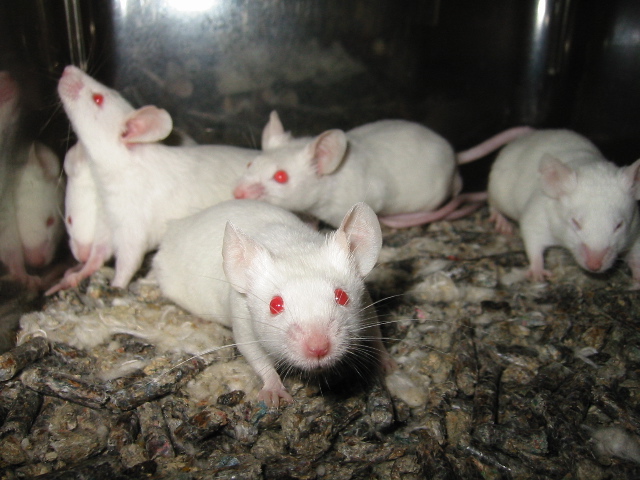
Cornell University neuroscientists have found that mice use almost completely distinct sets of neurons for their two types of vocalizations: the squeaks they produce when in distress or during fighting, and the whistle-like ultrasonic vocalizations they use when communicating socially. The discovery was published August 17 in the journal eNeuro, according to a report by Phys.org.
The research was led by Katherine Tschida, the Mary Armstrong Meduski '80 Assistant Professor of psychology in the College of Arts and Sciences, whose lab studies motor control of vocalization. Co-first authors are doctoral student Patryk Ziobro and postdoctoral researcher Da-Jiang (David) Zheng.
The team focused on a region of the brainstem called the nucleus retroambiguus, or RAm, which sits close to the spinal cord. The RAm is known to play a role in vocalization through its connections to respiration and control of the larynx, in both humans and nonhuman animals. It had been studied before in relation to mouse ultrasonic vocalizations, but its role in squeaking had never been directly examined, and the two types of vocalization had never been directly compared in this region.
To get mice to produce high rates of each type of sound, the researchers used natural mouse behaviors. They introduced an unknown female mouse to generate social ultrasonic vocalizations, triggering sniffing, following, and what the researchers described as curious ultrasonic chatter. To generate squeaking, they drew on courtship behavior, since female mice squeak frequently when being vigorously courted by a male.
The results surprised the team. "We asked, if we make a mouse produce a high rate of squeaks, how do things light up?" Tschida said. "We fully expected we would see a similar pattern to what you get in a mouse producing a high rate of social vocalizations. But when we looked at the data, we saw that the pattern looked completely different."
The study is part of a larger effort to understand how the mammalian brain organizes the control of vocalization. Tschida and her collaborators believe that different mammals and vertebrates are likely to share a great deal in common at this level of brain organization, making the mouse findings relevant beyond the species.
"Our ability to produce different vocal sounds is critical to our social identity and the ability to communicate," Tschida said. "Whether you're a human producing speech or laughter or a mouse producing social vocalizations or squeaks, mammals have a limited set of hardware in their brainstems underlying our ability to produce these vocal communication sounds."
The findings are a step toward a fuller map of how the brain controls vocalization in mammals, a question with implications for understanding speech and communication disorders in humans.