Rising carbon dioxide in the atmosphere has been driving a dramatic increase in grass growth across African savannas, and researchers say the effect has been hiding in plain sight for decades.
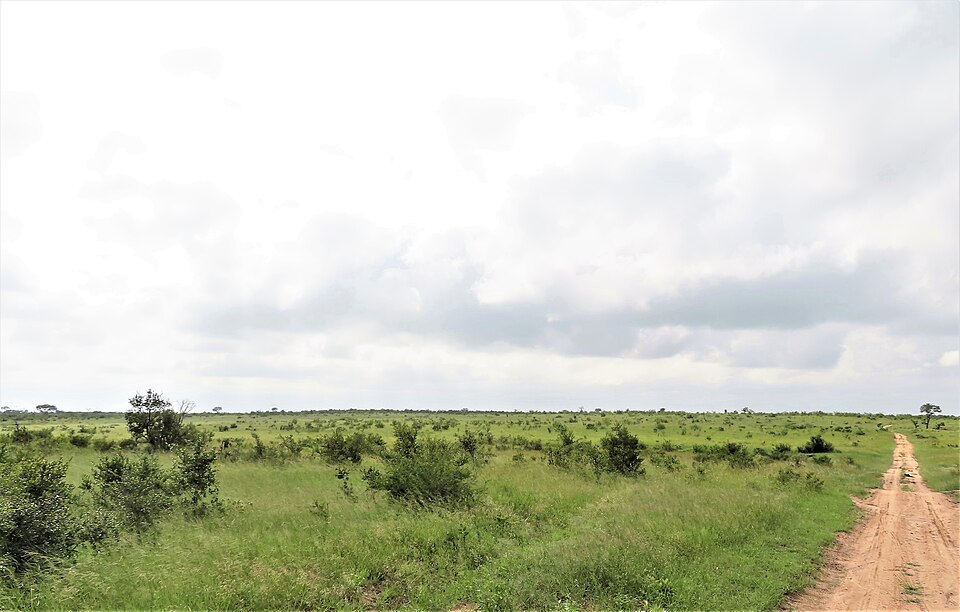
A new study published in Nature, led by the University of Sheffield, analyzed 70 carbon dioxide experiments and a 32-year record of grass production from 533 locations in South Africa's Kruger National Park. The data showed grass production in the park increased by 28% between 1989 and 2021, according to Phys.org.
The findings challenge a longstanding assumption in plant science. C4 grasses, the dominant type in tropical and subtropical savannas, were long thought to gain little benefit from rising carbon dioxide because they already use a highly efficient form of photosynthesis under hot, high-light conditions.
Dr. Kimberley Simpson, research fellow in the University of Sheffield's School of Biosciences and the study lead, addressed that assumption directly. "Our findings challenge that assumption. Under dry conditions, higher carbon dioxide helps these grasses conserve water, reduce drought stress and continue growing," she said.
The mechanism works through water conservation. Higher carbon dioxide levels help wild savanna grasses reduce water loss through their leaves. This allows them to maintain photosynthesis and produce more growth even when rainfall is scarce. The relative increase in grass growth was greatest in the park's driest areas, which lines up with the experimental findings.
The research team examined other possible causes for the increase, including rainfall, temperature, grazing, fire, nitrogen pollution, and changes in grass species. None of those factors fully explained the trend. The rise in atmospheric carbon dioxide over the same period was the most consistent explanation.
Professor Colin Osborne, also from the University of Sheffield's School of Biosciences, said the combination of controlled experiments and long-term field data made the case stronger. "Finding the same pattern in controlled experiments and across more than three decades of observations in a natural savanna provides strong evidence that rising carbon dioxide has been changing these ecosystems for some time," he said.
The stakes extend well beyond the park's borders. Savannas cover around one-fifth of Earth's land surface and contribute to approximately 30% of global plant productivity. African savannas alone cover half the continent's land surface.
Carla Staver, professor of ecology at Princeton University and study co-lead, noted the wider implications. "This increase could have important impacts on fire activity and on wildlife, as well as on the carbon cycle, in this sensitive ecosystem and others like it," she said.
More grass is not simply a positive outcome. Denser grass cover can increase the frequency and intensity of wildfires, alter habitat conditions for wildlife, and change how carbon moves through the ecosystem. The researchers describe the consequences as complex and wide-ranging.
The study draws on an unusually long and detailed dataset. The 32-year record from 533 locations inside Kruger National Park gives the findings a depth that short-term experiments cannot provide, and the alignment between laboratory results and real-world observations over three decades strengthens the case that carbon dioxide, not some other variable, is driving the change.