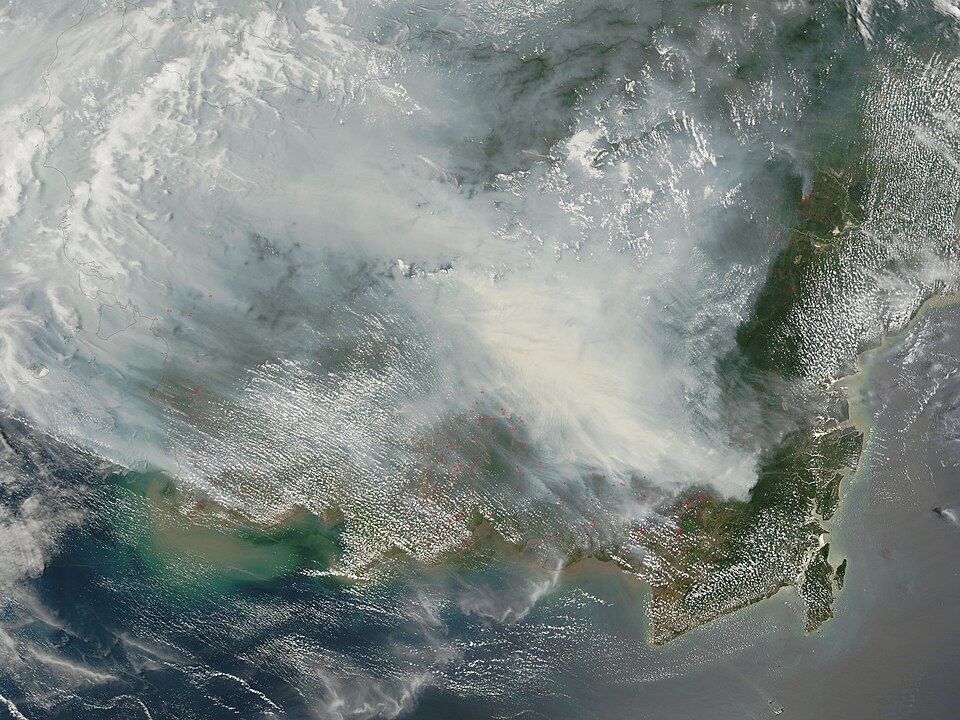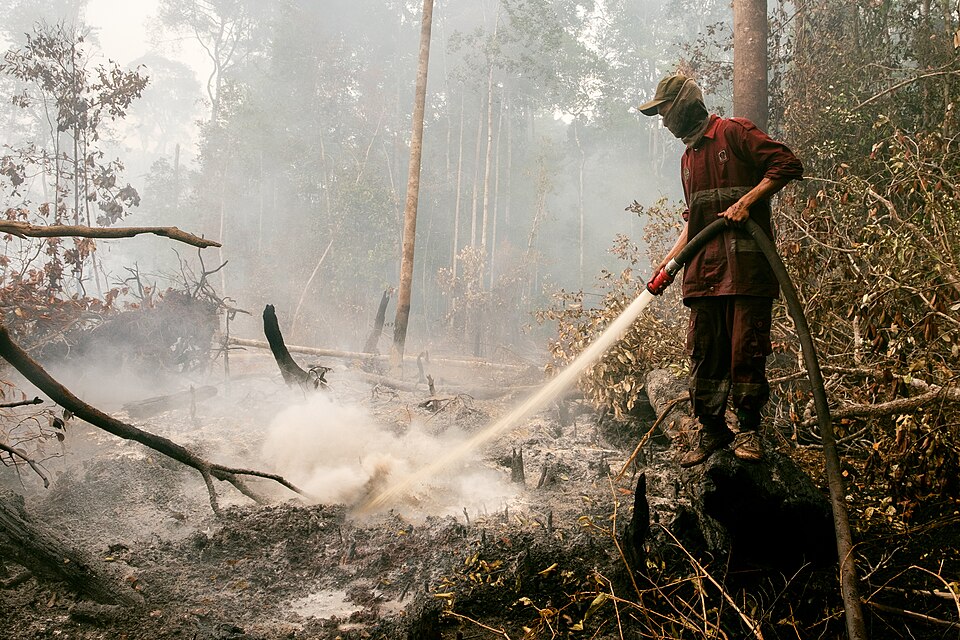
Wildfires burning across Indonesia are already producing emissions comparable to those seen during previous major El Niño years, and the season is still just beginning.
Mark Parrington at the European Centre for Medium-Range Weather Forecasts, who tracks wildfire emissions as part of the Copernicus Atmosphere Monitoring Service, said ground-based sensors in the region are measuring smoke levels that have previously been detected only during El Niño years. "And we're still at the start of the season," he said.
Wildfires normally occur in Indonesia between August and October, according to New Scientist, but are more intense in El Niño years. "Fire has certainly been greatly enhanced in those previous El Niño years," Parrington said.
The scale of what could follow is significant. During the strong El Niño of 1997 and 1998, Indonesian wildfires emitted as much as 2.5 gigatonnes of carbon dioxide into the atmosphere, equal to roughly a third of global annual fossil fuel emissions at the time. That event caused a measurable jump in global CO2 levels. During another strong El Niño in 2015, Indonesian fires emitted an estimated 1.5 gigatonnes of CO2.
The current event may surpass both. Adam Scaife at the UK Met Office described the developing situation in stark terms. "This is an unprecedented event. I have never seen an El Niño signal this intense in our forecasts," he said. "If the forecast is accurate, then 2026 will far exceed our recent experience of El Niño and its worldwide climate influences."
El Niño events are generally defined as sea surface temperatures at least 0.5 degrees Celsius above normal in a defined area of the Pacific. During the 1997 and 2015 events, temperatures in that region reached more than 2 degrees above normal. The Met Office is now forecasting temperatures there could exceed 3 degrees Celsius around October.
Fires are currently burning on the island of Borneo and in the Indonesian provinces of West and Central Kalimantan. Smoke pollution has caused school closures and is affecting neighboring countries including Singapore and Malaysia.
Much of the region sits on thick layers of peat that have accumulated beneath rainforests over thousands of years, storing large amounts of carbon. When forests are cleared, peat dries out and becomes highly vulnerable to fire. Peat fires are especially difficult to control because they can burn underground.
If the El Niño reaches the intensity the Met Office is projecting, Parrington said it would not be surprising if wildfire emissions approached the totals seen in the strongest previous events. He also noted that next year could bring particularly intense fires in the Amazon and parts of North America.