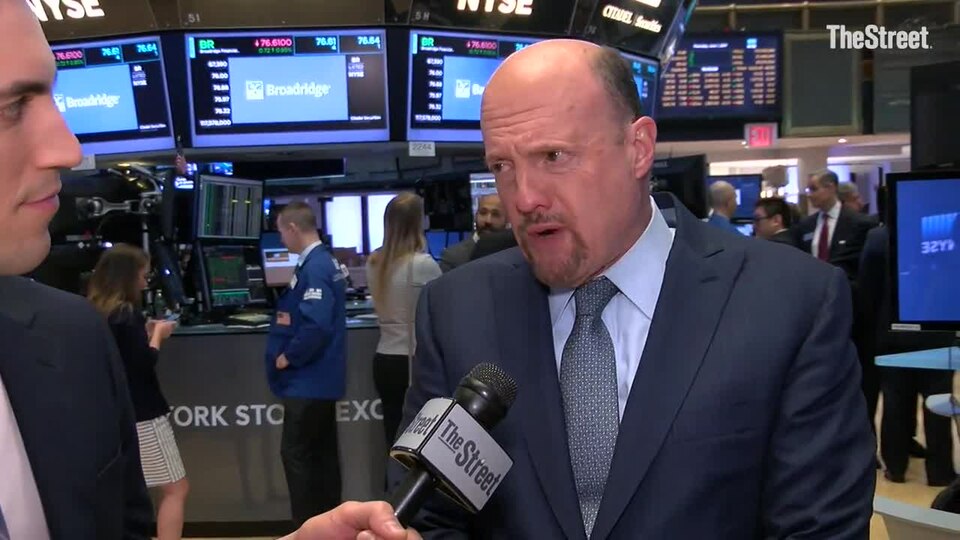
Long-term interest rates have climbed to levels not seen in nearly two decades, and CNBC's Jim Cramer said Monday that stock investors can no longer afford to look away from the bond market.
The 10-year Treasury yield has risen from below 4% in February to nearly 4.7%. The 30-year Treasury yield recently topped 5.3%, reaching its highest point in close to 20 years. The S&P 500 has fallen in five of the past seven sessions as those elevated rates have put pressure on equities.
"Normally, I don't like to talk about bonds, because you don't want to hear about bonds," the Mad Money host said. "Unfortunately, it's very important now that long-term interest rates are on the rise."
Higher rates hurt stocks in two primary ways, according to Cramer. They offer stronger competition for investors' money, pulling dollars away from equities. They also reduce the present value of future corporate profits, which weighs on stock prices.
Concerns about demand for government debt grew earlier this month when a 30-year Treasury auction drew weaker interest than the previous month, despite the already elevated yields on offer. The Treasury Department responded by announcing it would more than double the size of its planned buybacks of longer-dated government debt. Yields initially fell and stocks rallied after that announcement, but the relief did not last. Rates climbed again later in the week.
Cramer said the Treasury Department's options are limited. The national debt now stands at $40 trillion, and the tools available to Treasury do not include the two things that would actually solve the problem. "The only real solution to this problem is to either cut spending or raise more revenue and the Treasury can't do either of those things on its own," he said.
Cramer identified two forces he sees as the main drivers behind the rate pressure. The first is oil prices, which have risen sharply as a result of the war with Iran. Those higher prices are feeding inflation and making it harder for the Federal Reserve to cut short-term interest rates.
The second is a surge in corporate borrowing tied to the artificial intelligence buildout. Technology companies are taking on large amounts of debt to fund data centers, Cramer said, flooding the market with corporate bonds and forcing Treasury yields to rise in order to stay competitive for investor dollars. "As more incremental dollars go to shares or bonds from a hyperscaler, Treasury yields have to creep higher in order to stay competitive," he said.
On what it would actually take to bring long-term rates back down, Cramer pointed to the inflation side of the equation. "We want long-term interest rates to go lower, but that's only gonna happen if we can get inflation under control by reopening the Strait of Hormuz, and that's a tall order," he said.
Cramer also offered a pointed assessment of the Treasury's recent moves. "The Treasury Department's attempts to get this under control I think have only made investors more nervous," he said.