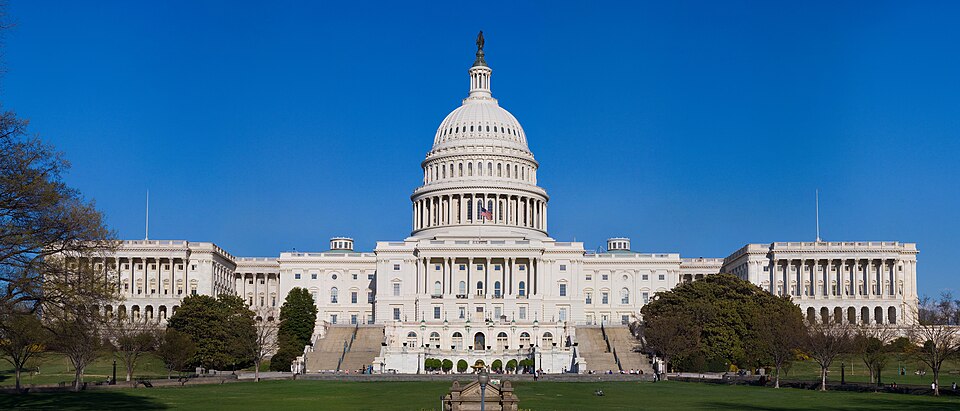
Ten weeks before the 2026 midterm elections, financial markets are beginning to price in the possibility that Democrats could win control of at least one chamber of Congress, potentially ending unified Republican government in Washington.
According to CNBC, Democrats lead Republicans by roughly 6 percentage points on the generic ballot, based on data from FiftyPlusOne, a website that tracks polling averages. Analysts contacted by CNBC outlined how a full or partial shift in congressional power could affect U.S. capital markets, with consequences ranging from a prolonged debt ceiling fight to increased volatility from executive orders.
The conventional view on Wall Street is that divided government is good for markets because it prevents extreme policy from passing. Analysts say that framework may not fully apply with President Trump in the White House.
"One of the things you often hear is the market loves a divided government, and that usually means the extreme positions don't get enacted," said Ed Mills, managing director of Washington policy at Raymond James. "But what we have been cautioning is the biggest market moves from a policy perspective of the last two years have come from executive action."
Mills pushed the question further. "After the midterms, if Democrats have a majority at least in the House, do you think that President Trump is going to work with Democrats more? Or is it more likely he's going to get more aggressive on executive action? My bet's on more executive action," he said.
Trump's tariff campaign is the most prominent example of a major market-moving executive action. The administration drew on emergency authority to impose sweeping tariffs on a wide range of countries. The Supreme Court eventually ruled that the International Emergency Economic Powers Act did not authorize those tariffs, but the levies remained on the books for more than a year. Trump has since replaced them using different executive authority.
The debt ceiling is the other major pressure point analysts are watching. Most financial institutions expect the U.S. to hit its debt ceiling of $41.1 trillion in mid-2027, requiring Congress to raise or suspend the limit so the Treasury Department can continue borrowing to meet its obligations. If Congress fails to act, the U.S. would be unable to borrow to pay its bills. A divided Congress could turn that process into a drawn-out standoff.
JPMorgan noted in a June report that dating back to 1950, the S&P 500 has performed better under a divided Congress than under single-party control. The firm also noted that even if Democrats gain control of the Senate, Trump would remain in the White House and could block Democratic legislation on taxes, climate, or healthcare.
Trump has regularly cited stock market performance as a measure of his administration's success. The S&P 500 reached a record high close on Aug. 13. Whether that level holds through a contested midterm election and a possible debt ceiling fight in 2027 remains an open question for investors.