An avalanche of ice and rock blocked a river in Nepal's Himalayan region early Wednesday morning, triggering massive flash floods that killed at least eight people and left 384 tourists missing, including at least three American nationals. The disaster struck around 9 a.m. local time in the northern Rasuwa district, near the country's border with Tibet.
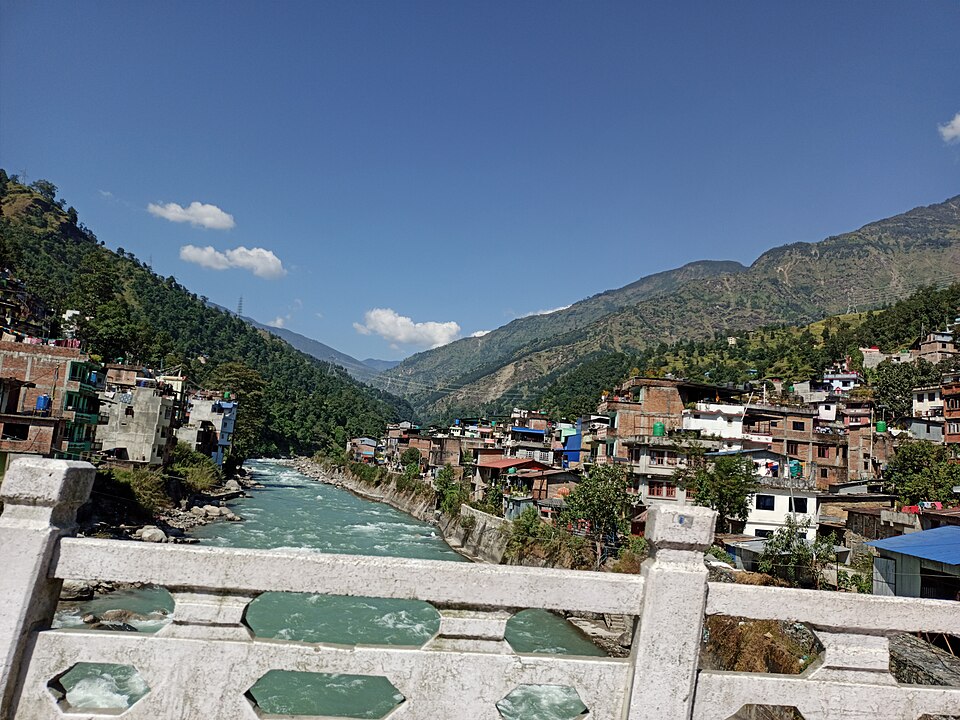
According to NPR, the Lhende Khola River, a tributary of the Bhotekoshi, flooded first after the avalanche blocked its course and released a sudden surge downstream. That surge tore through the Bhote Koshi River valley, destroying villages, roads, bridges, and hydropower infrastructure in the Rasuwa, Nuwakot, and Dhading districts. Dozens of multi-storied buildings, trucks, and vans were buried under mud in Nuwakot, one of the worst-affected areas.
Of the 384 tourists listed as missing, 291 were foreign nationals. The three Americans were traveling with a Nepali company called Fishtail Tours and Travel, which confirmed to ABC News that three of its clients were among the missing. The company said rescue efforts were ongoing but provided no information on the tourists' possible whereabouts or condition. Also missing were 142 Indian nationals, 17 Malaysians, 12 British citizens, eight South Koreans, four South Africans, one Australian, and one Dutch national. The nationalities of 111 other missing people had not yet been confirmed.
Nepal's Tourism Board said most of the missing were likely tourists from India and the Indian diaspora traveling on pilgrimage to Mount Kailash in Tibet, a sacred site for Hindus. South Korean officials said their citizens working on a hydropower plant in Nepal were also among those unaccounted for. Malaysia's Foreign Ministry said its embassy in Kathmandu had received reports from travel agencies that they had lost contact with 11 Malaysians believed to be in the Rasuwa district.
Helicopters could not land in the hardest-hit areas, including Syapru Besi and Timure, according to Reuters. The Nepali Army said rescue operations via air transport were ongoing as of Wednesday. Nepal's government spokesperson Sasmit Pokharel said, "We have asked both India and China to help us with the rescue efforts." On the Chinese side of the border, the state-run Xinhua News Agency reported casualties at the Gyirong border crossing. Chinese President Xi Jinping ordered search and rescue efforts for those reported missing there.
The U.S. Embassy in Kathmandu said it was "deeply saddened by the tragic loss of life and devastation" caused by the flooding and said it was "closely tracking developments and remain in close contact with Nepali authorities." The embassy urged Americans to avoid the affected areas.
Nepal Police spokesman Abi Narayan Kafle told AFP, "We do not exactly know the extent of damage, but the flood is big, and it could have damaged many settlements." District administrator Narendra Pariyar urged people living along the banks of the Bhote Koshi River to move to higher ground. "There could be heavy casualties or loss of property," he was quoted as saying by Reuters.
Climate researchers at the Kathmandu-based International Centre for Integrated Mountain Development said the event followed a pattern becoming more common in a warming Himalayan region. Disaster risk reduction specialist Saswata Sanyal said, "The Lhende Khola has flooded twice in fourteen months, this time triggered by an ice rock avalanche from a glacier on the Nepal side that blocked the river and released a sudden surge downstream." He added, "In a warming Himalaya, early warning is the first line of adaptation." The same region experienced deadly flash floods in August of last year, when an overflowing glacial lake in neighboring Tibet killed nine people and damaged a key cross-border bridge.
Nepali President Ramachandra Paudel said he was "extremely saddened" by the disaster and called on the government, political parties, agencies, and the general public to intensify rescue and relief efforts. The Nepal Electricity Authority confirmed that six major hydropower and transmission facilities were damaged in the flooding.