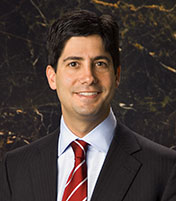
Federal Reserve Chairman Kevin Warsh is scheduled to deliver his keynote address Friday at the Fed's annual symposium in Jackson Hole, Wyoming, and markets are watching closely. The event this year carries the title "Financial Innovation: Implications for Payments and Policy," but analysts say the real question is whether Warsh will say anything meaningful about interest rates or the direction of monetary policy.
According to CNBC, Warsh has taken a markedly different approach to Fed communications than his recent predecessors. Rather than using carefully placed signals to guide market expectations, he has let markets interpret data on their own and send signals back to the Fed. That strategy has drawn mixed reviews since he took the chair position in May.
Economists who follow the Fed closely say they genuinely do not know what to expect. "People keep asking me what I'm expecting, and I'm not really expecting much of anything. I think it's hard to predict what he's going to say," said Luke Tilley, chief economist at M&T Bank and Wilmington Trust Investment Advisors. Tilley added that if he had to guess, Warsh would offer a broad, high-level look at the work of the Fed's internal task forces rather than a direct assessment of the economy or policy expectations.
Warsh has established five task forces since becoming chairman. They are examining how policymakers think about inflation, the Fed's balance sheet, the data that influences decisions, technology-related issues, and Fed communications. On communications specifically, his approach has been more hands-off than any recent chair, letting market signals drive the conversation rather than the reverse.
Tilley said he is hoping for something more concrete on the mechanics of monetary policy. "I would appreciate some more detail on how he personally thinks inflation happens, or how he personally thinks monetary policy affects inflation, either in timing or through which channels," Tilley said. "That doesn't even have to address the reaction function. It's just the basic plumbing of financial markets and monetary policy, because there are a lot of channels."
The stakes for Friday's speech have been raised further by a rise in Treasury yields that has drawn significant market attention in recent days. Separately, Treasury Secretary Scott Bessent announced last week that the department would double the size of its buybacks on off-the-run, or already issued, debt offerings, adding another layer of complexity to the policy environment Warsh will be speaking into.
Joseph Brusuelas, chief economist at RSM, did not describe the moment as routine. "We have the most unusual Jackson Hole monetary symposium in recent memory on deck because of Warsh's unforced errors early in his tenure," Brusuelas said. "The market has now bid this up to be something that I think the Federal Reserve would rather it not be."
Prior Fed chairs have regularly used the Jackson Hole address to signal broad policy intentions, and markets have come to treat the speech as a meaningful event for that reason. Whether Warsh follows that tradition or continues his more restrained approach is the central question heading into Friday.