

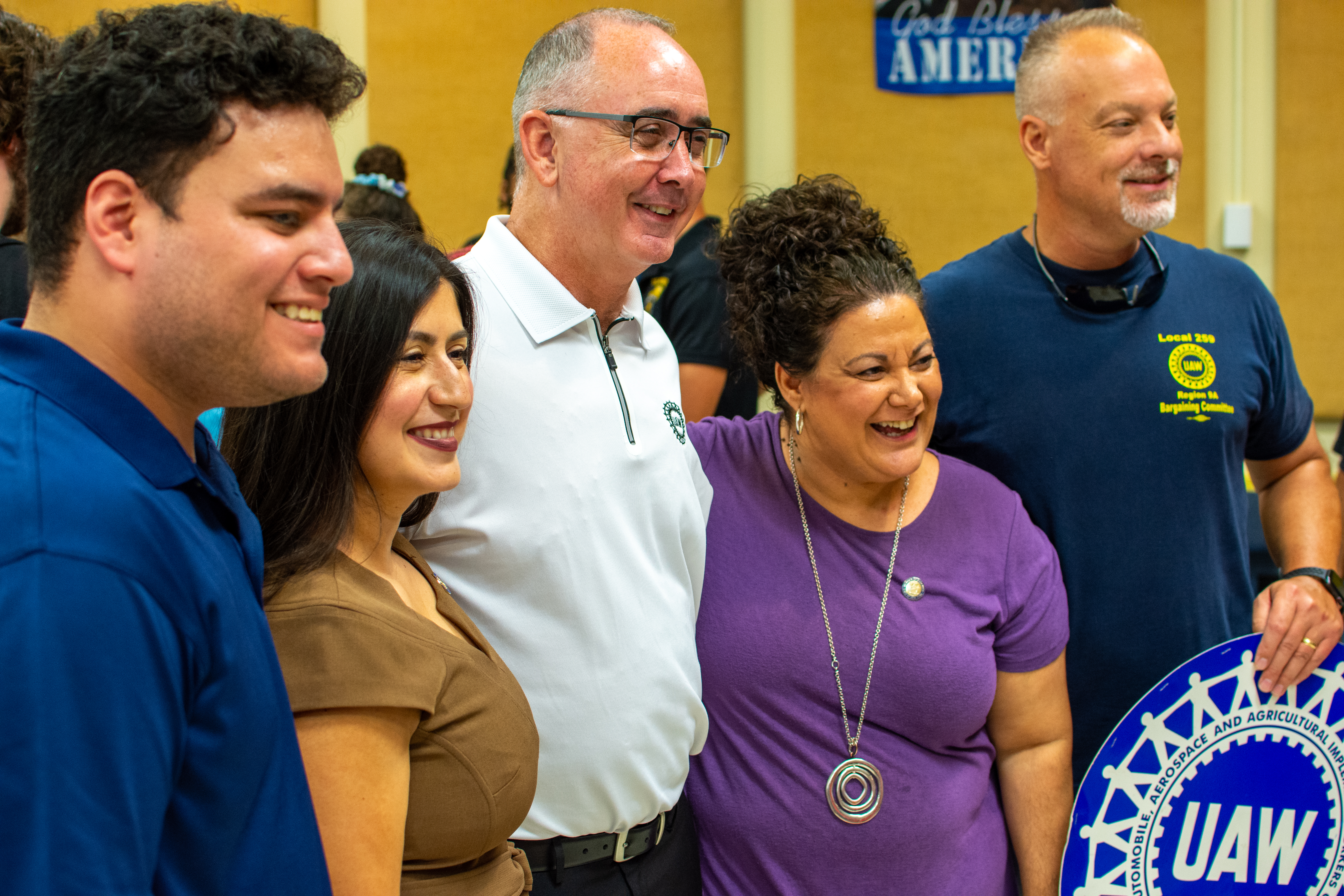
The United Auto Workers is working to rebuild its political influence in Michigan ahead of the November 3, 2026, midterm elections, as union president Shawn Fain prepares for another four-year term. The union is expanding voter outreach, supporting Democratic candidates and encouraging members to become more involved in political decisions affecting their jobs and communities.
Fain declared victory in the UAW presidential election on Friday, October 9, after receiving more than 68% of the vote in preliminary results. His closest challenger, Rich Boyer, received approximately 13%, while candidates aligned with Fain also won several other leadership positions.
The election results have not yet been officially certified. However, the substantial margin gives Fain a strong indication of support from participating union members following a campaign that included allegations of misconduct and disputes over the union's internal leadership.
Fain first became UAW president in March 2023 after campaigning on transparency, accountability and greater involvement by rank-and-file workers. His election followed a corruption scandal that damaged public confidence in the union and led to federal oversight of its operations.
Since taking office, he has become a prominent voice in national labor disputes. He led the union during its 2023 strikes against General Motors, Ford and Stellantis, which resulted in new contracts providing substantial wage increases and other improvements.
Those negotiations helped establish Fain's reputation as a leader willing to challenge major corporations. His latest election campaign emphasized improving workers' economic security, addressing wealth inequality and preparing for future contract negotiations.
The Guardian reported that Fain described his reelection as support for continuing the union's efforts to strengthen workers' bargaining power. He also identified upcoming negotiations with John Deere, Volvo and General Dynamics Land Systems in 2027 as priorities.
Contracts with the three major Detroit automakers are scheduled to expire in 2028. The union expects those negotiations to involve issues such as wages, retirement benefits, job security and changes affecting the automotive industry.
Beyond workplace negotiations, the UAW is seeking to expand its political role in Michigan, where organized labor has historically been an important part of state politics.
The union remains Michigan's largest labor organization, but its membership is considerably smaller than it was several decades ago. In the 1980s, Michigan had more than 600,000 active and retired UAW members. Today, that number is approximately 350,000.
The decline has reduced the union's traditional organizing base. It has also created new challenges as members express differing views about political parties, economic policies and which candidates best represent their interests.
Michigan remains politically competitive, making participation by union households important to candidates from both major parties. However, union membership does not automatically translate into support for candidates endorsed by union leadership.
Some UAW members support Democrats because of their positions on collective bargaining, healthcare and labor protections. Others favor Republicans, including President Donald Trump, because of concerns involving manufacturing jobs, trade policies and economic conditions.
Those disagreements are especially visible in Macomb County, a historically important region for organized labor and automotive manufacturing. Trump carried the county by nearly 14 percentage points in the 2024 presidential election.
UAW organizers have made Macomb County one of their priorities as they attempt to connect with members who hold different political views. Their efforts include conversations about wages, healthcare, retirement security and the future of American manufacturing.
According to Associated Press reporting, union leaders recognize that endorsements alone cannot guarantee support from members. Their strategy increasingly emphasizes direct conversations rather than relying entirely on traditional political advertising.
The UAW held a conference of its Michigan Community Action Program in Lansing during September. It was the first statewide gathering of the union's political arm since 2018.
The event brought together members and organizers to discuss political priorities and preparations for the November election. Participants also had opportunities to meet candidates and raise questions about policies affecting working families.
Fain emphasized that members should help determine the union's political direction. The approach reflects his broader argument that workers need a stronger voice in decisions affecting their employment and economic future.
The union has endorsed Michigan Secretary of State Jocelyn Benson, the Democratic nominee for governor. Benson is seeking to succeed Governor Gretchen Whitmer, who cannot run for another term because of term limits.
The UAW has also endorsed Abdul El-Sayed, the Democratic nominee for Michigan's open U.S. Senate seat. El-Sayed has supported proposals involving healthcare access, labor protections and reducing the influence of wealthy donors in politics.
The endorsements reflect the union leadership's policy priorities, but they have not eliminated disagreement among members. Some workers remain skeptical of Democratic candidates, while others question whether the union should place so much emphasis on electoral politics.
During Michigan's August primary elections, the UAW organized an extensive voter outreach campaign. Union figures show that nearly 800 members participated in canvassing, phone banking and conversations with voters.
The union reported that volunteers knocked on approximately 15,000 doors and made more than 145,000 phone calls. It also said nearly 113,000 UAW members voted early during the primary period.
Those figures suggest that the organization has maintained a significant ability to mobilize members despite its smaller membership. However, primary participation does not establish how members will vote in November.
Political organizers must also address the damage caused by the UAW's previous corruption scandal. More than 10 union officials and associates pleaded guilty in federal investigations that exposed the misuse of union funds and other misconduct.
The scandal led to a federal settlement and the appointment of independent monitor Neil Barofsky. The monitoring arrangement was designed to strengthen accountability, oversee reforms and protect the integrity of union elections.
Although Fain entered office as a reform candidate, he has faced questions about his own conduct. In June 2026, the independent monitor accused him of abusing his authority and retaliating against another union official.
The allegations included claims involving efforts to obtain benefits for members of Fain's family. Fain denied wrongdoing and argued that the accusations were politically motivated.
The Department of Justice subsequently opened an investigation into the allegations. The investigation should not be confused with a criminal conviction, and the claims remain disputed.
Fain has also clashed publicly with Barofsky, accusing the monitor of being used against him during the union election. The monitor's office has maintained its role in overseeing compliance with the federal settlement.
These disputes complicate the union's efforts to rebuild trust. While Fain's reelection indicates support among those who voted, questions about accountability and oversight remain part of the organization's future.
For Michigan voters, the union's political campaign comes during a period of uncertainty in the automotive industry. Manufacturers are adjusting to changes in vehicle demand, production costs, tariffs and investments in new technologies.
Workers are concerned about wages, retirement security and whether manufacturing jobs will remain in their communities. Those issues affect union members regardless of their political affiliations.
The UAW's electoral activity also reflects a long history of organized labor participating in American politics. In September 2023, then-President Joe Biden joined UAW members on a picket line during their strike against major automakers, becoming the first sitting American president to do so.
That appearance demonstrated the political attention surrounding the union's labor disputes. However, its relationship with elected officials remains complicated by disagreements among workers about economic policy and national leadership.
As November approaches, the UAW is continuing its efforts to reach members through workplace conversations, candidate forums and community organizing. The goal is to increase participation while giving members opportunities to discuss their concerns directly.
The union's ability to influence Michigan politics will depend on more than the outcome of its leadership election. It must address internal disagreements, maintain confidence in its leadership and demonstrate that its political activity reflects the priorities of its members.
With Fain preparing for another term and Michigan's statewide elections approaching, the UAW faces two important tests. One involves rebuilding confidence within the organization, while the other concerns how effectively its members participate in the political process.
The immediate focus is November 3, when Michigan voters will select a new governor, a U.S. senator and other elected officials. The results will provide another measure of the union's political reach, although determining its specific influence will require more than examining election outcomes alone.