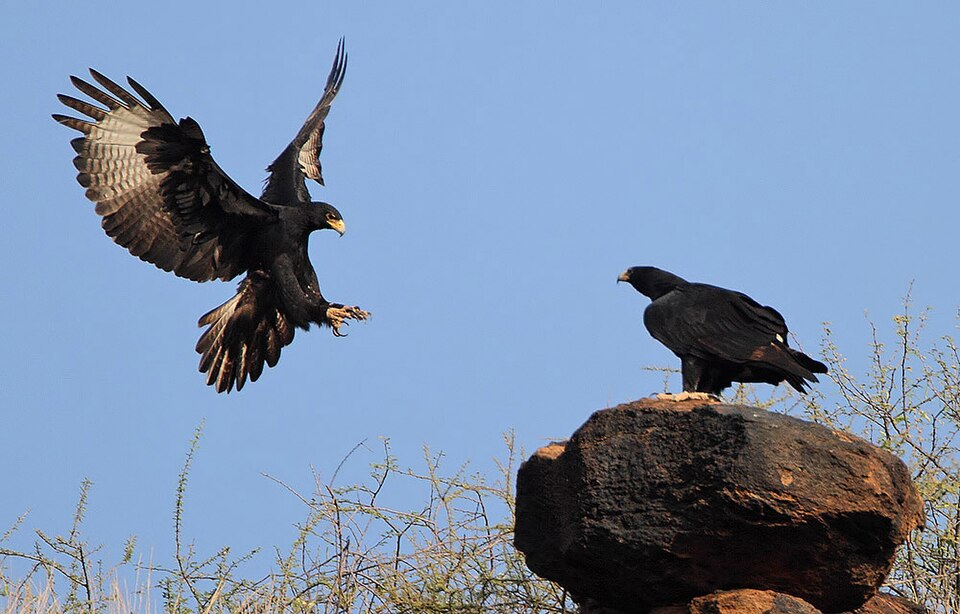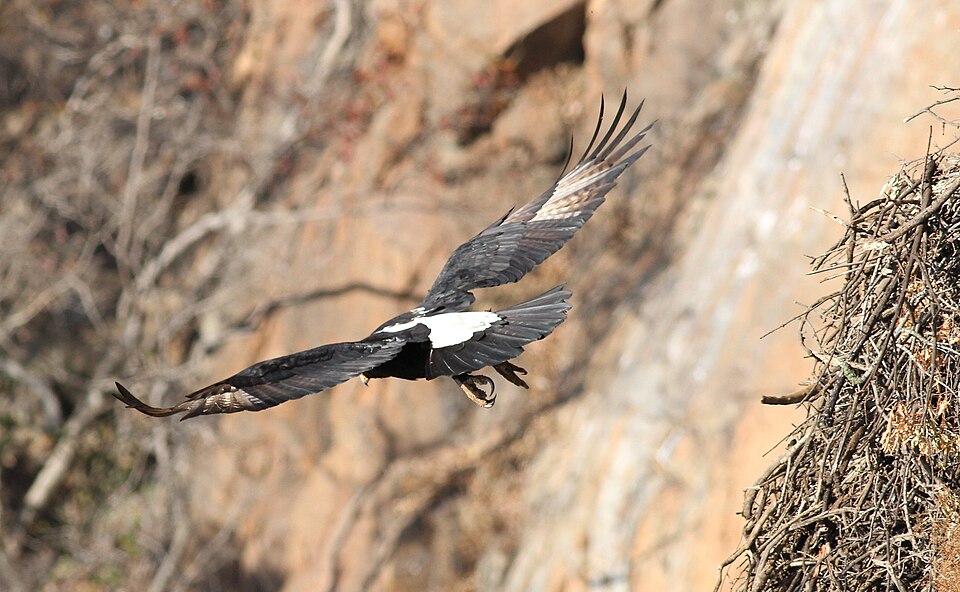
Verreaux's eagles are not supposed to eat goats. The species is one of the most specialized predators on earth, known for feeding almost exclusively on rock hyraxes, small herbivorous mammals that live across rocky terrain in Africa and parts of the Middle East. But in December 2024, two of the birds showed up at a goat carcass in northwestern Saudi Arabia in under an hour and stayed far longer than anyone expected.
According to a report in the Journal of Raptor Research, the observation marks the first confirmed case of sustained carrion use by Verreaux's eagles in the Arabian Peninsula. Researchers from CIBIO-BIOPOLIS in Portugal set up a network of bait stations in the AlUla region using goat carcasses to study scavenger activity in the area. Three cameras were placed around one carcass, and the footage captured not just a brief visit but an extended stay. One eagle remained at the carcass for more than nine consecutive hours.
Lead author Bruno Martins said the team did not expect what they found. "For a species so strongly associated with active predation on rock hyraxes, that degree of sustained carrion use was particularly unexpected," he said.
The AlUla region presents challenging conditions for predators. The arid landscape and intense heat can create periods when prey is scarce. Researchers believe the low availability of hyraxes during the study period may help explain why the eagles turned to carrion. But the study raises a deeper question: is this behavior a rare response to lean conditions, or does it point to something more regular that scientists have simply not documented until now?
Scavenging by Verreaux's eagles had been noted in a small number of studies from Africa but remained poorly documented and had never been confirmed in the Arabian Peninsula before this report. The new footage provides the most detailed record of the behavior to date, including information on timing, how often the birds visited, how long they stayed, and how they interacted with other species at the site.
Related species show similar flexibility. African hawk-eagles and golden eagles, both in the same genus, are known to take carrion opportunistically. Understanding how willing each species is to shift foraging strategies could matter for conservation work, particularly as prey populations fluctuate and habitats continue to change.
Martins noted the broader implications of the find. "Confirming that Verreaux's Eagles can make sustained use of carrion has implications for how we think abou," the study states, with the full published text expanding on what this means for how scientists classify the species' dietary habits.
The researchers said more work is needed to determine whether the behavior is purely opportunistic or represents a more regular part of the eagle's feeding strategy in the Arabian Peninsula. The bait station setup that captured the footage was designed to assess general scavenger activity in the region, which means the discovery was not the result of a targeted study on eagle behavior. That makes the sustained presence of the birds at the carcass all the more striking to the team.
The study adds to a growing body of evidence that top predators are more flexible than their reputations suggest. For a bird long considered a hunting specialist, nine hours at a goat carcass is a significant data point.