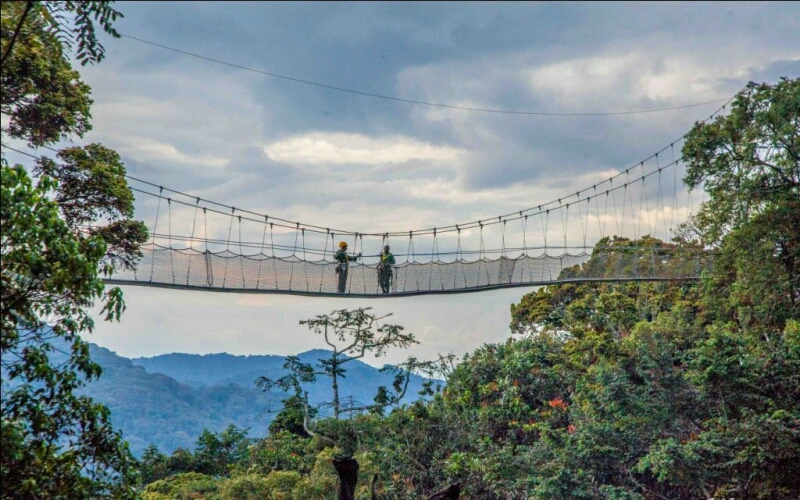
For Naomi Nibishaka, 76, a 230-foot suspension bridge over the Mukungwa River in northwest Rwanda changed everything. Before it was built, crossing the rushing water meant hiring an expensive boat, using slippery log makeshift bridges that floods swept away, or hiking three hours to a narrower crossing.
People drowned. Parents pulled children out of school rather than risk a river crossing. Farmers lost business they could not reach.
"When someone [who attempted the crossing] went missing, we would look for them, but if it was a rainy day, we would ask the other side if that person slept over," Nibishaka told NPR. "And if they can't find them, we would look for the body."
The bridge she now crosses, called Cyangoga, was completed in 2025. It is one of 96 footbridges built across Rwanda since 2020 by the nonprofit Fika, a Kigali-based organization whose name means "to arrive" in Swahili. Funding came from the Rwandan government and donors that included the U.S. Agency for International Development, before that agency was dismantled by the Trump administration.
Until recently, no researchers had systematically studied what these bridges actually do for communities. A team led by Evan Thomas, a professor of environmental engineering at the University of Colorado Boulder, set out to find out. "We collected tens of thousands of surveys from hundreds of villages and thousands of households to try to figure out: What changes when you get a bridge?" Thomas said.
The results, released in July, were concrete. "We found an increase in household consumption, an increase in household income, an increase in the amount of land people are cultivating, an increase in use of fertilizers, even an increase in the number of children going to school," Thomas said.
The bridges connect settlements divided by rivers, where services are unequally distributed on either side. A health clinic might be on one bank, a school or market on the other. Farmers cross to sell harvests or buy supplies.
For Nibishaka, the change is direct and personal. Before the bridge, she depended on family members to bring her food. "Before, I would have to wait for my grandkids to bring me food every day. Some days I would be very hungry," she said. Now she crosses the river herself to visit her son and grandchildren on the other side.
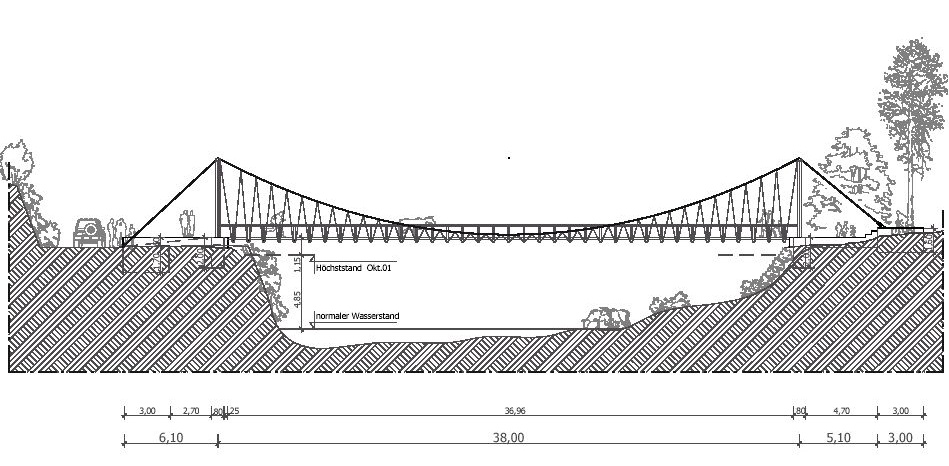
The Cyangoga bridge is 230 feet long, made of concrete and cable, roughly the length of a city block. The valley where it stands was once isolated by seasonal flooding. In the rainy season, the log crossings grew slippery and were often swept away entirely. The new bridge holds in all weather.
The loss of USAID funding has raised questions about whether the program can sustain its pace of construction. Fika and the Rwandan government have not publicly announced what the funding gap means for future bridge projects.