

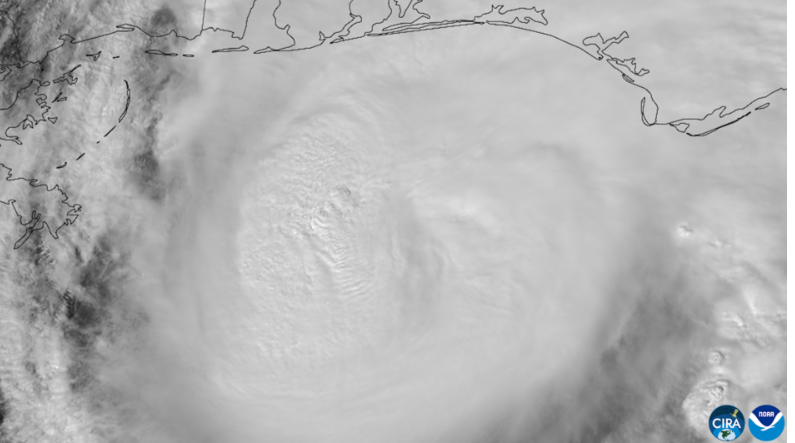
Hurricane Isaias struck Florida’s Panhandle near Destin late Friday, bringing damaging winds, storm surge, flooding and widespread power outages before weakening rapidly over land.
The National Hurricane Center said Isaias made landfall at about 8:30 p.m. Central time on October 9 with maximum sustained winds of 105 mph. That made it a Category 2 hurricane at landfall. The storm’s estimated central pressure was 971 millibars.
Before reaching Florida, Isaias briefly strengthened to 120 mph over the Gulf of Mexico. That put it at Category 3 intensity for a time, but the hurricane weakened before its center crossed the coast.
Some of the strongest wind observations came from the western Panhandle. A station near Santa Rosa Sound recorded a gust of 116 mph, while Pensacola recorded gusts around 100 mph. Panama City Beach also saw water rise about 5.6 feet above the average higher high-tide level, according to federal and state officials.
The combination of wind and water caused widespread damage across coastal communities. Trees and power lines came down, roofs were damaged and some roads became blocked by debris or flooding. Pensacola and surrounding communities were among the areas reporting serious infrastructure problems.
Power failures were one of the most immediate problems after the storm. Florida officials reported more than 448,000 customer accounts without electricity early Saturday. By early afternoon, the number had fallen slightly to about 439,000 as restoration crews moved into damaged areas.
More than 16,000 utility workers and restoration personnel had been positioned before landfall. Crews began repairs as soon as conditions allowed, with the hardest-hit parts of the Panhandle receiving priority.
Florida Gov. Ron DeSantis declared a state of emergency covering 27 counties. State agencies deployed hundreds of personnel for debris removal, road clearance, search-and-rescue work, traffic control and supply distribution.
The Florida State Guard sent nearly 400 soldiers to assist with recovery work. Florida Highway Patrol teams helped clear major routes and escorted water tankers, utility vehicles and pumping equipment into damaged areas.
State officials said Interstate 10 and U.S. 98 were cleared after crews worked through fallen trees and storm debris. Flooding still caused localized problems, especially near low-lying coastal areas.
Emergency supply sites were also opened in several Panhandle communities. Locations in Pensacola, Cantonment, DeFuniak Springs, Bonifay, Freeport, Santa Rosa Beach and Vernon were distributing items such as bottled water and shelf-stable food.
The storm also disrupted hospitals, assisted-living facilities and other health care providers. Florida reported evacuations at several facilities, while dozens of providers reported power problems or storm damage.
The University of West Florida remained closed as cleanup continued. The university said Sunday that its closure would extend through Tuesday, October 13, while crews restored power and removed debris from campus. Only essential personnel were being allowed on university property.
Isaias also had deadly consequences beyond property damage. At least four deaths were linked to the storm in Florida and Alabama, according to the Associated Press and Reuters. Reported causes included falling trees and carbon monoxide poisoning associated with generator use.
The hurricane moved quickly north after landfall, passing through the western Florida Panhandle and into Alabama. It lost tropical characteristics early Saturday, but its remnants continued to carry heavy rain and severe weather into other parts of the Southeast.
By Sunday, the system was producing dangerous flooding farther north. Parts of North Carolina experienced heavy rain, rising rivers and landslide concerns. Tornadoes were also reported as moisture and unstable air associated with the former hurricane moved through the region.
The National Weather Service documented tornado activity in North Carolina on October 11, including an EF-0 tornado near East Arcadia in Bladen County. The tornado remained on the ground for less than two miles but produced winds estimated at 75 mph.
For Florida, the focus has shifted from immediate hurricane warnings to recovery. Crews are restoring electricity, removing debris, inspecting roads and bridges, and providing food and water to affected communities.
The storm also showed how quickly hurricane intensity can change near the Gulf Coast. Isaias was still strengthening on October 9 and reached 120 mph before weakening to 105 mph by landfall. Even after that decrease, the storm remained strong enough to produce destructive winds and significant coastal flooding.
Isaias was the first Atlantic hurricane of the 2026 season. Its late-season arrival followed an unusually quiet start to Atlantic hurricane activity, but it demonstrated that dangerous storms can still develop well into October.
Residents returning to damaged homes face continuing hazards from standing water, unstable trees, downed electrical lines and improper generator use. State officials have urged people to avoid unnecessary travel in damaged areas and to follow local emergency instructions while cleanup continues.
Recovery will continue for days in the hardest-hit communities. The University of West Florida’s extended closure, ongoing power restoration and open supply distribution sites show that normal conditions have not yet returned across parts of the Panhandle.