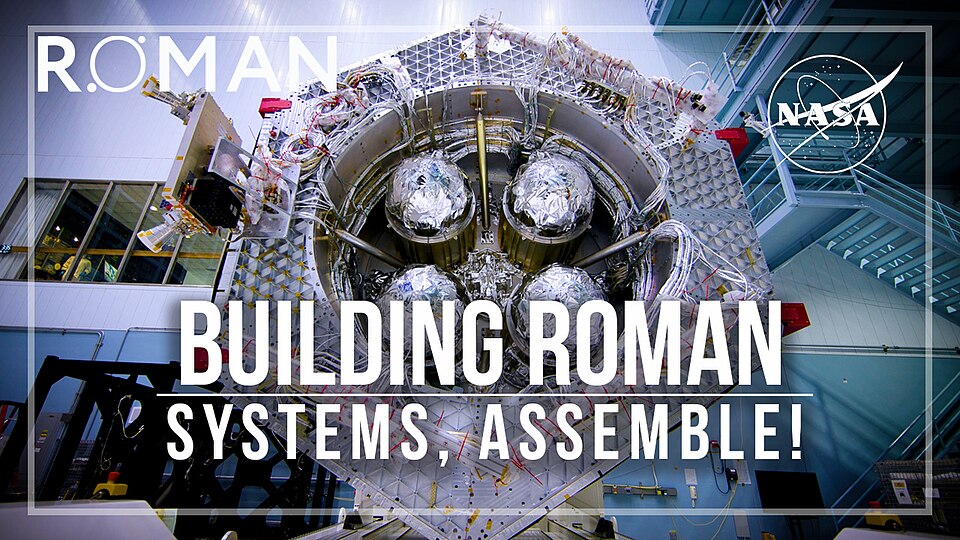
The Nancy Grace Roman Space Telescope is currently making its way to a distant orbit about one million miles from Earth, according to NASA. The destination is called Sun-Earth Lagrange Point 2, or L2, the same gravitational sweet spot where the James Webb Space Telescope operates.
The journey takes approximately three months. During that time, the spacecraft is undergoing a process called commissioning, in which systems are powered on, adjusted, calibrated, and checked against expected performance. Scientists and engineers are using the period to confirm that Roman is working as designed before it begins formal science operations.
NASA notes that the commissioning schedule is subject to change as the team assesses results and makes adjustments along the way. The agency has not announced a specific date for science operations to begin.
L2 is a location in space where the gravitational pull of the Sun and Earth balance in a way that allows a spacecraft to maintain a stable position relative to both. Telescopes stationed there can observe deep space continuously without Earth or the Sun blocking their view, and they require minimal fuel to stay on course. Webb's success at L2 established the location as a preferred destination for large space observatories.
Roman is designed to study dark energy, dark matter, and the large-scale structure of the universe. It carries a wide-field camera capable of capturing images roughly 100 times larger than those produced by the Hubble Space Telescope's main camera, allowing it to survey enormous sections of the sky in a single exposure. The telescope is also expected to contribute to the search for exoplanets and to conduct a wide range of astronomical surveys.
The commissioning phase is standard procedure for any major space mission. Each instrument must be powered on carefully, and sensors must be calibrated against known references in space before the telescope can produce scientifically reliable data. Engineers compare what Roman is detecting against what the telescope's design predicted it should detect, and they make fine adjustments where needed.
No science data has been released yet. The next major milestone for the mission will be the conclusion of commissioning and the formal start of science operations, a date NASA has not yet specified publicly.