

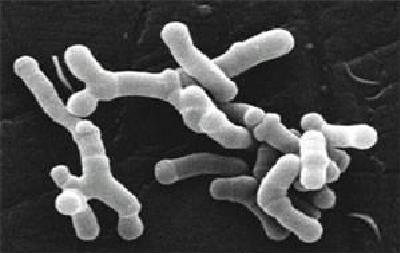
Ancient bacteria had already developed a way for cells to talk to each other, using a system strikingly similar to the one found in human heart and nerve tissue today. The discovery comes from an international research team led by biologists at Heinrich Heine University Düsseldorf, working alongside scientists at the University of Tübingen.
Their findings were published in The EMBO Journal, according to Phys.org. The study focused on multicellular cyanobacteria, a type of prokaryote, meaning cells that lack a nucleus. These organisms are among the oldest life forms on Earth.
In plants, animals, and humans, neighboring cells communicate through specialized connecting structures. Those structures are regulated by the exchange of calcium ions. The research team discovered that cyanobacteria use a nearly identical system, something no one had expected to find in such simple, ancient organisms.
Junior Professor Dr. Khaled Selim, who led the research group at the Institute of Phototrophic Microbiology, described the result as unexpected. "It came as a big surprise to us that one of the earliest life forms on Earth — evolutionarily older and simpler cells — had already developed communication structures regulated by calcium signals similar to those found in the cells of higher organisms, such as animals and humans," Selim said.
The connecting structures found in human and animal cells are called gap junctions and have long been considered a trait exclusive to eukaryotes, which are cells with a nucleus. The cyanobacteria version is called septum junctions. Teresa Müller, a doctoral researcher in Selim's group and the study's first author, explained that the signals controlling these structures had not been well understood before this research. "Analogous to the connecting structures in eukaryotes known as gap junctions — traditionally considered a eukaryotic trait — cyanobacteria coordinate their cell-to-cell communication via connecting structures called 'septum junctions.' The signals regulating this cell-to-cell communication and the formation of septum junctions were previously largely unknown," Müller said.
Müller works within the Cluster of Excellence called "Controlling Microbes to Fight Infections" at the University of Tübingen.
The team identified a calcium-binding protein found only in multicellular cyanobacteria, which they abbreviated as CSE. Using nuclear magnetic resonance spectroscopy, they determined the structure of CSE when it is bound to calcium and showed that it functions as a calcium-buffering protein. They also used cryo-electron microscopy to study what happens when this protein is absent in mutant bacterial cells.
The significance of the finding goes beyond cyanobacteria. Because these bacteria predate the evolution of eukaryotic cells by a vast stretch of time, the discovery suggests that calcium-based cell communication did not originate with complex life. Instead, the basic machinery was already in place long before animals or plants existed.
The human heart relies on intercellular communication structures to beat in a coordinated way. Nerve cells use similar structures to transmit signals. The fact that bacteria developed analogous systems independently, or possibly as an ancient precursor, forces scientists to reconsider when and how this type of cellular coordination first appeared in the history of life on Earth.