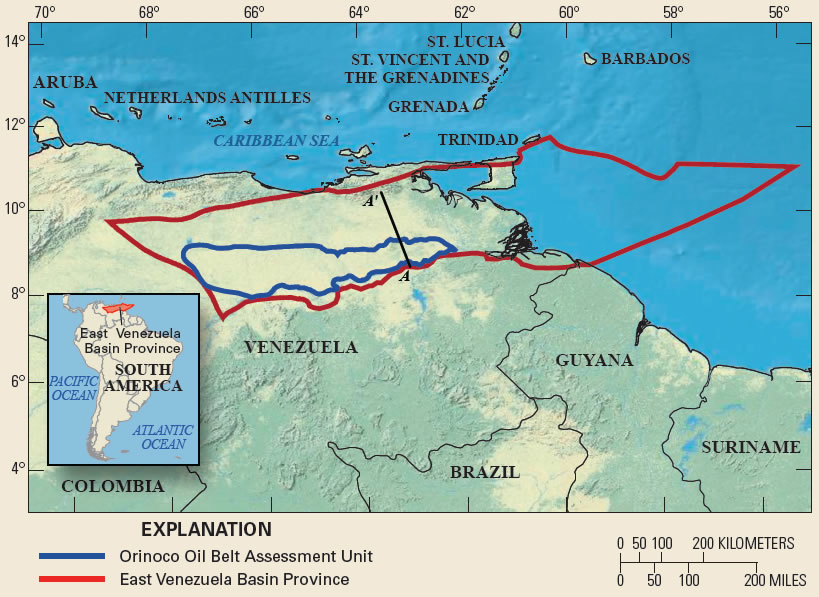
Chevron said Wednesday it plans to invest $7 billion in Venezuela over the next five years and double its oil production in the country after receiving additional acreage in the Orinoco Belt region.
The investment would boost production to about 600,000 barrels a day, twice Chevron's current capacity, according to a company statement reported by CBS News. Chevron said it costs the company about $20 per barrel to produce oil in Venezuela.
"With improved terms and additional acreage, we are strengthening a portfolio that we believe can deliver attractive low-cost oil growth, support energy supply and create differentiated long-term value," Chevron CEO Mike Wirth said in the statement.
Chevron is the only U.S. oil company operating in Venezuela and has maintained a presence there since 1923. The company has been assigned rights to develop the adjacent Carabobo 1 and Carabobo-2-South-A areas in the Orinoco Belt. Its existing joint ventures in Venezuela include Petroindependencia and Petropiar S.A., which oversee extra-heavy oil projects, as well as Petroboscan S.A. in Zulia State in western Venezuela.
The announcement follows a deal President Trump announced on August 28 to create a private joint venture called North American Blue Energy Partners, or NABEP, to operate oil fields containing 65 billion barrels of petroleum. Under that agreement, the Venezuelan government granted the company 100-year concessions to drill in 17 oil fields, representing roughly one-fifth of Venezuela's total proven oil reserves. NABEP is run by Venezuelan executive Alejandro Betancourt.
Venezuela holds the world's largest proven oil reserves, containing more than 303 billion barrels of crude oil, according to OPEC's 2025 Annual Statistical Bulletin. Saudi Arabia is second with 267 billion barrels.
Trump said the Venezuela deal will help lower U.S. gasoline prices and refill the Strategic Petroleum Reserve, which has dropped to historically low levels. However, experts cautioned that results are not immediate.
"Meaningful new barrels are years away: Much of Venezuelan oil is extra-heavy crude sitting behind decayed infrastructure, so significant output growth will require substantial investment and time," said Dan Alamariu, chief geopolitical strategist at investment advisory firm Alpine Macro, in a research note.
Chevron officials and U.S. Energy Secretary Chris Wright were expected to visit Venezuela on Wednesday, where the new investment was to be formally unveiled, according to a U.S. official.