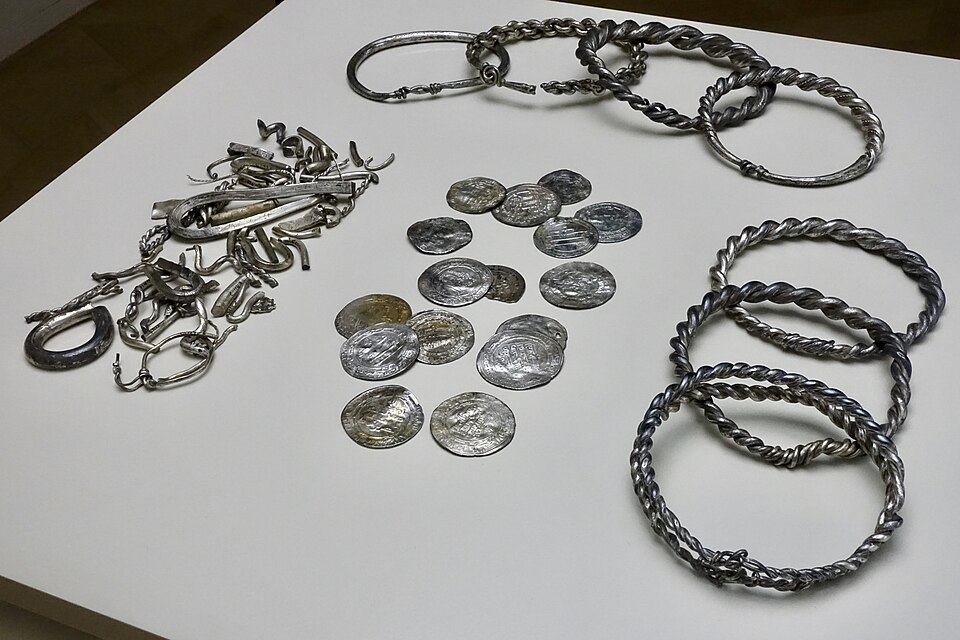
A homeowner in Denmark set out to build a backyard terrace this past spring and instead hit something in the ground that made a strange sound. What came out of the dirt was more than 40 pounds of thousand-year-old silver, now confirmed as Denmark's largest Viking Age silver hoard ever found, according to a report by Live Science.
The hoard sits in the municipality of Rebild and contains approximately 700 silver objects. Among them are silver bars, jewelry, 47 whole coins and coin fragments, and a small Thor's hammer. The Thor's hammer is often interpreted as a sign of protection and as evidence that its owner followed the Norse pantheon of gods.
About 320 of the objects were inside a clay vessel. The rest lay scattered in the soil nearby. The entire collection is nearly three times larger than the previous record-holder for Denmark's Viking Age silver hoards.
The homeowner, who has remained anonymous, described the moment of discovery in a statement. "It should have just been a few hours of hard gardening work removing stubborn grass, stones and gravel for a new tiled terrace, but it turned out to be the biggest surprise of my life," they said.
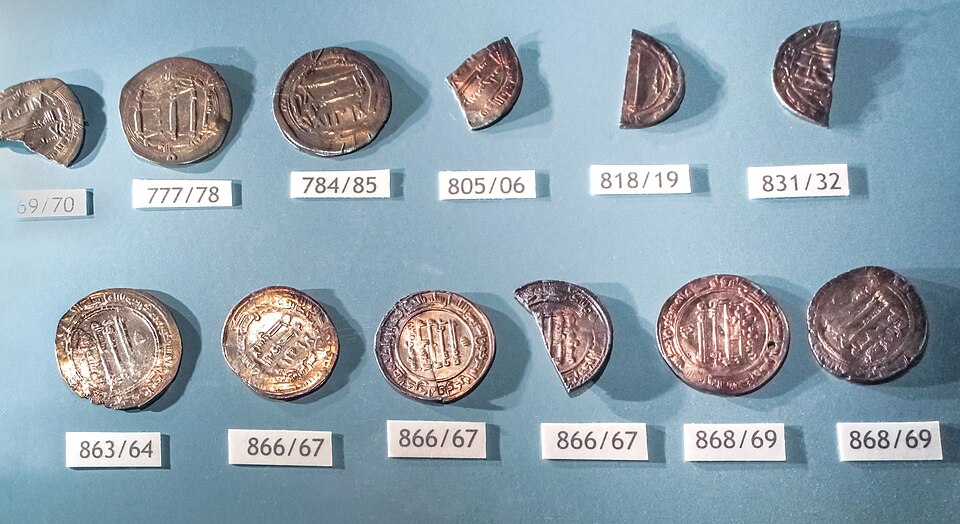
Researchers date the hoard to sometime in the 10th century. Two Anglo-Saxon silver pennies minted during the reign of King Edward the Elder, who ruled from 899 to 924, helped establish that timeline. The hoard also contains Islamic coins. Together, the coins point to Denmark's reach during the Viking Age.
Torben Sarauw, cultural heritage manager at the North Jutland Museums, said the coins offer evidence of wide-ranging trade and contact. "When we analyze the weight of the silver objects, the treasure reveals information about the economic practices of the Viking Age," Sarauw said. "The treasure does not only consist of beautiful objects. Most of them are part of a structured value system by weight."
One silver bar carries a runic inscription that may spell out the word "hutu," which researchers believe could be a person's name or an owner's mark. Runes were the writing system used across Scandinavia during the Viking Age.
The discovery adds to a growing body of evidence about the economic and cultural connections that Viking Age Danes maintained across Europe and into the Islamic world. Researchers have previously found that some Viking coins from Danish hoards were made from melted Islamic currency, a detail that fits with what the Rebild hoard now shows.