

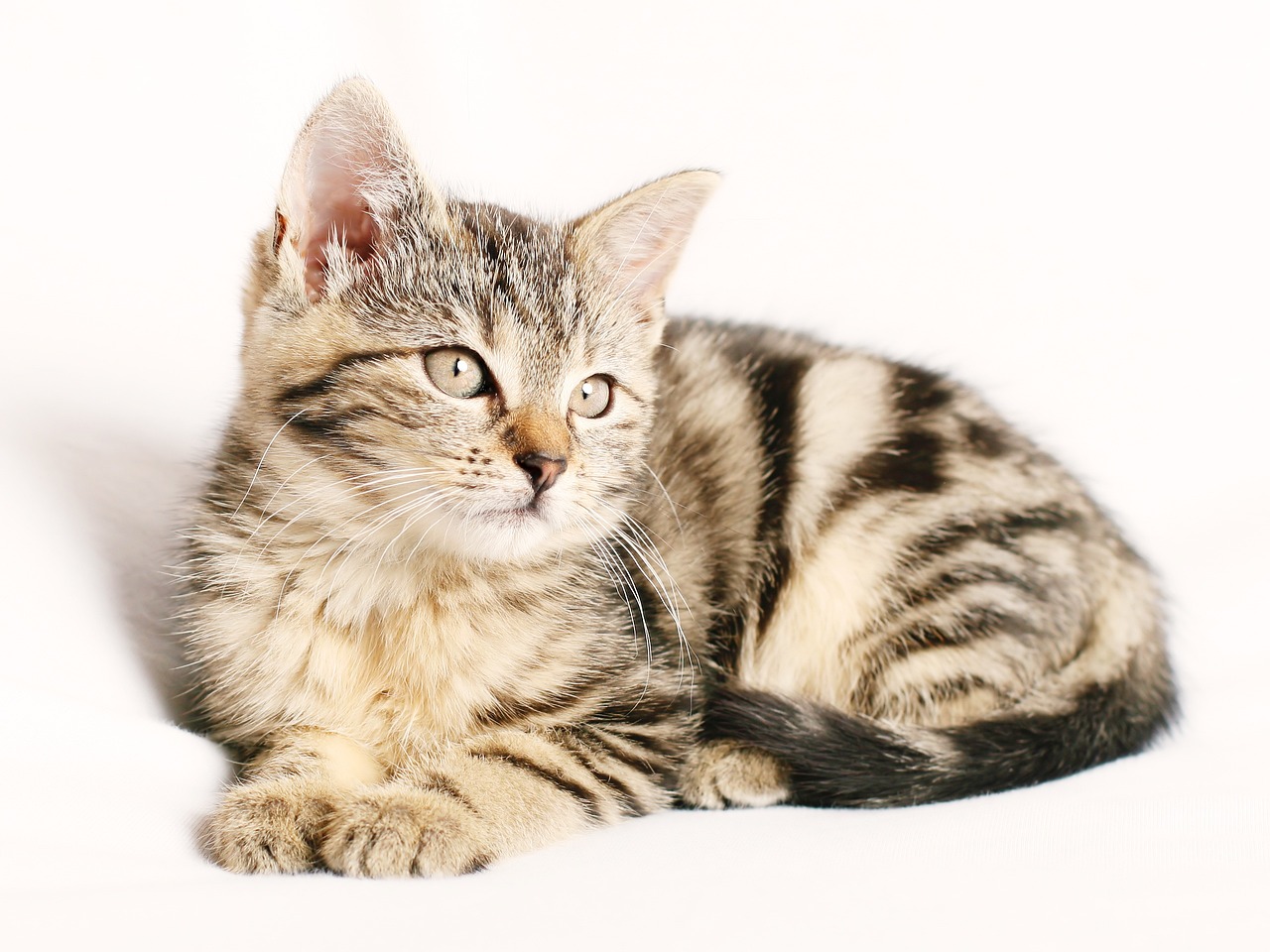
Research examining the relationship between pets and childhood development has produced an unexpected finding: young children who acquired a cat during the preschool years later showed higher levels of emotional and behavioral difficulties than children who did not have cats.
The study, published in the World Journal of Pediatrics, followed 1,893 families participating in Spain's INfancia y Medio Ambiente, or INMA, project. Researchers examined pet ownership when children were approximately 1 year old and again when they were 4 to 5 years old. The children's mental health was then assessed when they reached ages 7 to 8.
Rather than examining pets as a single category, researchers separated them into dogs, cats, birds and a group consisting of other animals such as rabbits, hamsters, guinea pigs, fish, turtles and reptiles.
That distinction produced one of the study's most intriguing results.
Children whose families reported owning a cat only when the child was 4 to 5 years old showed higher levels of both internalizing and externalizing problems several years later.
Internalizing problems are behaviors and symptoms directed inward. They can include anxiety, fear, nervousness, sadness, withdrawal and difficulties involving relationships with peers.
Externalizing problems are directed outward and can include hyperactivity, impulsiveness, tantrums, aggression, disobedience and other behavioral difficulties.
The researchers measured these outcomes using the Strengths and Difficulties Questionnaire, a widely used 25-item screening tool completed by parents. It measures emotional symptoms, conduct problems, hyperactivity and inattention, peer problems and prosocial behavior.
After adjusting for a number of family, parental and childhood characteristics, researchers found that children who had a cat only at ages 4 to 5 had a relative rate ratio of 1.37 for internalizing problems compared with children who never had a cat.
The association with externalizing problems produced a relative rate ratio of approximately 1.27.
In practical terms, those numbers indicate that the researchers observed substantially higher rates of emotional and behavioral difficulty scores among that particular group. They do not mean that 37% of children with cats developed a mental illness, nor do they establish that the cat caused the problems.
The timing of cat ownership may also matter.
Children who had cats consistently across the study periods did not show the same statistically significant pattern. The association appeared specifically among children whose families reported a cat at ages 4 to 5 but not at the earlier assessment around age 1.
That raises a difficult question: did something about acquiring a cat during this period affect the child, or were families already dealing with behavioral or emotional difficulties more likely to acquire a cat?
The study cannot answer that question.
Researchers did not have mental health measurements from the children before the pets were introduced, meaning they could not determine whether behavioral differences were already developing before the family acquired a cat.
The study authors specifically raised the possibility that some families may choose cats because they are perceived as easier to care for than dogs. A household dealing with a child's behavioral or emotional difficulties might therefore be more likely to choose a relatively independent pet.
If that occurred, cat ownership could be a marker of an existing family situation rather than the cause of later mental health differences.
The findings were also much more specific than saying pets in general are harmful.
Researchers found no statistically significant association between owning a dog or a bird and the children's later internalizing or externalizing problems.
Dogs in particular have frequently been associated in previous research with social interaction, physical activity and companionship. However, the Spanish study did not find a significant protective mental health effect from dog ownership during the preschool period either.
The researchers suggested that age may help explain some of the mixed findings in the broader pet literature.
Many studies reporting emotional or social benefits from pets have examined older children, adolescents or adults. Young children may interact with animals differently and may not yet have developed the same type of emotional attachment that an adolescent or adult forms with a pet.
Caring for an animal may become more psychologically meaningful as a child gets older and assumes greater responsibility for feeding, grooming and looking after it.
Interestingly, the study did find what appeared to be a protective association involving animals other than cats, dogs or birds.
Families that consistently kept animals such as small mammals, rodents, fish or reptiles had lower levels of internalizing problems among their children. The relative rate ratio was 0.80, representing about a 20% lower rate compared with children who never had those types of animals.
The researchers speculated that smaller animals may sometimes function more directly as a child's pet rather than primarily as a family pet.
A hamster, rabbit, guinea pig or fish may give a child manageable responsibilities such as feeding the animal, cleaning its enclosure and remembering daily care routines.
Those activities could potentially help develop planning, responsibility, empathy, impulse control and other skills, although the current study did not prove that this was the mechanism responsible for the observed association.
Cats present a different kind of human-animal relationship.
The researchers noted that dogs generally encourage more outdoor activity and social interaction, while cats tend to remain indoors and often require less direct engagement.
The authors also discussed differences in attachment styles between people and different species. Cats are typically more independent than dogs and may be less consistently responsive to a young child's attempts at interaction.
That does not mean cats are incapable of forming strong bonds with children. Individual cats vary enormously in temperament, and many families report extremely close relationships between children and their cats.
The study measured whether a family owned an animal, not how affectionate the animal was, how frequently the child interacted with it or how strongly the child was attached to it. That is an important limitation.
Researchers also examined whether simply reporting ownership accurately reflected living with the animal.
Pet ownership does not always mean that an animal lives continuously in the child's primary home. A family might have a dog at another property, for example, or an animal could primarily belong to another family member.
The researchers had cohabitation information for a smaller group of 1,528 participants at ages 4 to 5. Comparing ownership with actual cohabitation changed the estimates only modestly, although some of the cat associations became statistically weaker.
Another possible explanation mentioned in the paper involves Toxoplasma gondii.
Cats are the definitive host of the parasite, which can cause toxoplasmosis. Most human infections cause no symptoms or only mild illness, but scientists have spent decades studying whether infection could influence neurological or psychiatric outcomes.
The researchers noted previous studies linking toxoplasmosis with some internalizing and rule-breaking behaviors in children.
However, the INMA study did not test the children for Toxoplasma infection. The parasite therefore remains only one possible hypothesis and should not be interpreted as an explanation for the findings.
That distinction is particularly important because humans can acquire Toxoplasma through several routes unrelated to cats, including undercooked meat, contaminated soil and contaminated food or water.
Simply living with a cat does not mean a child has toxoplasmosis.
The researchers attempted to account statistically for many other influences that could affect childhood behavior.
Their models considered factors including the child's age and sex, the geographic study cohort, maternal education, family social class, breastfeeding, parental smoking, parental country of origin, maternal alcohol use during pregnancy, family structure and number of siblings, among other variables.
The relationship involving cats remained after multiple statistical tests and several sensitivity analyses.
That makes the association difficult to dismiss as a simple statistical accident, but it still does not demonstrate cause and effect.
Observational studies can identify patterns, yet families who own particular pets may differ from families who do not in ways researchers cannot completely measure.
Pet ownership itself was also relatively uncommon in some categories.
Across the study, 11.5% of families consistently owned dogs, 4.5% consistently owned cats, 3.8% consistently owned birds and 17.6% consistently kept other animals. About 24.4% of families reported continuously having some type of pet.
The study drew participants from four Spanish regions included in the larger INMA project: Valencia, Sabadell, Asturias and Gipuzkoa.
That gives the research considerably more geographic diversity than a study conducted in a single neighborhood or school district, but the results still may not apply identically to children living in other countries or cultures.
Attitudes toward animals, whether cats remain indoors or outdoors, family living arrangements and the responsibilities children have for pets can vary widely between societies.
Another limitation is the gap in pet information between the two major assessments.
Researchers recorded pet ownership around age 1 and again at ages 4 to 5, but they did not have equivalent information for ages 2 to 3. An animal could have entered or left a household during that period without being fully captured by the study.
The researchers also did not measure the child's emotional attachment to the pet, the amount of daily contact between child and animal or whether a pet had died during the study period.
The death or disappearance of a beloved animal could itself create emotional distress and complicate the relationship between pet ownership and later mental health.
Previous research makes the picture even more complicated.
Some studies have associated pets with reduced loneliness, greater social interaction and better emotional wellbeing. Others have found little measurable benefit, while still others have identified negative associations under particular circumstances.
A longitudinal study of adolescents in Japan, for example, previously found dog ownership associated with better mental wellbeing while cat ownership was associated with declining wellbeing. Other research has found that strong attachment to either dogs or cats can be associated with lower risks of some mental health diagnoses.
Those conflicting findings suggest that simply asking whether pets are “good” or “bad” for children may be too simplistic.
The species may matter. The child's age may matter. The temperament of the animal may matter. The amount of interaction, who takes responsibility for the pet and why the family acquired the animal may all influence the outcome.
A child who actively chooses and cares for a pet may have a very different experience from a child who merely lives in the same household as an animal belonging primarily to a parent.
The new findings therefore should not be interpreted as a warning for parents to remove cats from their homes.
The researchers themselves emphasized that the relationship is complex and that most types of pet ownership were not significantly associated with worse mental health.
Instead, the cat finding provides researchers with a narrower question to investigate.
Future studies could measure children's mental health before and after a pet enters the household, record the amount and type of interaction between child and animal, measure attachment to the pet and potentially test for biological factors such as Toxoplasma exposure.
Researchers could also investigate whether the association differs between indoor and outdoor cats, between single-cat and multiple-cat households or according to the temperament of the animal.
The ultimate explanation may have little to do with cats themselves.
The association could reflect family circumstances that make acquiring a cat more likely. It could involve differences in physical activity or social interaction. Biological exposures could contribute. Or several small factors could combine to produce the statistical pattern.
For now, the research challenges a common assumption that simply placing a pet in a household automatically improves a child's emotional health.
Pets can provide companionship, responsibility and affection, but their effects appear to depend heavily on the child, the animal and the family environment in which the relationship develops.
The Spanish study suggests that understanding those differences may be more useful than treating all pets, and all human-animal relationships, as if they were the same.