

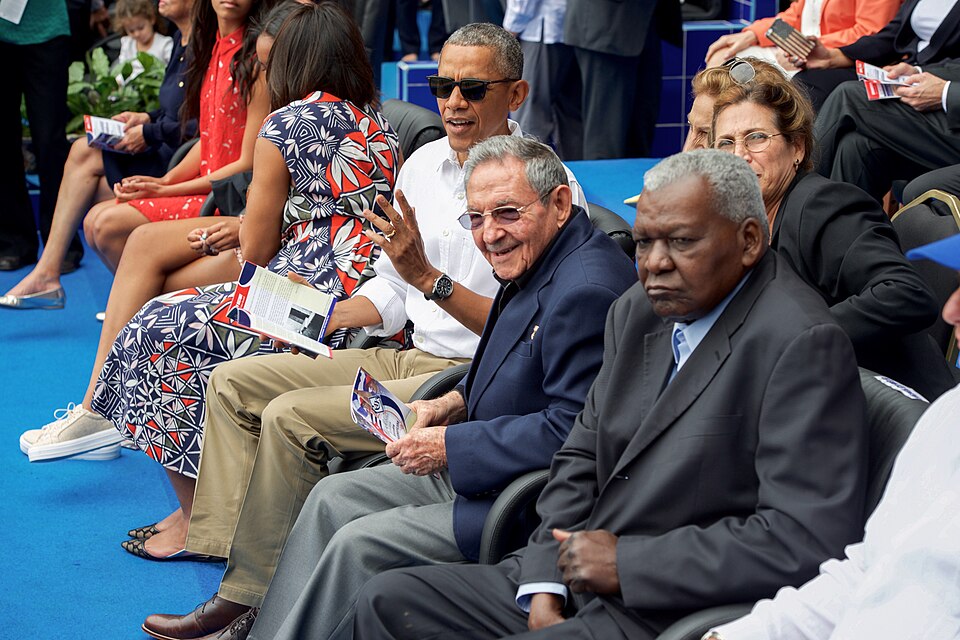
Former Cuban President Raúl Castro appeared publicly for the first time since August, according to Cuban state television. The footage showed him in his usual olive-green military uniform, walking alongside his grandson and bodyguard, Raúl Guillermo Rodríguez Castro. This was the first public showing of the 95-year-old leader since he reportedly became ill and was hospitalized last week, according to CBS News. Cuban authorities, however, had not publicly confirmed the hospitalization or reports that Castro had suffered a stroke; those claims circulated through foreign media and social media during the previous week.
Castro’s previous public appearance was on Aug. 13, and his absence from a major July event marking the anniversary of the Cuban Revolution had already fueled speculation about his health. The event was held to celebrate the 65th anniversary of the Personal Security Directorate, an agency of Cuba’s Ministry of the Interior responsible for protecting the country’s top leaders. Castro was seated in the front row of an indoor venue alongside high-ranking military officials. Cuban television also showed him standing several times to receive a commemorative certificate and greet people attending the ceremony.
Cuban state television reported that his grandson had participated in talks with the United States earlier this year. The Associated Press reported that the talks have since halted and that neither side has disclosed an agenda or detailed account of what was discussed. Rodríguez Castro, who holds no formal government office, told USA Today in an interview published in July that he was willing to negotiate with representatives of the United States.
The former president no longer leads Cuba’s Communist Party or holds an executive government post, but he remains a member of the National Assembly and retains the military rank of Army General. Castro stepped down as president in 2018 and relinquished leadership of the Communist Party in 2021.
Castro’s relatively brief absence from public view, combined with his unusual absence from the July revolutionary anniversary gathering, led to speculation about his health and future public activity. Reports of his hospitalization sparked strong reactions among Cuban exiles and residents in South Florida. Local 10 reported that Cuban Americans in Miami were discussing what Castro’s eventual departure could mean for the island as rumors about his condition circulated.
In May, the U.S. Department of Justice unsealed a superseding indictment charging Castro and five co-defendants over the 1996 shoot-down of two unarmed civilian aircraft operated by the Miami-based group Brothers to the Rescue. The indictment includes conspiracy to kill U.S. nationals, two counts of destruction of aircraft and four counts of murder. According to the Justice Department, Cuban military jets shot down the two Cessna aircraft outside Cuban territory, killing four people.
The International Civil Aviation Organization investigation similarly found that the two aircraft were shot down about 10 nautical miles outside Cuban territorial airspace. Brothers to the Rescue had previously conducted flights near and over Cuban airspace, and international investigators found evidence that some members of the organization sought to influence Cuba’s political situation. An indictment contains allegations, and the defendants are presumed innocent unless proven guilty.
Cuban television broadcast images of Castro at the event, showing him with several military leaders and in attendance at the ceremony. Cuban President Miguel Díaz-Canel wrote that it was an honor to participate alongside Army General Raúl Castro in the ceremony marking the Personal Security Directorate’s anniversary.
The United States has long maintained economic sanctions against Cuba, while the Trump administration intensified pressure in 2026 through a fuel blockade and an expanded sanctions program targeting Cuban entities, foreign supporters and financial transactions. The Treasury Department says the newer sanctions operate alongside the existing Cuban Assets Control Regulations rather than replacing them.
The fuel restrictions and expanded sanctions have exacerbated an existing five-year economic and energy crisis, alongside Cuba’s aging electrical infrastructure and chronic fuel shortages. Reuters reported that blackouts spanning days have become commonplace and that the U.S. fuel restrictions have contributed to increasingly severe power cuts. Cuban officials largely blame U.S. measures for the crisis, while the U.S. government says its sanctions are intended to pressure Cuba’s government to change its policies.