

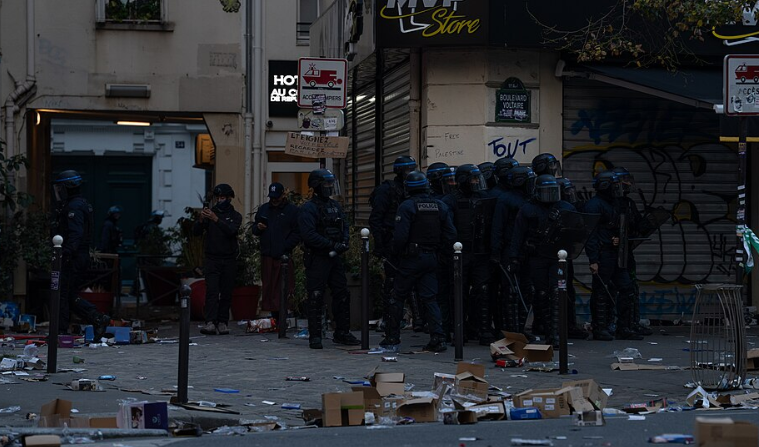
At least 3,000 businesses across France were damaged or looted during violent unrest on October 17 and 18, 2026, leaving shop owners facing extensive repair costs and lost income. The French government announced emergency financial assistance on Tuesday, October 20, as authorities continued assessing destruction in Paris, Marseille, Lyon and other cities.
The damage followed nationwide demonstrations against rising living costs, declining purchasing power and inadequate school funding. Most participants protested peacefully, but separate groups engaged in looting, arson and clashes with police that caused widespread disruption.
The scale of destruction became clearer as businesses reopened and local authorities assessed the damage. The government initially received reports of approximately 1,500 affected shops before raising the figure to 3,000 on Monday.
Marseille Among Cities Hit by Extensive Looting
Marseille suffered serious damage in its central shopping districts. Storefronts were smashed, merchandise was stolen and debris covered streets that normally attract shoppers and tourists.
Rue Saint-Ferréol, one of the city's main commercial streets, was among the areas affected. Cleaning crews worked to remove broken glass and scattered merchandise while shopkeepers examined damaged premises.
A Louis Vuitton boutique was among the businesses broken into during the unrest. Other retailers suffered damage to display windows, entrances and security systems.
The violence also reached Marseille's city hall, where people forced their way into the building and caused damage. Mayor Benoît Payan condemned the destruction and called for additional security resources.
Police reinforcements were deployed to help prevent further attacks and protect commercial areas. Municipal officials also established assistance services for businesses seeking information about repairs and financial support.
Paris experienced similar scenes. Shops around Les Halles and other major commercial districts reported broken windows, theft and property damage. Retailers including Nike and Sephora were among those affected.
In Lyon, firefighters responded to a blaze at the city's tourism office. Nearby shops were vandalized, and residents joined cleanup efforts as workers began restoring damaged streets.
Other communities reported attacks on public buildings, including a fire at the historic city hall in Limoges.
Thousands Protest Against Rising Living Costs
The unrest developed from demonstrations organized by students, labor unions and groups protesting economic conditions. Complaints about deteriorating school facilities and inadequate education funding helped bring young people into the movement.
Rising fuel prices, household expenses and concerns about public services broadened participation. Organizers demanded improved wages, greater investment in schools and measures to ease financial pressure on families.
Between 550,000 and 800,000 people joined demonstrations across France on October 17, according to estimates reported by Reuters and other news organizations. The demonstrations took place in more than 100 locations.
Most participants did not engage in violence. However, groups operating near demonstrations attacked businesses, damaged public buildings and confronted police officers.
Authorities reported more than 2,400 arrests over the weekend. Injuries were recorded among police officers and demonstrators, while the use of riot-control weapons attracted criticism.
President Emmanuel Macron condemned the destruction and promised action against those responsible. Prime Minister Sébastien Lecornu blamed radical activists and opportunistic criminals for much of the disorder.
However, researchers studying French protests cautioned against attributing all the violence to a single political movement. They noted that organized attacks on symbolic targets and theft from commercial premises may involve different participants and motivations.
Government Announces Emergency Financial Assistance
France's Finance Ministry announced several support measures on October 20 to help businesses recover from the destruction.
One measure allows affected employers to use an emergency reduced-working-hours program supported by the state. The arrangement is intended to preserve jobs when damaged premises cannot reopen immediately.
Eligible employees will receive compensation based on their usual wages, while businesses receive government assistance covering the required payments.
The government also introduced measures to ease immediate financial pressures. Affected companies can request delays in paying certain taxes and employer social contributions while arranging repairs.
Public investment bank Bpifrance will offer zero-interest loans of up to €50,000 over three years. The loans are intended to help businesses replace inventory and meet urgent expenses.
Smaller companies suffering substantial damage and business interruption may also qualify for targeted financial assistance. Craft and trade organizations have activated emergency support programs.
The measures are designed to help businesses resume operations without immediately facing the full financial burden of repairs, replacement goods and employee costs.
Insurance Claims Could Reach Hundreds of Millions
The final cost of the unrest remains uncertain because insurers are still collecting claims and evaluating damaged properties.
Euronews reported that France Assureurs, the country's insurance industry federation, had not yet produced a comprehensive estimate of losses as of October 20.
Many commercial insurance policies provide protection against vandalism, theft, fires and damage associated with riots. However, coverage depends on individual contracts and the circumstances surrounding each claim.
Business interruption is a particular concern. Even companies with insurance for physical damage may discover that lost revenue during closures is not fully covered.
Insurers have agreed to provide additional assistance, including faster claims processing and emergency payments in appropriate cases. The government said the deadline for reporting damage would be extended to 30 days.
The financial consequences could extend beyond small independent businesses.
French supermarket giant Carrefour warned on Tuesday that unrest and precautionary closures could reduce its operating income by €80 million to €200 million.
Chief executive Alexandre Bompard said approximately 50 Carrefour stores were affected on the first day of violence. The company reported significant damage and looting at several locations.
Carrefour lowered its annual earnings forecast and said it would reduce planned capital spending in France. Security expenses and reduced customer traffic have added to the financial pressure.
Previous Riots Show Potential Economic Costs
France experienced another period of widespread riots in 2023 following the police killing of 17-year-old Nahel Merzouk near Paris.
Those disturbances resulted in approximately €793 million in insured property losses, according to France Assureurs. A later French Senate investigation estimated total property damage at nearly €1 billion.
Businesses accounted for a substantial share of those losses. Public buildings, vehicles and transportation infrastructure were also damaged.
The 2026 unrest has already affected more shops than the number recorded during the 2023 disturbances, although the financial comparison remains preliminary.
Repair costs depend on the extent of damage, the value of stolen stock and the time required to restore normal operations. Businesses forced to remain closed may face continuing expenses even after their immediate physical losses are assessed.
France has also developed legislation intended to improve insurance protection against major civil disturbances. However, a new national riot insurance arrangement has not yet taken effect, leaving current claims subject to existing policies.
Further Demonstrations Raise Security Concerns
Authorities have increased security around vulnerable commercial districts as protest organizers prepare additional demonstrations.
Student organizations have called for further action, while groups seeking to revive the Yellow Vest movement have announced plans for Saturday, October 24.
Local officials have been authorized to consider targeted curfews and restrictions where necessary to prevent renewed violence. The government has also ordered a review of intelligence and security planning following criticism that authorities underestimated the potential for disorder.
Business associations are urging officials to protect shopping districts without preventing peaceful demonstrations.
For many shopkeepers, the immediate priorities remain clearing debris, securing damaged premises, documenting losses and reopening safely.
The government has begun distributing information about financial support, while insurers and local business organizations continue assessing claims. The full cost of the October riots will become clearer as those assessments proceed and businesses determine how long their recovery will take.