

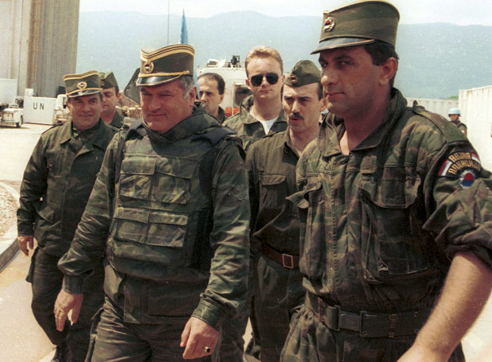
Thousands of people gathered early at the small Serbian Orthodox Church of St. Luke in Belgrade to pay tribute to Ratko Mladic, a man who remains a hero to many Serbs. Mladic was a military commander who died at age 84 in The Hague, Netherlands, while serving a life sentence for genocide and war crimes committed during the Bosnian conflict from 1992 to 1995. His body was brought back to Belgrade by the Serbian government on a special plane, and soldiers carried his coffin wrapped in the national flag.
A military commemoration was held at an official Serbian army site, and Mladic’s family arranged the funeral details while the government supported the event, according to ABC News. Mladic was described by a mourner as someone who gave everything to the Serbian people, with Milan Dobric traveling from Kosovo to attend, according to a report from France 24. The funeral service was led by the head of the Serbian Orthodox Church, Patriarch Porfirije, and Mladic’s military cap and sabre were placed on his coffin.
Mladic was buried with full military honors, despite strong criticism from European Union officials and regional leaders. European Union enlargement commissioner Marta Kos canceled a planned trip to Serbia in protest over the public recognition of Mladic after his death. The war that led to Mladic’s conviction left more than 100,000 dead and displaced over a million people before ending in a peace agreement brokered by the United States. Bosnia's foreign minister also said the country would withdraw most of its embassy staff from Belgrade in protest over Serbia's handling of the funeral, according to Reuters.
Serbia’s president, Aleksandar Vucic, who once supported nationalist policies during the conflict, dismissed EU criticism and accused Kos of lying. Vucic’s rhetoric has grown more anti-Western ahead of a key parliamentary election expected next month. Mladic was sentenced in 2017 for his role in the Srebrenica massacre, where over 8,000 Bosniak men and boys were killed. The United Nations tribunal convicted him of genocide at Srebrenica as well as crimes against humanity and violations of the laws or customs of war, and his life sentence was upheld on appeal in 2021.
He also played a part in the long siege of Sarajevo and was found guilty of running concentration camps for non-Serb civilians. Serbia continues to deny that genocide occurred in Srebrenica, calling it a 'horrific crime' instead. Since Mladic’s death, nationalist supporters have held vigils and painted murals of him in Belgrade.
The country also buried another convicted war criminal, Nebojsa Pavkovic, with full military honors last year. Serbia’s bid for European Union membership has stalled due to democratic backsliding and its refusal to join international sanctions against Russia. The conflict began after the breakup of Yugoslavia when ethnic Serbs in Bosnia tried to form a separate state linked with Serbia.
Srebrenica had been declared a UN safe haven for Bosniaks but was overrun by Bosnian Serb forces who killed men and boys and buried them in mass graves.