

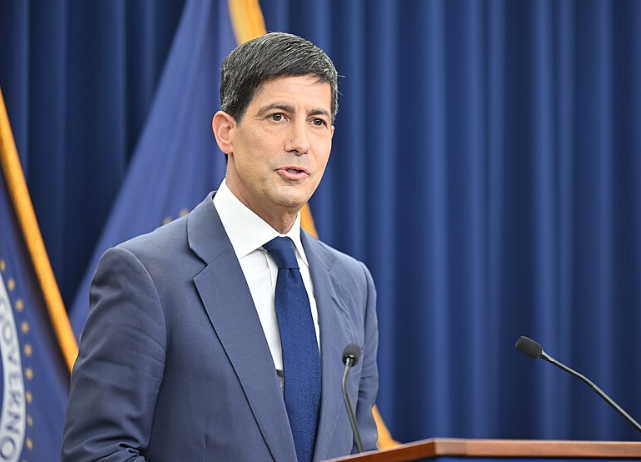
Federal Reserve Chairman Kevin Warsh announced on Wednesday that the central bank had unanimously decided to raise interest rates, signaling a shift from earlier hesitation. The Fed raised its target range by a quarter percentage point to 3.75% to 4%, the first increase since July 2023. This move comes as conflict in the Middle East has pushed oil and gasoline prices higher and added to persistent inflation. The Fed's decision reflects its view that the economy remains strong even though inflation is high. Warsh emphasized that while the economy is showing signs of improvement, inflation has been eroding Americans' purchasing power. He noted that the least well-off have the most to gain from stable prices and steady growth, which could help restore real wage increases.
Although the Fed's rate increase does not directly control mortgage or auto loan costs, it influences how much banks charge for borrowing, according to Yahoo Finance. The benchmark federal funds rate affects the cost of money between banks, which in turn influences rates that consumers pay. Auto loan rates are influenced by the Fed's benchmark rate, bond yields, lender funding costs and a borrower's credit profile. Major U.S. banks raised their prime rates to 7% from 6.75% after the Fed announcement. The most recent Fed meeting in September resulted in a rate hike, though the full impact on consumer loans will take time to show. While the Fed’s actions affect how much banks borrow from each other, lenders may adjust their own rates based on these changes.
Investors are demanding higher returns on bonds due to elevated inflation, which also pushes up long-term interest rates like mortgage costs. The 10-year Treasury yield recently surpassed 5%, a level not seen since 2023, reflecting investor concerns about inflation. By Thursday, the 10-year yield had fallen back to about 4.93% as bond markets stabilized. Tech companies’ massive bond issuance for AI data centers has also added to rising borrowing costs in the financial markets. Reuters reported that large technology companies have issued about $220 billion in bonds over the past year as they finance AI expansion.
Gold and silver initially fell after the Fed announced the rate increase. Spot gold dropped more than 1% on Wednesday and silver fell 1.7% as the dollar strengthened and investors expected tighter monetary policy. Both metals rebounded sharply on Thursday. Spot gold rose more than 2% to about $4,360 an ounce while silver climbed 4.2% to $65.60 an ounce as Treasury yields and the dollar eased.
Stocks also reacted in two stages. On Wednesday, the Dow Jones Industrial Average fell 1.21%, the S&P 500 lost 0.44% and the Nasdaq Composite slipped 0.01%. On Thursday, the Dow rebounded 0.62%, the S&P 500 gained 1.14% and the Nasdaq rose 1.69%. Reuters said the rebound was helped by lower oil prices, falling Treasury yields and solid labor market data.
Warsh pointed out that stronger economic growth has increased demand for capital, which naturally pushes up interest rates, according to Reuters. Warsh did not cite the rising national debt as a reason for the rate hike, though the U.S. debt surpassed $40 trillion earlier this month. He also did not address tariffs as a reason for the increase during his post-meeting remarks. Reuters reported that stronger growth, heavy capital spending and geopolitical uncertainty were among the forces Warsh discussed when explaining higher bond yields.
President Donald Trump criticized the Fed's decision, calling for lower interest rates and expressing frustration with the central bank’s approach. Trump said rates should be 1% or lower, but he also said he still had confidence in Warsh. Trump had repeatedly criticized former Fed Chair Jerome Powell over interest rates during Powell's tenure.
Economists cited by the Associated Press said Trump's comments don't reflect the full picture of why rates have risen, pointing to broader market forces beyond the Fed’s control. Many Americans are still waiting for relief from both inflation and high borrowing costs, but experts say those two issues are closely linked. The Fed's latest projections show that most policymakers expect at least one more rate increase before the end of 2026. Sixteen of 18 Fed policymakers projected a year-end rate above the current midpoint following Wednesday's increase.
Those with good credit scores and low debt are more likely to find favorable loan terms in the current environment. The Fed’s rate-setting meetings are important moments that give insight into how economic conditions may change in the near future. Consumers who have variable-rate loans should be prepared for potential increases as the Fed continues to respond to inflation and growth trends. Credit cards and home equity lines are among the products that can respond relatively quickly when banks raise their prime rates.