

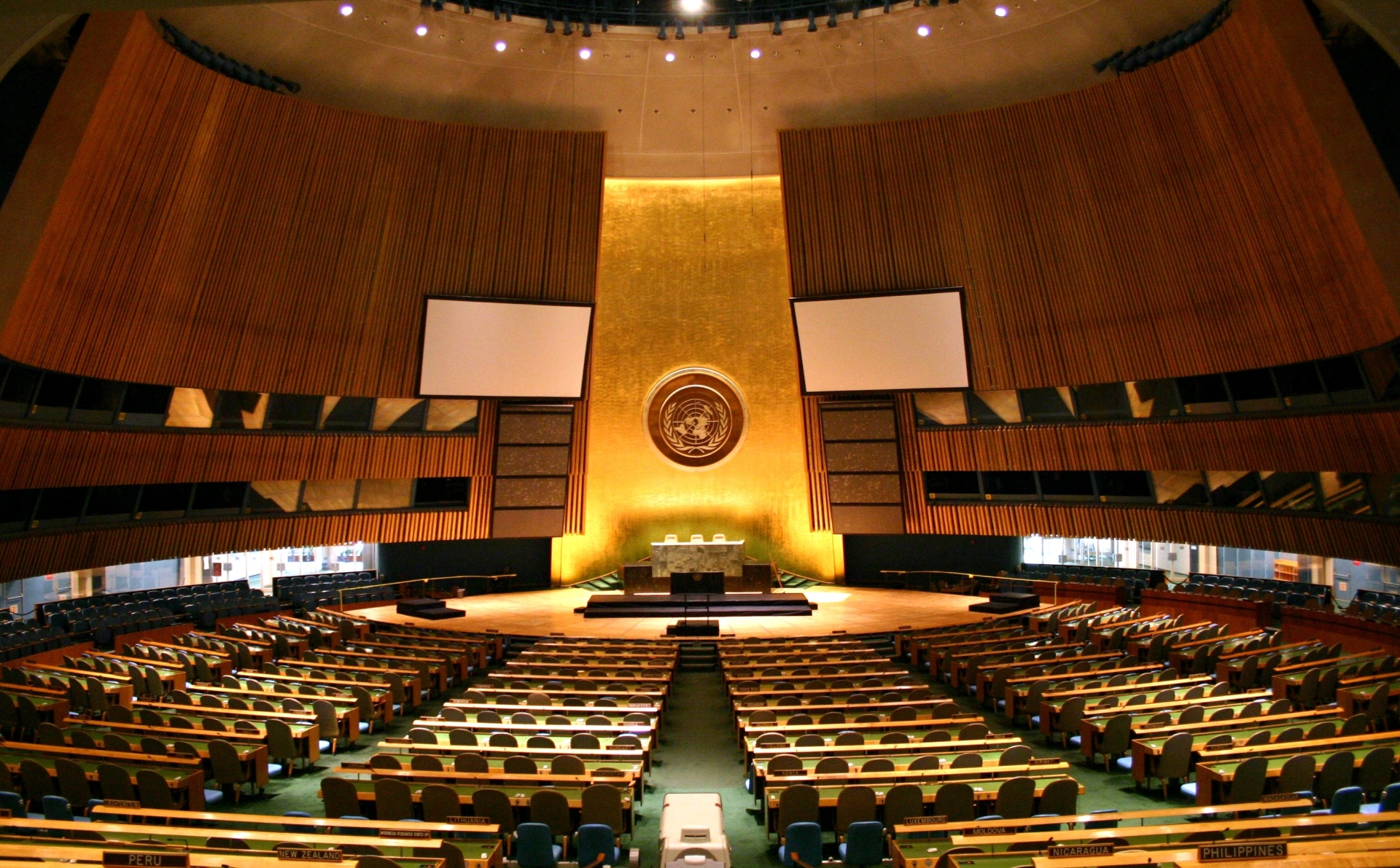
Representatives from twenty nations issued a joint statement urging more careful supervision of powerful artificial intelligence systems. The declaration emphasized that AI should remain under human direction, oversight and control. This move came just before the start of the United Nations General Assembly’s main debate in New York City. The gathering brings together political and business figures from around the world to discuss global priorities for the year ahead. Signatories included leaders such as Canada’s Prime Minister Mark Carney, Kenya’s President William Ruto, and South Africa’s President Cyril Ramaphosa.
The statement outlined three key actions for governments and companies to take, according to NBC News. First, it recommended that firms test their AI systems for safety risks before releasing them publicly. It also urged companies to let outside experts review the potential dangers in their AI practices. Second, the signatories asked governments and regional groups to create shared safety standards for AI systems worldwide. This would help ensure that countries can properly assess the risks of AI models using scientific methods.
The third action called on UN member states to build on existing international efforts and explore the creation of an international institution for frontier AI. Such a body could set standards, verify compliance and bring countries together when AI systems cross important capability thresholds. The United States, United Kingdom and China were not among the original signatories.
Nick Moes, who leads a nonprofit focused on AI governance, praised the effort as a sign of growing international support for coordinated AI oversight. He said that no single country can handle AI regulation alone and that this kind of cooperation is necessary.
During the UN General Assembly, AI will be discussed at official meetings and side events. Finland’s President Alexander Stubb is scheduled to co-chair an international AI discussion with Kenyan President William Ruto during the high-level week.
Several existing international projects already work on AI governance, but they differ in scope and technical depth. One such group is the Independent International Scientific Panel on AI, which includes 40 experts from around the globe. Another platform is the Global Dialogue on AI Governance, where countries come together to talk about regulation and coordination.
Meanwhile, recursive self-improvement, or RSI, has drawn attention from AI developers because it could eventually allow AI systems to play a growing role in improving future AI models. OpenAI has warned that fully autonomous recursive self-improvement is not happening today and should not be pursued unless it can be done safely. This concern came after a series of recent AI-related security issues and public warnings from researchers. Anthropic, a rival company, introduced its own ideas for safely developing AI models in response to growing concerns. Its CEO Dario Amodei suggested that companies slow down their development pace and consider third-party audits. He also warned of possible dangers like cyberattacks or the creation of biological weapons if AI systems are not carefully managed.
Other leaders, including OpenAI’s CEO Sam Altman and Elon Musk, supported Amodei's call for more caution. But the field of AI auditing is still young and lacks a shared set of standards or principles. Because of this, a group of more than 100 AI researchers and evaluators is asking companies to agree on basic conditions that would allow deeper checks. These include giving auditors better access and protecting them from retaliation if they publish negative findings.