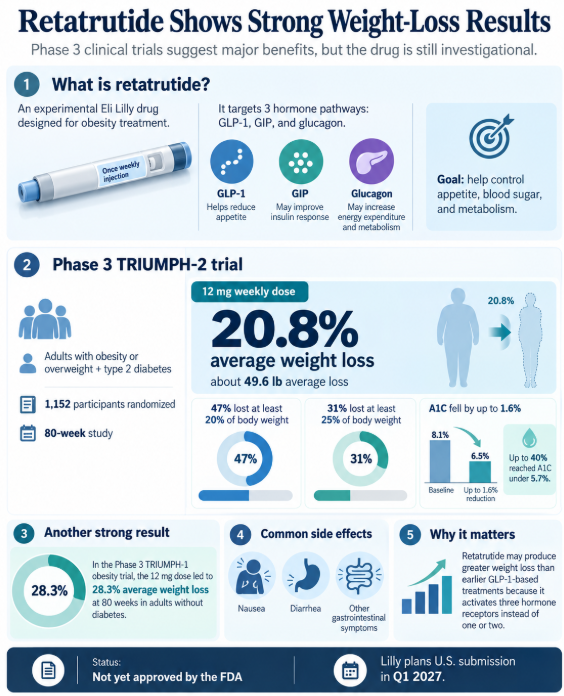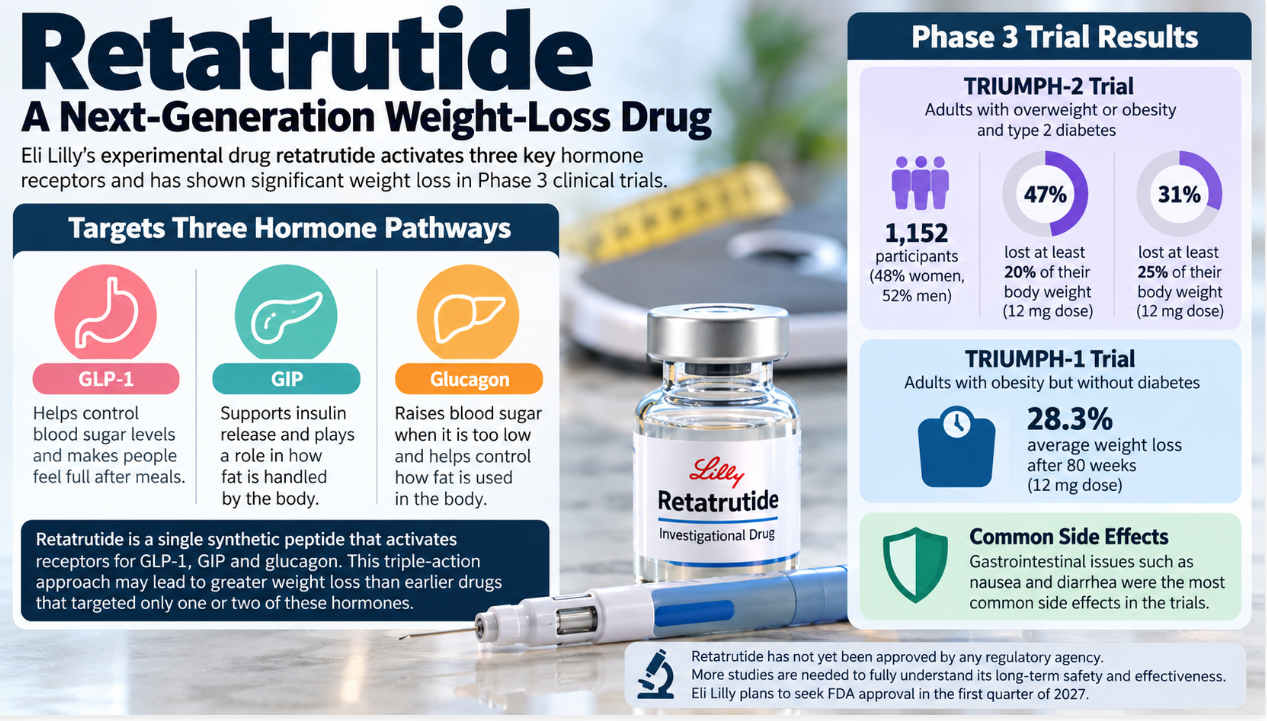
Eli Lilly is developing a next-generation obesity drug called Retatrutide, which builds on earlier treatments like tirzepatide and semaglutide. Retatrutide is a single synthetic peptide that activates receptors for three key hormones involved in food intake, blood sugar, and metabolism: GLP-1, GIP, and glucagon. These hormones help regulate how much we eat, how quickly the stomach empties, and how fat is stored or broken down in the body.
The drug has not yet been approved by any regulatory agency, but early trial results are promising, according to The Guardian. The clinical trial included people with a BMI of at least 27 and type 2 diabetes. Participants were 48% women and 52% men.
The Phase 3 TRIUMPH-2 trial randomly assigned 1,152 participants after screening 2,047 people. Some participants received a 12mg dose of the drug. Among those taking the 12mg dose, nearly half lost at least 20% of their starting weight.
About a third of them lost at least 25% of their original body weight.
The most common side effects were gastrointestinal issues such as nausea and diarrhea. Researchers emphasized the need for more studies to fully understand the drug’s long-term safety and effectiveness. They also noted that more research is needed on retatrutide in women of reproductive age.
GLP-1 is the most well-known of these hormones and is made in the gut after eating, according to a report from Ars Technica. It helps control blood sugar levels and makes people feel full after meals. GIP is released from the small intestine shortly after food enters the stomach.
This hormone helps with insulin release and also plays a role in how fat is handled by the body. Glucagon works opposite to GLP-1 and GIP by raising blood sugar levels when they are too low. It also helps control how fat is used in the body and influences how quickly food leaves the stomach.
Retatrutide activates receptors for all three hormones and may offer stronger weight loss than previous drugs. This approach is different from earlier obesity treatments that focused only on GLP-1 or GLP-1 and GIP together. Each hormone has its own role in the body and can affect different systems at different times.
The complex interactions between these hormones make it difficult to predict how they will work together in a new drug. Researchers are still learning how best to use this combination for treating obesity and related health issues. A separate Phase 3 trial in adults with obesity but without diabetes found average weight loss of 28.3% at 80 weeks with the 12mg dose.
Lilly says it plans to seek FDA approval for retatrutide in the first quarter of 2027.