

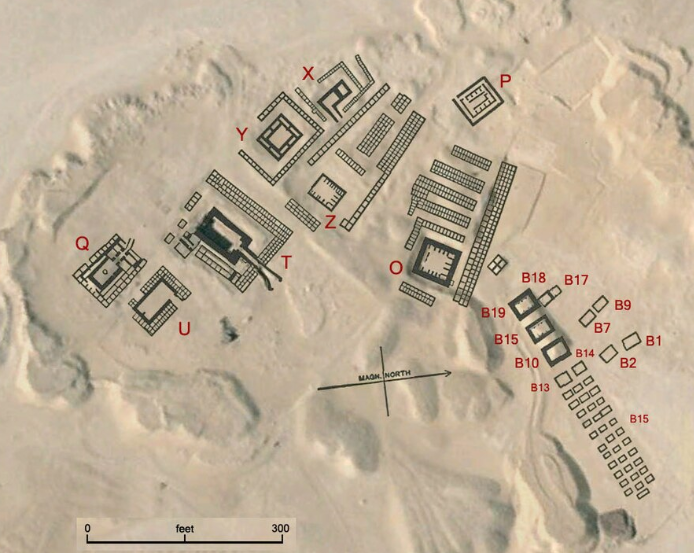
Forensic analysis of ancient Egyptian skulls has uncovered evidence that royal attendants were killed to accompany pharaohs into the afterlife. The study published in the journal Frontiers in Environmental Archaeology focused on 46 skulls from the First Dynasty period. These remains were excavated by archaeologist Flinders Petrie at Abydos in southern Egypt.
Petrie had noted the large number of burials near the pharaohs but did not find clear signs of violent death on the bones. The skulls were later stored in the Duckworth Collection at Cambridge University. Roselyn Campbell of Purdue University recently examined the remains with modern forensic techniques.
She found that 18 of the skulls showed signs of significant trauma including linear fractures and sharp-force wounds. These injuries suggest that at least some individuals may have been struck with a wide flat object rather than a mace. One skull even showed evidence of a chopping wound to the eye.
The fractures likely caused unconsciousness, internal bleeding and death.
Campbell explained that earlier researchers did not recognize these injuries as signs of violence. She noted that forensic and bioarchaeological methods have advanced significantly since Petrie’s time.
The study also looked into the biological sex and age of the individuals. Campbell cautioned that sex estimates based only on skulls are less certain than estimates that include pelvic remains. Some of the individuals may have died naturally or through methods that left no visible marks on the skull.
Researchers have suggested possible causes such as strangulation or asphyxiation for some of the other deaths. The preserved remains cannot establish how every person in the subsidiary graves died.
The practice known as retainer sacrifice was limited mainly to the First Dynasty around 3100–2900 BCE. It may have reflected beliefs that attendants would continue serving rulers in the afterlife while also displaying royal power. The practice declined by the end of the dynasty and later Egyptian burial traditions used servant figurines known as shabtis.
Campbell said the sample is limited but the findings support the idea that some of these individuals were deliberately killed.
The study does not show whether those people volunteered or were forced to die. Campbell and other scholars have noted that both possibilities may have existed. It also remains uncertain how many additional retainers were sacrificed.
Petrie reburied most of the remains so further investigation is limited. Campbell expressed a desire to locate and study more of the bodies if resources and access allowed. She noted that matching any recovered bones with the preserved skulls would be extremely difficult.