

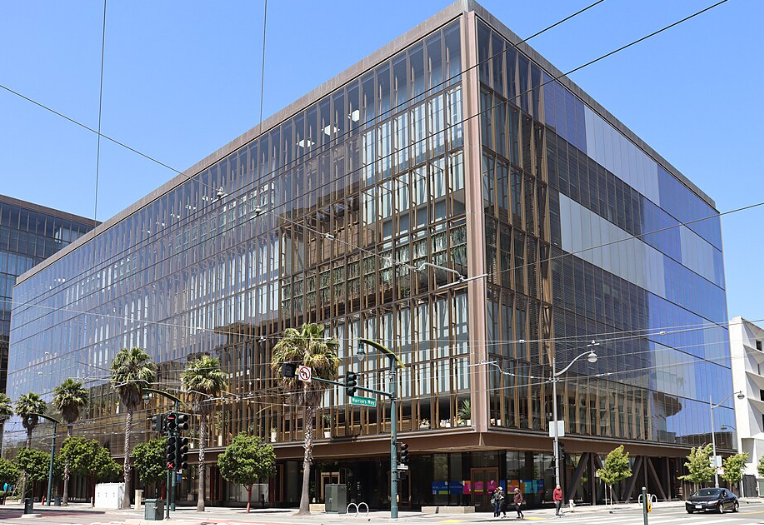
The FBI has arrested a former OpenAI engineer accused of secretly installing an audio recording device inside an executive conference room at the company's San Francisco office. Federal prosecutors announced the charges on October 13, 2026, raising concerns about internal security at one of the world's leading artificial intelligence companies.
Abdulrahman Alfozan, a 35-year-old Saudi Arabian national, was arrested on October 9 and appeared in federal court four days later. He is charged with using or attempting to use an electronic device to intercept private conversations without authorization.
Investigators allege that Alfozan concealed a sophisticated recording device behind a television in a room where company executives regularly discussed sensitive business and technical matters. The equipment was discovered during a security inspection on September 30.
OpenAI said it used its own AI systems to help investigate the device and identify the employee suspected of installing it. The company subsequently dismissed Alfozan and referred the matter to federal authorities.
The investigation is ongoing. Prosecutors have not established that confidential information was successfully recorded or transferred outside the company.
Hidden Recording Device Found Behind Television
According to the U.S. Department of Justice, OpenAI employees discovered the recording equipment on September 30 inside an executive conference room.
The device had been inserted into a USB port behind a wall-mounted television and concealed in toilet paper, making it difficult to notice during ordinary room inspections.
Investigators believe the equipment was installed around September 28, approximately two days before its discovery.
Federal authorities said the device contained encrypted data, although the criminal complaint does not establish what conversations, if any, were successfully captured.
The conference room was used for meetings involving some of OpenAI's most sensitive activities. These included proprietary research, product development, business strategy, government relationships and commercial partnerships.
Access to the room was restricted because discussions could involve confidential information about the company's artificial intelligence systems.
Prosecutors allege that Alfozan did not have authorization to enter the conference room or participate in the meetings held there.
The discovery prompted OpenAI to examine security footage, internal records and other information to determine who may have installed the equipment.
Surveillance Footage Raises Suspicions
Security camera recordings showed Alfozan near the executive conference room on several occasions before the device was discovered, according to federal investigators.
The footage placed him in areas connected to the room despite his lack of authorization to access it.
After discovering the recording equipment, OpenAI installed additional surveillance inside the conference room.
On October 5, cameras allegedly captured Alfozan entering the room and looking behind the television where the original device had been concealed.
The footage became part of the evidence presented in the federal criminal complaint.
Investigators also identified an unattended bag that Alfozan allegedly left elsewhere in an OpenAI building on October 5.
Security personnel opened the bag and discovered his wallet, identification documents and another recording device resembling the equipment found behind the television.
The discovery of the second device expanded the investigation into whether additional surveillance equipment had been prepared for use.
However, authorities have not publicly established that the second device was installed or successfully used to record conversations.
AI Chatbot Searches Become Part of Investigation
Federal prosecutors allege that Alfozan used artificial intelligence tools to research office locations, meeting schedules and recording equipment before the first device was discovered.
According to the Justice Department, he submitted multiple requests to a workplace productivity tool about OpenAI building addresses, conference room capacities and meeting calendars.
Some searches focused on locations used by senior leadership and external business partners.
Investigators also examined activity associated with a chatbot account linked to Alfozan's spouse.
That account shared several identifying characteristics with an account associated with Alfozan, according to prosecutors.
Between September 24 and September 30, the account submitted questions about building and customizing audio recording equipment.
The requests included information about Wi-Fi connectivity, improving recording quality, remote access and encrypting data stored on an SD card.
Investigators also identified prompts about creating a device capable of recording audio continuously.
Some of the questions referred to technical identifiers associated with the recording equipment discovered in the conference room.
Prosecutors consider the searches relevant to their allegation that the equipment was deliberately prepared and installed for unauthorized surveillance.
However, the complaint does not establish who personally typed every prompt submitted through the account linked to Alfozan's spouse.
It also does not establish that his spouse participated in a crime.
The allegations demonstrate how AI-generated technical information can become evidence in a criminal investigation when combined with surveillance footage and other records.
OpenAI Says Sensitive Data Was Not Stolen
OpenAI confirmed that the employee had been dismissed following the discovery and investigation.
The company said it used its AI models to better understand the device and determine how it had been introduced into the workplace.
Investigators examined its components and the possible methods by which recordings could be stored or transferred.
OpenAI described the equipment as sophisticated, with advanced encryption and audio monitoring capabilities.
The company also said it had identified technology designed to transfer information while avoiding detection.
Despite those findings, OpenAI reported no indication that Alfozan improperly accessed or removed model weights, source code or customer data.
Model weights are numerical parameters developed during AI training. They represent a valuable component of an AI system because they help determine how a model processes information and generates responses.
Source code and customer information are also among the sensitive assets technology companies seek to protect.
OpenAI's statement addresses its findings about those categories of information. It does not independently establish that no conversations were recorded or that all possible security risks have been eliminated.
The company said it continues cooperating with federal authorities.
Federal Prosecutors Cite National Security Concerns
The criminal case is being handled by the U.S. Attorney's Office for the Northern District of California.
Federal prosecutors said the alleged surveillance involved a company developing advanced artificial intelligence technology with significant commercial and national security implications.
U.S. Attorney Craig Missakian emphasized the government's responsibility to protect sensitive technology developed in Silicon Valley.
FBI Director Kash Patel also described the protection of advanced American AI technology as a counterintelligence priority.
Authorities believe the alleged recording activity was intended to capture sensitive communications about OpenAI's technical work.
However, the criminal complaint does not identify a foreign government as directing the alleged operation.
Alfozan's Saudi nationality does not establish a connection to Saudi intelligence services or any government-sponsored espionage effort.
The publicly disclosed charge concerns the attempted or actual interception of oral communications, rather than theft of trade secrets or acting as an agent of a foreign government.
That distinction is important because investigators have not publicly established who might have received any recordings or what the alleged suspect intended to do with them.
Former Engineer Faces Federal Criminal Charge
Alfozan began working at OpenAI as an engineer in July 2025, according to federal court documents.
He previously worked in the technology industry and was employed on OpenAI's product team before his dismissal.
The criminal charge alleges a violation of federal law prohibiting unauthorized interception of oral communications.
If convicted, Alfozan faces a maximum sentence of five years in federal prison and a $250,000 fine, followed by up to three years of supervised release.
Those penalties represent the statutory maximum rather than a prediction of the sentence he would receive.
Alfozan remains in federal custody following his initial court appearance on October 13.
A detention hearing is scheduled for October 19 before U.S. Magistrate Judge Alex G. Tse.
The Justice Department has not announced additional charges or identified other defendants in connection with the alleged recording devices.
As in all federal criminal cases, the allegations must be proven in court. Alfozan is presumed innocent unless prosecutors establish his guilt beyond a reasonable doubt.
Case Raises Questions About Workplace AI Security
The allegations come as technology companies invest heavily in artificial intelligence research and place greater importance on protecting confidential information.
Advanced AI development involves expensive computing infrastructure, proprietary software, specialized research and commercially valuable information.
Security measures commonly focus on preventing unauthorized computer access, protecting databases and monitoring suspicious network activity.
The OpenAI case illustrates a different concern: physical surveillance equipment placed inside a workplace where sensitive conversations take place.
Even companies with sophisticated cybersecurity systems can face risks involving people who have legitimate access to certain parts of their facilities.
The investigation also shows how digital records, workplace cameras and technical analysis can be combined to examine suspected internal security breaches.
AI tools played a role in the alleged planning described by prosecutors, while OpenAI said its own models assisted the investigation.
The case does not establish that AI software independently committed wrongdoing or that similar tools are inherently unsafe. The criminal allegations concern how an individual allegedly used technology to intercept communications.
For now, the central unanswered questions involve whether private conversations were actually captured, whether any information left OpenAI and what purpose the suspected surveillance equipment was intended to serve.
The FBI investigation remains active, and Alfozan's next scheduled court appearance is October 19. Further filings may clarify the equipment's capabilities and the evidence prosecutors intend to use in pursuing the charge.