

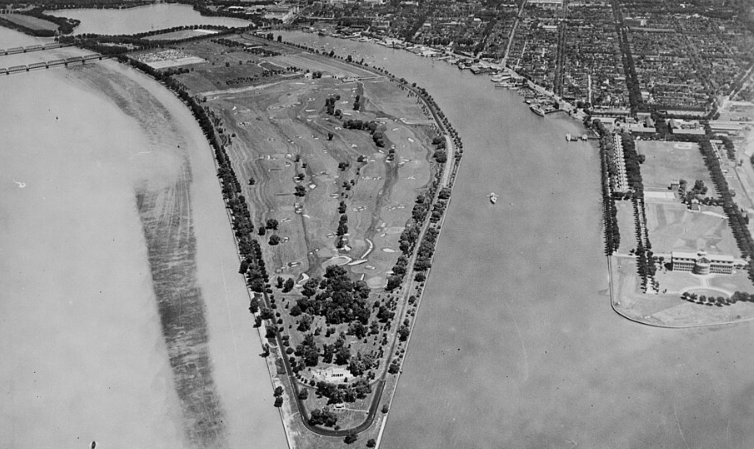
A federal judge has ordered the Trump administration to stop cutting down trees at the historic East Potomac Golf Links in Washington, D.C., after government crews removed approximately 430 trees over the Columbus Day weekend. The order, issued Tuesday, October 13, 2026, temporarily blocks further tree removal through October 26 while the court investigates how the work was authorized.
U.S. District Judge Ana Reyes sharply criticized Justice Department lawyers for failing to provide adequate advance notice before the large-scale clearing began. The judge had previously instructed federal officials to notify the court before undertaking work that could permanently change the public golf course.
The controversy has become part of a broader legal battle over President Donald Trump's plans to transform the historic recreational facility into a championship-level golf course. Preservation groups and residents argue that the government is making irreversible changes without sufficient public review.
The administration maintains that the tree removal is part of a longstanding maintenance and restoration effort, separate from the president's proposed redevelopment.
Hundreds of Trees Removed in One Day
The dispute escalated after the National Park Service notified the court late Friday, October 9, that it intended to remove up to 529 trees from the course in phases beginning the following day.
By Saturday evening, crews had already removed approximately 430 trees, according to government lawyers.
The speed of the operation alarmed preservation advocates, who had expected the court to receive sufficient notice before major changes occurred.
The D.C. Preservation League and other plaintiffs filed an emergency request to stop the work. They argued that the administration had moved forward despite repeated warnings from the judge about protecting the historic property during ongoing litigation.
Reyes held an emergency hearing on Monday, October 12, to question government attorneys and National Park Service officials about the operation.
During the hearing, she expressed particular frustration with the timing of the government's notification. The filing had arrived shortly before 5 p.m. on Friday, leaving little opportunity for opponents to respond before crews began working Saturday.
The judge said she had made clear in May that federal officials should provide advance notice before removing significant numbers of trees or making other permanent changes to the golf course.
According to Reuters, Reyes described the government's conduct as unacceptable and said she was deeply disappointed by its failure to follow her earlier instructions.
She initially ordered a temporary halt to the work before extending the restrictions through October 26.
Judge Questions Government's Credibility
The emergency hearing included unusually direct criticism of the Justice Department's handling of the case.
Reyes questioned why government lawyers had not given the court more time to review the tree removal operation.
She also challenged the administration's explanation that the work was unrelated to the larger redevelopment proposal.
At one point, the judge said the government's actions had damaged its credibility with the court.
The concern was not simply that trees had been removed. Reyes focused on whether federal officials had disregarded her instructions and deprived the plaintiffs of a meaningful opportunity to challenge the operation.
The judge warned that violating the temporary restrictions could result in contempt proceedings.
The court has also required advance notice before further activities that could permanently alter the property.
These measures are intended to preserve the remaining landscape while the court examines whether the government has complied with applicable legal requirements.
Reyes has not issued a final ruling on the legality of the entire redevelopment proposal.
Her October 13 order temporarily restricts additional work rather than permanently prohibiting renovation of the golf course.
Senior Interior Officials Ordered to Testify
The judge has ordered senior Interior Department and National Park Service officials to appear at another hearing scheduled for October 19.
Among those expected to testify are Gregory Wischer, deputy chief of staff at the Interior Department, and Jessica Bowron, acting director of the National Park Service.
The testimony is expected to address who authorized the tree removal, when the decisions were made and why the court received limited advance notice.
Reyes previously questioned National Park Service officials about the operation during Monday's emergency proceedings.
The court wants to determine whether the administration's explanations were accurate and whether federal officials understood the significance of the earlier instructions.
The testimony could also clarify the relationship between the tree-clearing operation and President Trump's proposed improvements to the course.
The government has insisted that the work was part of a restoration program that predates the current administration.
Its representatives have described the removals as necessary to address dead, declining, hazardous or historically inappropriate trees.
However, opponents dispute whether the operation can reasonably be separated from the broader redevelopment plans.
Trump Wants Championship-Level Golf Course
East Potomac Golf Links is a historic public golf facility located on a peninsula along the Potomac River near the National Mall.
The property includes an 18-hole course and additional nine-hole layouts. It is known for affordable public golf and views of the Washington Monument and other landmarks.
The area is also popular among cyclists, runners, walkers and people who visit the surrounding parkland.
President Trump has expressed interest in transforming the property into a championship-level golf destination capable of hosting major professional tournaments.
Supporters of the idea argue that substantial improvements could upgrade aging facilities and make the course more attractive to visitors.
Preservation advocates are concerned that an extensive redesign could change the historic landscape and reduce affordable recreational opportunities.
The debate intensified after the administration moved to take greater control of the publicly owned golf courses in Washington.
A lawsuit filed in February by the D.C. Preservation League and two local residents challenges the government's actions.
The plaintiffs argue that the administration has not followed the procedures necessary to make major changes to a historically significant public property.
Their concerns include whether federal environmental and historic preservation requirements have been adequately addressed.
The case also raises questions about public access and the future cost of playing golf at the site.
Government Says Tree Removal Was Planned Years Ago
The National Park Service has defended the clearing operation as part of a restoration effort developed in 2019.
Officials say the work is intended to restore historic sightlines, remove hazardous trees and improve conditions at the golf course.
The agency has stated that the operation is not intended to remove historically significant trees or the site's well-known cherry trees.
According to an Associated Press report published before the emergency hearing, the government described the work as necessary to restore features of the original golf course design.
Preservation groups reject the suggestion that the large-scale clearing should be treated as ordinary maintenance without additional review.
They argue that removing hundreds of trees can permanently change the character of a historic landscape, regardless of whether a formal redevelopment plan has been submitted.
The distinction matters because routine maintenance and major alterations to federal historic property can trigger different review obligations.
A longstanding maintenance plan does not automatically establish that every proposed action complies with current legal requirements.
The court is now examining whether the government provided appropriate notice and whether additional scrutiny is required.
Residents Fear Permanent Changes to Public Parkland
Community opposition extends beyond the trees themselves.
East Potomac Park has served Washington residents and visitors for generations. Its location near the National Mall makes it one of the capital's most recognizable recreational areas.
The golf course's relatively affordable fees have also been an important part of its identity.
Residents worry that rebuilding the facility to professional tournament standards could make it less accessible to ordinary golfers.
Others are concerned about the loss of mature trees, changes to the landscape and possible disruptions to nearby recreational activities.
Advocacy organization Democracy Forward, which is involved in the lawsuit, has criticized the administration's approach.
Its president and chief executive, Skye Perryman, has accused the government of making permanent changes to public landmarks before legal challenges can be fully considered.
Those allegations reflect the plaintiffs' position and have not been established by a final court judgment.
The administration argues that improvements to the golf course are intended to restore and enhance the property.
The disagreement illustrates the difficulty of balancing redevelopment, historic preservation and continued public access.
Tree-Cutting Ban Remains in Effect
The October 13 ruling prevents additional tree removal at East Potomac Golf Links through October 26 while the court continues examining the government's conduct.
Government lawyers have acknowledged that hundreds of trees were already removed, and additional trees had been identified for possible clearing.
The full environmental and historic impact of the completed work has not yet been determined.
Reyes is expected to question senior federal officials at the October 19 hearing about the planning, authorization and timing of the operation.
The testimony may influence whether the court imposes further restrictions or takes additional action against government officials.
For now, the larger redevelopment dispute remains unresolved. The immediate issue is whether the administration followed the court's instructions before carrying out changes that cannot easily be reversed.