

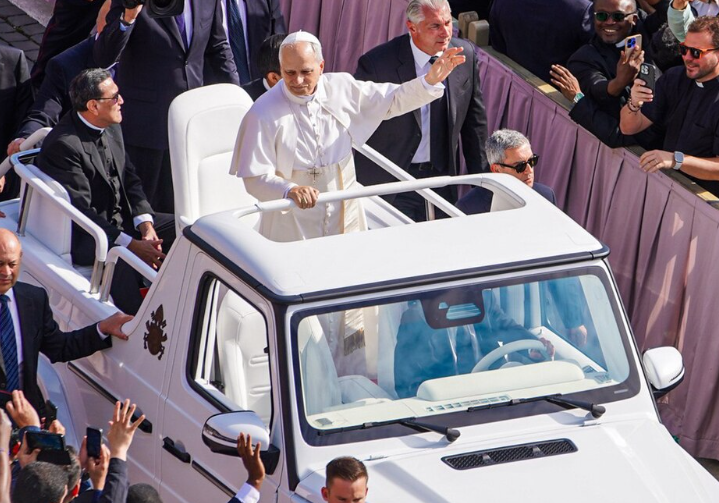
Pope Leo XIV is recovering in a Rome hospital after undergoing successful surgery to remove a cancerous growth from his right lung. The Vatican confirmed Wednesday, October 14, 2026, that the 71-year-old pontiff was walking, eating normally and making steady progress following the operation at Gemelli Hospital.
Doctors removed the lower lobe of his right lung Tuesday after earlier medical examinations identified a suspicious nodule. Tissue examined during surgery confirmed lung adenocarcinoma, the most common form of lung cancer.
The operation lasted approximately 90 minutes, although Leo spent about three hours in the operating room. Vatican officials said the procedure was completed without complications and the pope regained consciousness normally afterward.
Medical tests conducted Wednesday showed that his recovery was progressing as expected. Blood tests and a chest X-ray produced results within the normal range for someone who had undergone the same procedure.
The Vatican's latest medical update said Leo had begun respiratory physiotherapy and was walking around his hospital room. He had also resumed eating normally, including breakfast and lunch Wednesday.
The positive developments offered reassurance to Catholics worldwide following the unexpected announcement of the pope's cancer diagnosis. However, doctors have not yet confirmed whether the disease was completely removed or whether additional treatment will be needed.
The Vatican has not disclosed the cancer's exact stage or the results of tests examining possible involvement of nearby lymph nodes. Those findings will be important in determining the pope's prognosis and future medical care.
Leo first publicly discussed the lung nodule during his Sunday Angelus address on October 11. He told people gathered in St. Peter's Square that doctors had discovered a small abnormality during recent examinations.
The pope described the nodule as localized and detected at an early stage. He explained that doctors recommended removing it and that he had decided to follow their advice.
His announcement was unusually direct for a pope, whose medical information has traditionally been handled with considerable privacy. Leo thanked the faithful for their prayers and expressed confidence in the medical team responsible for his care.
He entered Rome's Agostino Gemelli University Hospital on Tuesday, October 13. Photographs showed him arriving at the medical facility and greeting supporters who had gathered nearby.
His personal physician, Dr. Luigi Carbone, accompanied him during the hospitalization. Professor Stefano Margaritora, chief of thoracic surgery at Gemelli Hospital, led the surgical team.
The procedure involved a technique known as video-assisted thoracic surgery. This approach allows surgeons to operate using a camera and specialized instruments, generally through smaller incisions than those required for traditional open-chest surgery.
Doctors removed the lower lobe of Leo's right lung to achieve what they described as a complete surgical removal of the suspicious tissue. The right lung normally contains three lobes, while the left contains two.
During the operation, specialists examined a tissue sample and confirmed the diagnosis of adenocarcinoma. The finding supported concerns raised by examinations conducted before surgery.
Following a brief observation period, Leo returned to his room on the hospital's tenth floor. Vatican spokesman Matteo Bruni said the pope requested dinner that evening and spent time with members of his staff.
He passed a peaceful first night after the operation. By Wednesday morning, doctors were carrying out routine examinations to monitor his breathing, circulation and overall recovery.
Lung adenocarcinoma begins in cells associated with the lungs' glandular tissue. It is a type of non-small cell lung cancer and can develop in people who have never smoked.
Treatment depends on factors including the tumor's size, location, stage and biological characteristics. Surgery can be an effective treatment when the cancer is detected before it spreads beyond the lung.
Medical experts consulted by Reuters and the Associated Press said early detection could offer a favorable outlook. However, they emphasized that the results of additional tissue testing would be necessary before determining whether the operation was curative.
Dr. David Jones, chief of thoracic surgery at Memorial Sloan Kettering Cancer Center, explained that some localized lung cancers can be successfully treated with surgery alone. More advanced disease may require chemotherapy, targeted medication or other treatment.
A successful operation does not automatically establish that a patient is cancer-free. Doctors must consider the final pathology results, including whether cancer cells are present in lymph nodes or at the edges of the removed tissue.
The Vatican has not announced a chemotherapy or radiation treatment plan for Leo. It has also not indicated that either treatment will be necessary.
For now, the medical team is concentrating on his postoperative recovery. Respiratory exercises and gradual movement are common parts of rehabilitation after lung surgery because they help patients regain breathing capacity and reduce complications.
The pope is expected to remain hospitalized for approximately one week. His public appointments have been canceled through October 20 to allow him time to recover.
Doctors generally expect recovery following this type of procedure to continue over several weeks. The precise timeline for Leo will depend on his progress, medical test results and the physical demands of his duties.
The hospitalization has already required changes to several Vatican events. On Wednesday, Cardinal Luis Antonio Tagle presided over a Mass in St. Peter's Square that Leo had originally been scheduled to celebrate.
The service included prayers for the pontiff's recovery. Catholics gathered in Rome and elsewhere have also held prayer services and sent messages of support.
World leaders have expressed concern and offered good wishes. Messages have come from King Charles III, U.S. President Donald Trump, Canadian Prime Minister Mark Carney and European Commission President Ursula von der Leyen.
The widespread response reflects the significance of the pope's position as leader of the Roman Catholic Church. Leo became the first American-born pope in May 2025, succeeding Pope Francis.
Born Robert Francis Prevost in Chicago, Leo previously served as a missionary and bishop in Peru. His long association with Latin America remains an important part of his background and pastoral work.
Before his hospitalization, the pope maintained an active schedule that included public audiences, religious celebrations and international travel. He had also been preparing for a major trip to South America.
A planned November visit to Uruguay, Argentina and Peru has not been officially canceled. However, questions remain about whether his recovery will permit the demanding journey.
Peruvian President Keiko Fujimori has indicated that scheduling changes may be needed depending on the pope's health. Vatican officials have not announced a final decision about the trip.
The medical situation has also renewed attention to how the Catholic Church functions when a pope becomes seriously ill. Unlike many political offices, the papacy has no designated deputy who automatically assumes full authority during a temporary incapacity.
The Vatican's departments can continue routine administration through established officials. Cardinal Pietro Parolin, the Vatican secretary of state, remains an important figure in coordinating institutional responsibilities.
Church law provides for a transition when a pope dies or voluntarily resigns but does not establish a comparable process for transferring all papal authority during a temporary medical incapacity.
There has been no indication that Leo intends to resign or that his condition has prevented the Vatican from continuing its regular administrative work.
The immediate medical reports have been encouraging. The pope is conscious, mobile and eating, while doctors report that his recovery remains within expected limits.
The next significant medical development will come when specialists complete their examination of the removed lung tissue and surrounding areas. Those findings will help determine whether Leo requires further treatment and how quickly he can resume his public responsibilities.