

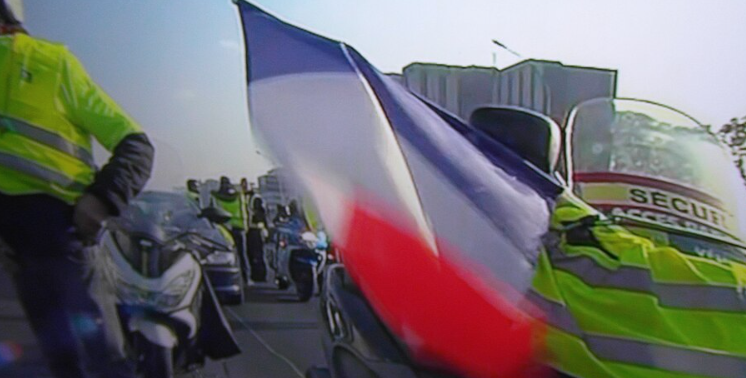
Protests against rising living costs and deteriorating public services spread across France on Saturday, October 17, 2026, as thousands of demonstrators gathered in Paris and other major cities. Most participants marched peacefully, but separate groups clashed with police, set vehicles and buildings on fire and damaged businesses, prompting hundreds of arrests.
The unrest was particularly severe in central Paris, where police used tear gas and water cannons against masked protesters near Place de la République. Fires broke out in vehicles and a newspaper kiosk, while several shops were looted during confrontations that continued throughout the day.
The demonstrations brought together people angry about the cost of food, fuel and energy, alongside students demanding better conditions in French schools. The nationwide mobilization drew inspiration from the yellow vest movement that began in 2018, adding to pressure on President Emmanuel Macron's government.
Violence Erupts in Central Paris
Police deployed large numbers of riot officers around Place de la République as confrontations developed between security forces and groups of masked demonstrators. Some protesters threw paving stones, fireworks and other objects at officers, who responded with tear gas and water cannons.
Associated Press journalists witnessed thick smoke rising from burning cars, bicycles and rubbish containers. A kiosk was also set ablaze, and several businesses suffered damage as confrontations spread through nearby streets.
France's Interior Ministry reported at least 272 arrests nationwide by midafternoon. That figure was preliminary, with later reporting indicating that arrests increased as police continued responding to incidents across the country.
Interior Minister Laurent Nuñez's office described an increasing number of violent incidents, including attacks on police officers, looting and damage to public buildings. Authorities deployed specialized riot-control units to contain confrontations and prevent groups from reaching sensitive government locations.
Despite the violence, much of the Paris demonstration remained peaceful. Large crowds marched toward the northwestern part of the capital, waving French flags and singing the national anthem.
Some marchers played trumpets and violins as they moved through the streets. Their participation illustrated the variety of people attending the protests, from students and union members to families frustrated with economic conditions.
Several Paris Metro stations were temporarily closed at police request. Restrictions affected areas near the Champs-Élysées, presidential palace, parliament and other government buildings as authorities attempted to control crowd movements.
Lyon and Marseille Report Fires and Damage
Violence also broke out in Lyon, where approximately 20,000 people participated in demonstrations. A tourist office near Place Bellecour was vandalized and set on fire during confrontations between masked individuals and security forces.
Footage from the city showed flames spreading along part of the building while smoke rose above the surrounding square. Police used tear gas and water cannons to disperse groups accused of throwing projectiles and fireworks.
Local authorities reported that firefighters experienced difficulties reaching the burning structure because of the unrest. The damage became one of the most visible incidents during Saturday's nationwide protests.
In Marseille, demonstrators entered part of City Hall before being removed by authorities. Shops and other properties were also damaged, while police responded to confrontations in the city's commercial districts.
Further demonstrations took place in Rennes, Toulouse, Montpellier, Grenoble and other communities. The level of disruption differed between cities, with many marches proceeding without major violence.
The widespread activity showed that public frustration extended beyond the capital. Protesters in different regions expressed concerns about wages, public spending, the cost of everyday necessities and access to essential services.
Cost-of-Living Concerns Revive Yellow Vest Movement
Saturday's mobilization followed calls circulated on social media encouraging people to revive the yellow vest movement. The original campaign began in November 2018 in opposition to planned fuel tax increases before expanding into protests over economic inequality and government policies.
The movement drew support from people who believed their incomes were failing to keep pace with living expenses. Its demonstrations continued for months and became one of the most significant political challenges of Macron's first presidential term.
The latest protests reflect similar economic grievances, although the participants represent a broader combination of organizations and campaigns. Labor unions, students and other groups joined demonstrations addressing different concerns.
Many participants complained that rising prices for food, transportation and household energy were placing additional pressure on families. Others criticized government spending priorities and argued that essential public services had not received sufficient investment.
The renewed activism comes ahead of France's 2027 presidential election, when economic conditions and public confidence in government are expected to feature prominently in political debate.
However, the participation of different groups does not mean all demonstrators share the same political objectives. Their demands range from immediate financial relief to longer-term changes in education funding and public services.
Student Protests Add to National Tensions
The nationwide demonstrations followed several weeks of protests by French high school students over poor educational conditions. Their complaints include teacher shortages, overcrowded classrooms, deteriorating buildings and unequal access to school resources.
Students began organizing blockades and marches in September, with participation expanding across the country. Some schools temporarily closed as demonstrators gathered outside entrances or prevented normal activities.
The movement attracted additional attention because of confrontations between students and police. Some demonstrations involved fires, property damage and projectiles, while students and human rights organizations accused officers of responding with excessive force.
Education Minister Édouard Geffray acknowledged that injuries had occurred during the protests. Authorities also reported significant damage to several schools, adding further difficulties for students already concerned about inadequate facilities.
One particularly serious incident occurred on October 5 outside Auguste-Béhal High School in Lens, northern France. A 15-year-old student lost a hand after a police stun grenade exploded during a confrontation.
The injury prompted an investigation into the circumstances surrounding the police intervention. The case also raised questions about the use of explosive crowd-control devices near minors.
On October 7, Interior Minister Nuñez suspended the use of certain stun grenades during high school demonstrations while investigators examined what happened. The measure applied specifically to policing the student protests rather than all law enforcement operations.
Greta Thunberg Joins Student Demonstration
The student movement received international attention when Swedish climate and social justice activist Greta Thunberg visited Paul Éluard High School in Saint-Denis on October 13.
Thunberg joined students protesting what they described as neglected school buildings and insufficient educational resources. The visit took place as demonstrations entered their fourth week, with organizers continuing to call for improvements.
Students at the school complained about missing teachers, damaged facilities and inadequate support services. Their concerns reflected broader disagreements over education funding, particularly in communities facing economic disadvantages.
The school protests have also attracted support from teachers, labor organizations and political figures. Some supporters argue that the demonstrations expose inequalities affecting young people from poorer communities.
Government officials have acknowledged the need to address educational complaints while warning against violence and damage to public property. The administration faces pressure to provide meaningful responses without encouraging further confrontations.
The overlapping student and cost-of-living demonstrations have created a wider challenge for authorities because they involve different demands, locations and organizing groups.
Government Faces Pressure Over Police Response
President Macron appealed for peaceful demonstrations before Saturday's protests, emphasizing the right to express political views while urging participants to respect people and property.
The government condemned attacks on police officers and public buildings, arguing that violent conduct should not be confused with lawful protest. Officials also promised investigations and prosecutions where criminal offenses were identified.
Civil liberties organizations have raised separate concerns about police tactics, particularly following the serious injuries reported during student demonstrations. They have called for accountability and closer examination of crowd-control practices.
The protests therefore present authorities with two immediate responsibilities: maintaining public safety and protecting the right to peaceful assembly. Both issues have become more contentious as confrontations have continued.
By Saturday evening, police were still assessing damage and making arrests following incidents in several cities. Investigations into fires, assaults and property destruction were expected to continue.
The government's response to student demands and economic grievances will remain under scrutiny as organizers consider further demonstrations. The next important developments include updated arrest and injury figures, investigations into police conduct and possible proposals addressing conditions in French schools.