

French health authorities confirmed the first documented human infection with Shamonda virus on October 22, 2026, after a seriously ill patient died in Lyon earlier this month. The virus, previously known to infect livestock, was detected in a patient whose immune system was severely weakened. Investigators are now examining whether the infection contributed to his death and how he contracted the virus.
The announcement marks the first recognized human infection worldwide, not just the first reported case in Europe. European health officials emphasized that the discovery does not currently indicate a broader public health threat, although important questions about the virus remain unanswered.
The patient was receiving treatment for a serious underlying illness at Hospices Civils de Lyon, a major hospital system in eastern France. He died in early October, but authorities have not established that Shamonda virus was responsible for his death.
French health researchers believe the virus may have contributed to neurological complications observed before the patient died. However, his severely weakened immune system made him particularly vulnerable to infections that might not cause serious illness in healthy individuals.
The French National Institute of Health and Medical Research, known as Inserm, announced that clinical, laboratory and epidemiological investigations were continuing. Researchers are examining evidence from human health, veterinary medicine and environmental surveillance to better understand the infection.
One leading possibility is that the patient contracted the virus through the bite of an infected midge in eastern France. The region experienced circulation of Shamonda virus among livestock during the spring and summer of 2026, making insect transmission a plausible explanation.
What Is Shamonda Virus?
Shamonda virus belongs to a group of viruses called orthobunyaviruses, which includes several pathogens transmitted by insects. It was first identified in cattle in Nigeria in 1965 and was subsequently detected in parts of Africa and Asia.
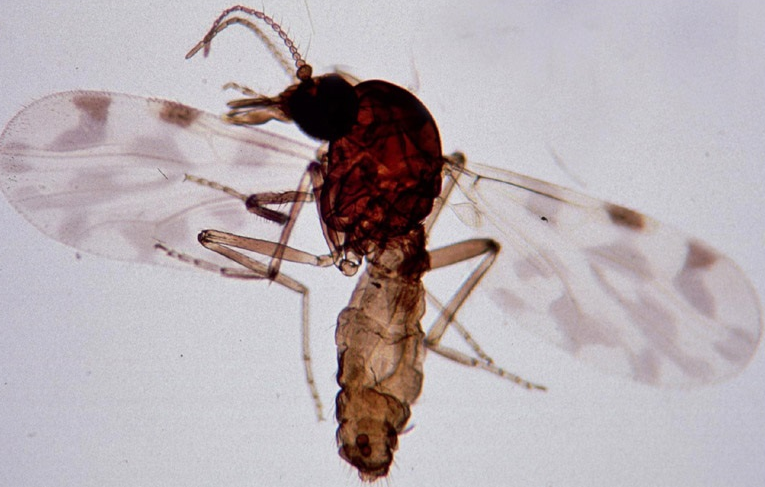
The virus spreads primarily through tiny biting insects called Culicoides midges. These insects feed on blood and can transmit certain viruses between susceptible animals, particularly cattle, sheep and goats.
Shamonda virus is related to Schmallenberg virus, another livestock pathogen that emerged in Europe in 2011. Both belong to the Simbu group of orthobunyaviruses, although they are distinct viruses with their own biological characteristics.
In livestock, Shamonda infection can cause fever, diarrhea, reduced appetite and declining milk production. Infected pregnant animals may also experience reproductive problems, including miscarriages and birth defects in their offspring.
Scientists are still determining how severely the variants circulating in Europe affect different animal species. Some infected cattle have experienced relatively mild illness, while other farms have reported substantial losses in milk production.
The World Organisation for Animal Health has identified two European variants, known as Shamonda virus Europe 1 and Europe 2. Their long-term effects on livestock populations are not yet fully understood.
Virus Appeared in European Livestock During Summer 2026
The first recognized European livestock infections were identified during the summer of 2026, although affected animals had begun showing symptoms in June. Laboratory testing identified the virus in late July, prompting investigations across several countries.
French agricultural authorities initially reported infections among dairy cattle in multiple departments. Similar findings subsequently emerged elsewhere in Europe as veterinary laboratories examined animals with unexplained fevers, diarrhea and reduced milk production.
Researchers from France's National Research Institute for Agriculture, Food and Environment helped identify the emerging virus through genetic analysis. Their findings, published in August, described a previously unrecognized Shamonda-like orthobunyavirus associated with illness in French cattle.
Investigators also found evidence of infection in other animals, including horses, sheep, goats and alpacas. Reports of neurological illness in some horses attracted particular attention because related viruses can affect the nervous system.
The appearance of Shamonda virus in Europe has raised questions about whether changing environmental conditions, insect populations or animal movements contributed to its spread. Scientists have not established a single explanation for its emergence.
Unlike diseases that spread directly between infected animals, Shamonda virus is primarily associated with insect transmission. Researchers have also documented transmission from pregnant animals to their developing offspring.
Health Agencies Say Public Risk Remains Low
The European Centre for Disease Prevention and Control announced on October 22 that it was monitoring the French case and working with national authorities. Its assessment emphasized that the patient had a serious underlying medical condition that made him unusually vulnerable to infection.
Scientists have not identified evidence of sustained transmission between humans. They also have not established that infected livestock can directly transmit the virus to people through ordinary contact.
Public health experts caution that a single documented human infection cannot establish how commonly people become infected or what symptoms might appear in otherwise healthy individuals. It is possible that additional infections have gone unrecognized, but there is not enough evidence to determine whether that has occurred.
The World Organisation for Animal Health is working with the World Health Organization and veterinary research networks to examine potential risks. Cooperation between animal and human health authorities is particularly important because the virus was circulating in livestock before the human infection was recognized.
For farmers, reducing exposure to biting midges remains an important consideration when managing livestock diseases spread by insects. Veterinary officials can investigate unexplained illness in farm animals and help distinguish Shamonda infection from other infections producing similar symptoms.
The discovery does not establish that farm workers or rural residents face a significant new health danger. Any assessment of occupational risk will require better evidence about whether the virus can infect healthy people and how frequently insect exposure results in infection.
Investigators Focus on Cause of Death and Transmission
Two central questions remain unanswered: whether Shamonda virus caused or worsened the patient's neurological complications, and precisely how he became infected. French researchers have indicated that the neurological problems were very likely associated with the infection, but determining its role in the death requires further investigation.
Scientists must also consider whether the patient's severe immune suppression made this an exceptional event. The virus circulated among animals for decades before a human infection was documented, suggesting that recognized human infections are extremely uncommon.
French authorities have notified international health organizations and are continuing their investigation alongside European disease specialists. Further laboratory findings and surveillance of livestock may help clarify the significance of this first recorded human case.