

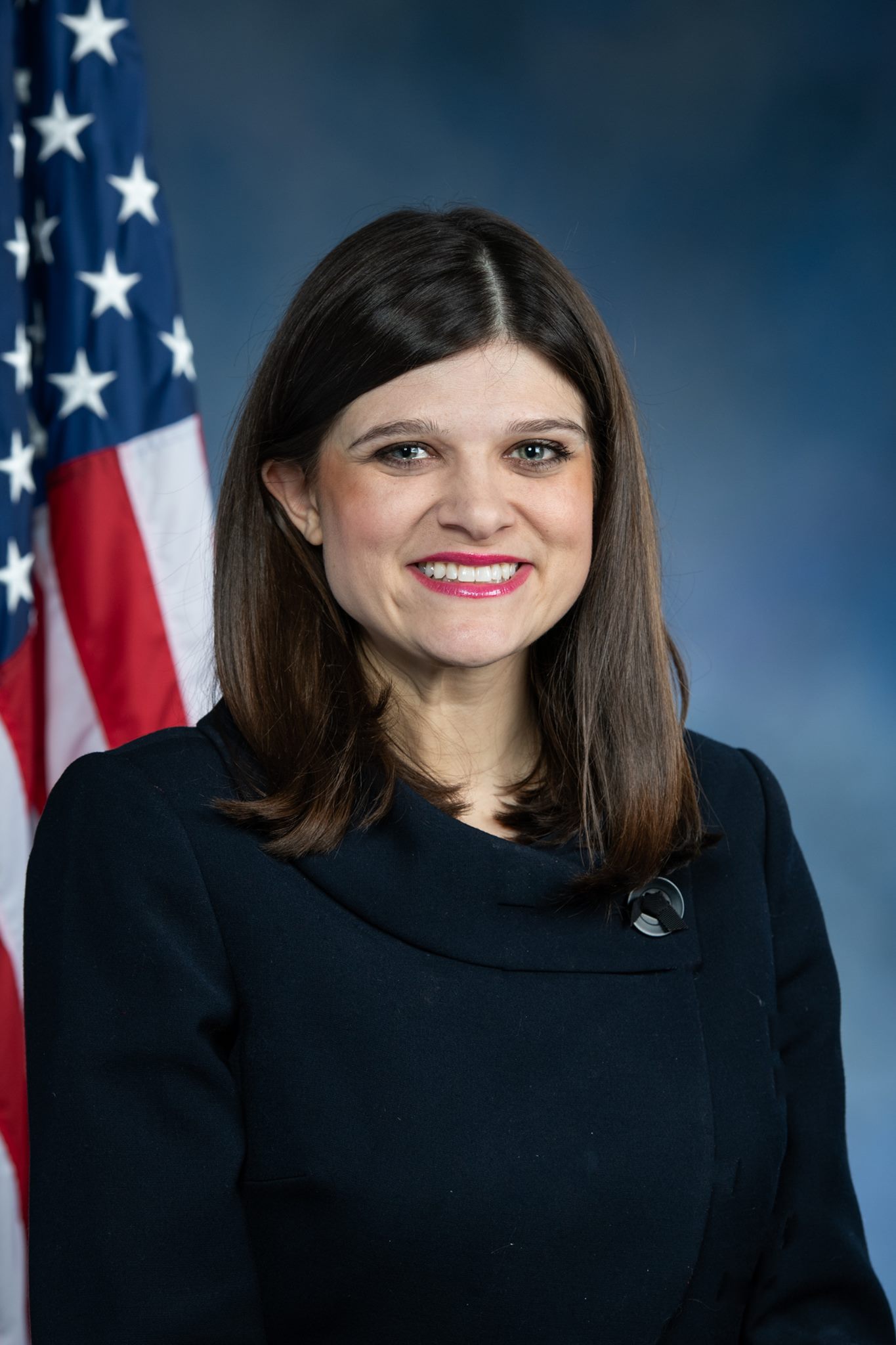
Democratic Rep. Haley Stevens endorsed Republican Mike Rogers in Michigan's closely contested U.S. Senate race on Sunday, November 1, 2026, abandoning her support for Democratic nominee Abdul El-Sayed just two days before Election Day. The unexpected decision followed weeks of growing tensions between Stevens and El-Sayed, who defeated her in Michigan's August Democratic primary.
Stevens announced her endorsement after attending a church service with Rogers at Perfecting Church in Detroit. The appearance came after plans for her to participate in a campaign event with El-Sayed and other prominent Democrats collapsed.
The endorsement immediately drew criticism from Democratic leaders and prompted resignations among Stevens' congressional staff. It also handed Rogers a significant political development during the final days of a race that could help determine control of the U.S. Senate.
Haley Stevens Announces Support for Mike Rogers
Stevens confirmed her decision in a video posted on social media Sunday afternoon. She said El-Sayed had made it clear that she was no longer welcome in his campaign and that she should stay away.
The congresswoman described that decision as a turning point in her support for the Democratic nominee. She then announced that she was endorsing Rogers for the Senate seat being vacated by retiring Democratic Sen. Gary Peters.
Stevens had previously promised to support El-Sayed after losing their primary contest. As recently as the previous week, she publicly stated that she intended to vote for the Democratic ticket.
Her endorsement represented a major reversal, particularly because Rogers has the backing of President Donald Trump. Stevens has spent her congressional career as a Democrat and previously campaigned against Republican positions on several major issues.
Speaking to reporters after the church service, Stevens argued that her decision did not mean she was abandoning the Democratic Party. She said she expected to support Democratic candidates in most other races but would vote for Rogers in the Senate contest.
Stevens emphasized that her endorsement concerned one particular election rather than a broader change in party affiliation. She also presented the decision as a response to political divisions and concerns about antisemitism.
Rogers welcomed the endorsement and said he was honored by her support. He characterized the unusual political partnership as an example of putting concerns about the state and country ahead of party differences.
Detroit Church Appearance Draws Attention
The endorsement followed a surprising scene at Perfecting Church, where Stevens attended Sunday worship alongside Rogers and his wife, Kristi. Stevens was accompanied by her fiancé, Jason Turkish.
Photographs showed the Democratic congresswoman and Republican candidate sitting together during the service. Their appearance quickly attracted attention because Stevens had been expected to participate in a different church event with El-Sayed.
The Democratic campaign had planned a gathering featuring prominent party figures, including Rep. Jim Clyburn of South Carolina. The event was intended to present a united front during the final stretch before the November 3 election.
Instead, Stevens joined Rogers while El-Sayed campaigned at another Detroit church. The competing appearances provided a visible example of the disagreements that had developed within Michigan's Democratic coalition.
According to NPR, the congresswoman's appearance with Rogers followed the breakdown of plans for her to join El-Sayed at the scheduled event. The dispute had already become public before Sunday.
El-Sayed previously indicated that he did not want disagreements involving Stevens to distract from his campaign's central issues. Stevens interpreted his position as a clear message that her participation was no longer wanted.
The Republican campaign publicized the appearance, recognizing its political importance shortly before voters were scheduled to choose Michigan's next senator.
Disagreement Over Israel and Campaign Advertisement
The relationship between Stevens and El-Sayed had deteriorated over disagreements involving Israel, antisemitism and the conduct of political supporters.
Stevens has been a strong supporter of Israel, while El-Sayed has criticized the Israeli government's policies and American military assistance. Their different positions contributed to tensions during and after the Democratic primary.
The immediate dispute centered on an advertisement produced by an outside political group associated with commentator Cenk Uygur. The advertisement connected American financial support for Israel with rising grocery prices.
Stevens condemned the advertisement as antisemitic and called on El-Sayed to reject it publicly. She also demanded an apology and raised concerns about how his campaign was addressing Jewish voters.
El-Sayed said his campaign had not created the advertisement and disagreed with its contents. He also accused Stevens of reopening conflicts from a primary election that had already ended.
The disagreement expanded to include political streamer Hasan Piker, who had appeared with El-Sayed during the campaign. Stevens criticized El-Sayed's association with Piker because of remarks she and other critics regarded as antisemitic.
El-Sayed has distanced himself from controversial statements made by Piker. His campaign has also maintained that criticism of Israeli government policies should not automatically be treated as hostility toward Jewish people.
The dispute illustrated disagreements among Democrats about Israel and political messaging. Those tensions became especially consequential in Michigan, where Jewish and Arab American communities are important parts of the electorate.
Abdul El-Sayed Responds to the Endorsement
El-Sayed declined to make Stevens' endorsement a central subject of his final campaign appearances. Instead, he emphasized the concerns of Michigan residents and the economic issues he believes should determine the election.
Speaking to reporters Sunday, he said he was more interested in discussing public policy than personal disputes. He pointed to grocery prices, gasoline costs and environmental conditions as problems affecting families throughout the state.
El-Sayed also criticized the Republican political agenda supported by Rogers and Trump. He argued that voters should focus on the policies each candidate would pursue in Washington rather than the disagreement involving Stevens.
The Democratic nominee had narrowly defeated Stevens in the August primary after a competitive campaign. The party had hoped that supporters of both candidates would unite before the general election.
The late endorsement complicated those efforts. However, it does not establish how many voters will change their preferences or whether it will affect the final result.
Democratic Leaders Condemn Stevens' Decision
The response from Democratic officials was immediate and sharply critical. Michigan Democratic Party Chair Curtis Hertel accused Stevens of abandoning the political commitments she had previously expressed.
Hertel rejected efforts to divide the party during the final days of the campaign. He emphasized that Michigan Democrats remained committed to supporting El-Sayed against Rogers.
Senate Minority Leader Chuck Schumer, who supported Stevens during the primary, also condemned her endorsement. He described it as a betrayal and reaffirmed Senate Democrats' support for El-Sayed.
The controversy extended into Stevens' congressional office. Her longtime chief of staff, Justin German, resigned following the announcement.
German said he was deeply disappointed by the decision and encouraged Michigan residents to support El-Sayed. Reports indicated that additional staff members also resigned or were preparing to leave.
The resignations showed that the endorsement created disagreements not only between competing campaigns but also within Stevens' own political organization.
Republicans responded differently. Rogers and his allies praised Stevens for crossing party lines, presenting her decision as evidence of broader dissatisfaction with El-Sayed.
Trump also welcomed the endorsement and praised Stevens publicly. His reaction gave the development additional national attention as both parties competed for Senate seats across the country.
Michigan Senate Race Could Affect Control of Congress
The contest between El-Sayed and Rogers is among the closely watched Senate elections of 2026. Both parties view Michigan as important to their efforts to control the chamber.
The seat is currently held by Gary Peters, a Democrat who announced that he would not seek another term. His retirement created an open-seat contest in a state that has experienced competitive statewide elections.
Rogers previously represented Michigan in the U.S. House of Representatives and served as chairman of the House Intelligence Committee. He also ran for the Senate in 2024, narrowly losing to Democrat Elissa Slotkin.
El-Sayed is a physician and former public health official who previously served as executive director of the Detroit Health Department. He ran for governor in 2018 before entering the 2026 Senate race.
The candidates have offered different approaches to federal spending, health care, immigration and economic policy. Their campaigns have also disagreed about American foreign policy and the country's relationship with Israel.
Stevens' endorsement added another complication to an already competitive election. Its effect on turnout or voter preferences cannot be determined from the announcement alone.
Election Day Approaches Amid Democratic Divisions
Michigan voters will decide the Senate race on Tuesday, November 3, with early voting already underway. The result will determine who succeeds Peters when the new Congress begins in January 2027.
Stevens has maintained that she remains a Democrat despite supporting the Republican nominee. Her party's leadership, however, has strongly rejected her decision and continued campaigning for El-Sayed.
The final days of the election will test whether Democrats can move beyond the dispute and whether Rogers can gain support from voters who previously backed Stevens.
For now, the central development is clear: a Democratic congresswoman who lost her party's Senate primary has endorsed the opposing Republican candidate less than 48 hours before Election Day. Michigan voters will determine the outcome on November 3.