

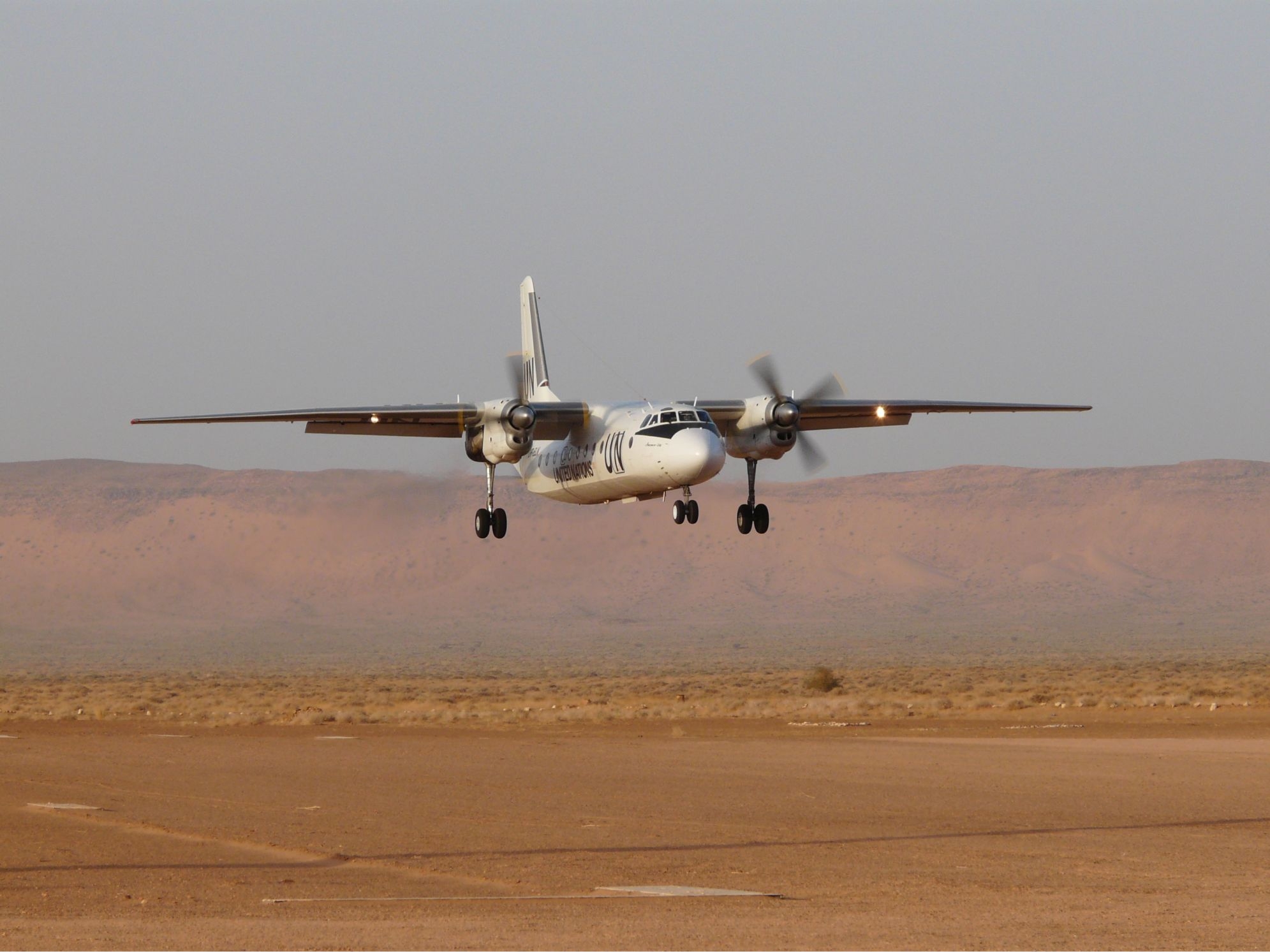
The United Nations has begun winding down its 35-year peacekeeping mission in Western Sahara after a diplomatic confrontation between the United States and Russia prevented the Security Council from renewing its mandate. The mission's authorization expired on October 31, 2026, ending a decades-long operation intended to monitor a ceasefire and support a referendum on the disputed territory's future.
The decision followed competing Security Council votes on Friday, October 30. Russia vetoed an American-backed resolution that favored Morocco's autonomy proposal, while a separate Russian plan to extend the mission failed to secure enough votes.
UN Secretary-General António Guterres confirmed that the United Nations Mission for the Referendum in Western Sahara, known as MINURSO, would begin winding down on November 1. The development leaves the international organization without its long-standing peacekeeping presence in a territory claimed by Morocco and the independence-seeking Polisario Front.
Russia and United States Clash at Security Council
The diplomatic confrontation centered on whether the United Nations should continue pursuing a referendum on Western Sahara's political status or prioritize Morocco's proposal for limited autonomy under Moroccan sovereignty.
The American resolution would have extended the mission's authorization until October 31, 2027, while substantially changing its purpose. The proposal called for renaming MINURSO the United Nations Mission in Western Sahara, removing the explicit reference to a referendum.
It also supported Morocco's autonomy plan as the principal framework for negotiations. The proposal would have reduced the mission's military component and placed greater emphasis on facilitating a political agreement.
Russia opposed the draft, arguing that the Security Council should not effectively determine the territory's sovereignty before negotiations produced an agreement. Russian Ambassador Vassily Nebenzia said the proposal favored one party and undermined the principle of self-determination.
The American resolution received support from 11 Security Council members, including France and the United Kingdom. Russia exercised its veto as a permanent member, preventing adoption despite the majority in favor.
Council members then considered a Russian proposal that would have renewed MINURSO's existing mandate for another year without the sweeping changes proposed by Washington.
That resolution also failed. It did not receive the nine affirmative votes required for adoption, leaving neither proposal in place when the existing authorization expired.
The Security Council's failure to agree ended MINURSO's authorized mandate without establishing a replacement peacekeeping operation. Any renewed mission would require another Council decision.
Morocco Welcomes End of UN Peacekeeping Mission
Morocco's royal palace welcomed the failure to renew MINURSO, describing the development as a significant change in the long-running dispute.
The kingdom considers Western Sahara part of its southern provinces and maintains that autonomy under Moroccan sovereignty offers the most realistic path toward resolving the conflict.
Moroccan officials argued that the United Nations should move beyond the referendum framework established in 1991. They also called for the withdrawal of the mission's personnel, vehicles and equipment following the expiration of its mandate.
The royal palace said the peacekeeping presence should end in the coming days. Morocco nevertheless stated that it remained committed to respecting the ceasefire.
The development follows years of diplomatic efforts by Rabat to secure international recognition of its position. The United States recognized Moroccan sovereignty over Western Sahara in 2020, while France and the United Kingdom have increasingly supported Morocco's autonomy proposal.
That support has strengthened Morocco's diplomatic position, but it has not resolved the territory's disputed international legal status.
The United Nations continues to classify Western Sahara as a non-self-governing territory. Its final political status remains unresolved despite decades of negotiations.
Polisario Front Condemns US Proposal
The Polisario Front, which seeks independence for Western Sahara, strongly opposed the American resolution and welcomed Russia's decision to block it.
Polisario representative Sidi Omar argued that Washington's proposal would have undermined the foundations of the United Nations peace process. The movement maintains that the Sahrawi people must be allowed to determine their political future through self-determination.
The organization rejected the idea that Moroccan sovereignty should be treated as the only acceptable outcome of negotiations. It has repeatedly insisted that independence must remain an available option.
Algeria, Polisario's principal regional supporter, also criticized the American proposal. Its foreign ministry expressed regret over the failure to extend MINURSO while accusing Washington of showing excessive favoritism toward Morocco.
The disagreement reflects the wider rivalry between Morocco and Algeria, which have maintained opposing positions on Western Sahara for decades.
The neighboring countries severed diplomatic relations in August 2021. Their relationship has remained tense amid disputes over regional security, political influence and military spending.
Although Russia vetoed the American resolution, its action should not be interpreted as formal recognition of an independent Western Sahara. Moscow's stated objection concerned the proposed negotiating framework and the Security Council's role in determining sovereignty.
Why Western Sahara Remains Disputed
Western Sahara occupies a large stretch of desert along Africa's northwestern Atlantic coast. The territory contains valuable phosphate deposits, fishing resources and potentially significant energy opportunities.
Spain administered the region until 1975, when it withdrew during the final years of Francisco Franco's rule. Morocco subsequently asserted control over much of the territory, while the Polisario Front pursued independence.
The dispute developed into an armed conflict involving Moroccan forces and Polisario fighters. Thousands of Sahrawi refugees fled to neighboring Algeria, where refugee camps were established near the town of Tindouf.
Fighting continued until a United Nations-brokered ceasefire took effect in 1991. That agreement created the framework for a referendum intended to allow the population to decide its political future.
The Security Council established MINURSO through Resolution 690 in April 1991. Its responsibilities included monitoring the ceasefire, supporting conditions for a vote and helping implement the proposed settlement.
The referendum never occurred because Morocco and the Polisario Front could not agree on who would qualify to participate. Disputes over voter identification, eligibility and political status repeatedly prevented progress.
Morocco gradually moved toward advocating autonomy rather than a vote that could result in independence. Polisario continued demanding a process that would allow Sahrawis to choose independence.
The peacekeeping mission remained in place as diplomatic negotiations stalled, becoming one of the United Nations' longest-running operations.
Ceasefire Breakdown Raises Security Concerns
The expiration of MINURSO's mandate comes during a period of continuing instability in Western Sahara.
In November 2020, the Polisario Front announced that it was no longer observing the 1991 ceasefire following a confrontation near Guerguerat, an important crossing close to Mauritania.
The dispute followed Moroccan military action to reopen a road that Polisario supporters had blocked. Sporadic hostilities subsequently resumed, although the conflict did not return to the scale of fighting experienced before 1991.
MINURSO continued operating despite the breakdown, providing the United Nations with a presence on the ground and information about security developments.
The removal of that presence could make it more difficult to independently monitor military activity and respond to emerging tensions.
Humanitarian organizations have warned that losing the mission's monitoring and de-escalation functions could expose civilians to greater risks.
Oxfam expressed concern that the Security Council deadlock might undermine regional stability and weaken prospects for a peaceful settlement.
The organization also highlighted the vulnerability of Sahrawi refugees, many of whom have spent decades living in camps in southwestern Algeria.
What Happens After MINURSO Closes?
The mission's closure does not automatically settle the sovereignty dispute or transfer internationally recognized ownership of Western Sahara to Morocco.
Morocco continues to administer most of the territory, while the Polisario Front maintains its claim to an independent Sahrawi state. The United Nations' classification of Western Sahara as a non-self-governing territory also remains unchanged.
The immediate challenge involves the withdrawal of peacekeeping personnel and equipment and the future of international monitoring in the disputed region.
MINURSO had a budget of approximately $62 million for the 2026-2027 financial period. Its operations included military observers and support personnel assigned to maintain a United Nations presence across the territory.
The mission's gradual withdrawal will require logistical arrangements in a remote desert environment with limited infrastructure and continuing security concerns.
Further diplomatic negotiations remain possible, but the Security Council has not agreed on a replacement mission or a new framework acceptable to both Morocco and Polisario.
UN officials have continued calling for restraint, the protection of civilians and a political settlement that addresses the rights of Western Sahara's people.
For the first time since the 1991 ceasefire, Western Sahara faces the prospect of moving forward without MINURSO's established peacekeeping presence. The Security Council must now decide whether another international mechanism can preserve stability while negotiations over the territory's future remain unresolved.